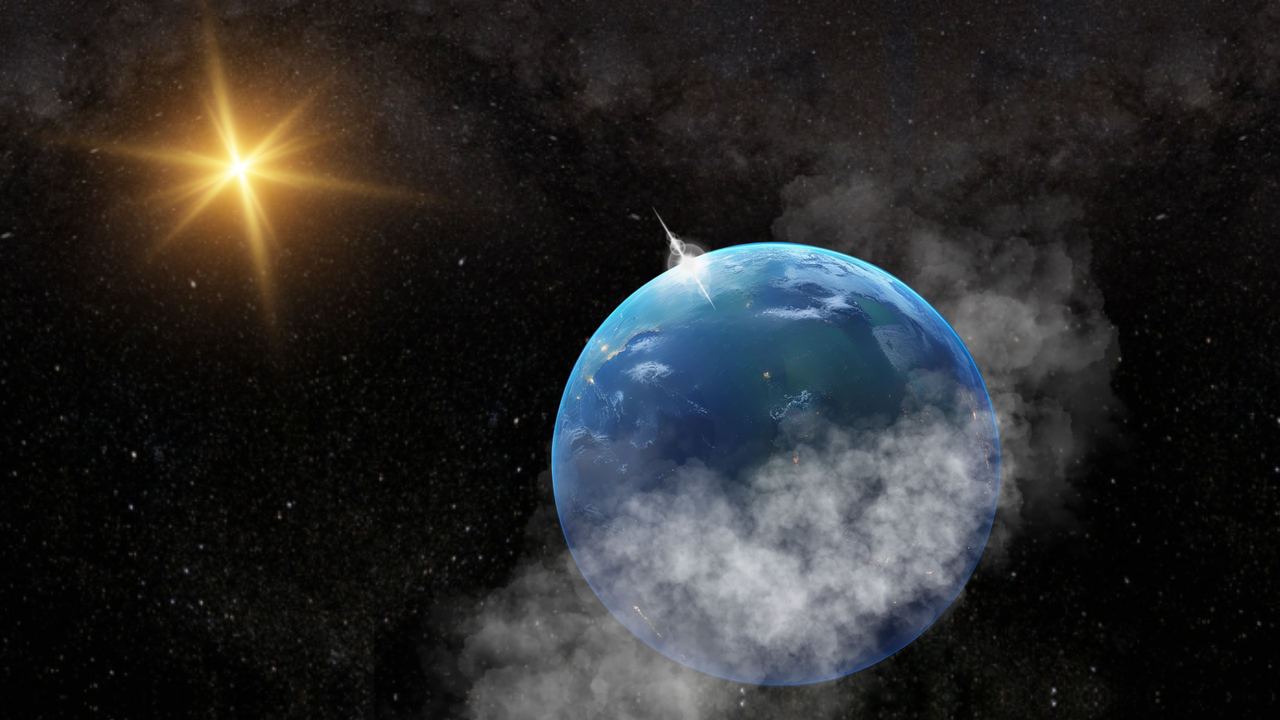
Scientists have developed a better model to understand "steam worlds," which are planets smaller than Neptune and larger than Earth that are too hot to have liquid water at their surface and thus have atmospheres filled with water vapor. Though steam worlds are unlikely to harbor life, modeling them more precisely could help scientists better comprehend ocean planets better, which in turn would aid in directing our search for life beyond the solar system.
Though absent from the solar system, the most common extrasolar planets, or "exoplanets," are so-called sub-Neptune planets. The size and mass of these planets suggest they have interiors rich with water. Many of these planets are closer to their stars than Earth is to the sun, meaning many sub-Neptunes are too hot to have liquid water at their surfaces. This also means water on these planets exists in atmospheric layers, and in exotic states, that don't act like liquids or gases; they tend to have atmospheres made of steam.