
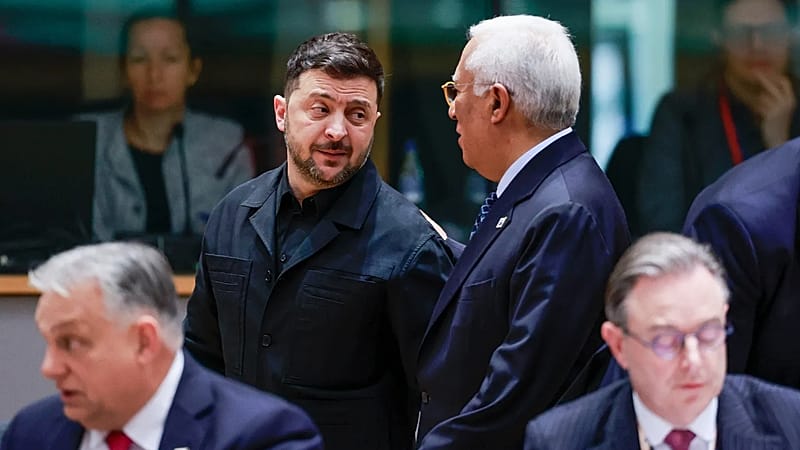
The real summit started the night before European leaders descended at the Europa building last Thursday for their final gathering of the year. As it often is the case in Brussels, the ordre du jour was only indicative, and the real business was done on the sidelines.
On the table was an innovative plan to issue a reparations loan for Kyiv based on immobilised Russian assets held mostly in Belgium. It was an option preferred by German Chancellor Friedrich Merz, Danish Prime Minister Mette Frederiksen and Commission President Ursula von der Leyen; the resistance from the Belgian Prime Minister Bart de Wever was the main obstacle, but not the only one.












