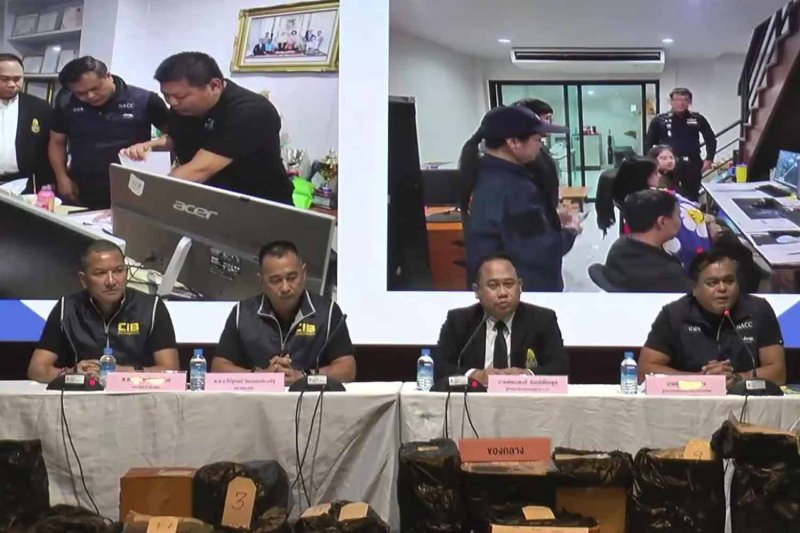
The Department of Local Administration plans to recheck the answer sheets of all 480,000 people who took its nationwide examination late last year after reports about large-scale exam rigging involving billions of baht in bribes.
The National Anti-Corruption Commission (NACC) has already impounded the documents pending further investigation. Thanon Panpeepas, deputy director-general of the department, said on Thursday that it would seek permission from the NACC to release the documents for a fresh review.
Technology would be used to re-evaluate the answer sheets before the eyes of journalists, a process that should take about a week, he said.
Mr Thanon also said that the recruitment of candidates who were earlier confirmed to have passed the exam would continue. This would protect the rights of honest candidates, while recruitment of those found to have cheated could be revoked later on a case-by-case basis.
Pol Lt Gen Nathasak Chaonasai, commissioner of the Central Investigation Bureau, said investigators would identify all the suspects involved in the case and conclude the charges within seven to 10 days.
The investigation followed the arrests of about 10 people, mostly civil servants, who were caught altering answer sheets from candidates who had reportedly paid between 350,000 and 800,000 baht each to ensure they would be hired as local administration officials. Earlier reports said the total amount of bribes could reach 4.5 billion baht.
The suspects were tampering with about 3,000 answer sheets collected from the exam that the Department of Local Administration had organised to recruit nearly 7,000 staff.
Between 300,000 and 500,000 candidates take the Thai civil service and local government examinations each year. The number fluctuates depending on the number of vacancies.
The civil service application procedure begins with a general aptitude test. It evaluates fundamental skills in analytical thinking and mathematics, Thai language and comprehension skills, English comprehension, and good governance and public service.
Successful candidates then move on to take a specialised, paper-based exam that tests specific skills required for the exact job they are seeking.
Civil service jobs are highly sought after for their security and generous pension and healthcare benefits. Studies have shown that the average annual health coverage expenditure for Thai civil servants is 11,000 to 14,000 baht per head. That compares with 2,100 baht per head for employees covered under Social Security, and 1,600 to 2,400 baht for those under the Universal Coverage or 30-baht scheme.