Get all your news in one place.
100's of premium titles.
One app.
Start reading
The Economic Times
The Economic Times
Punit Goenka

Everyone wants your attention. Media is changing because of it

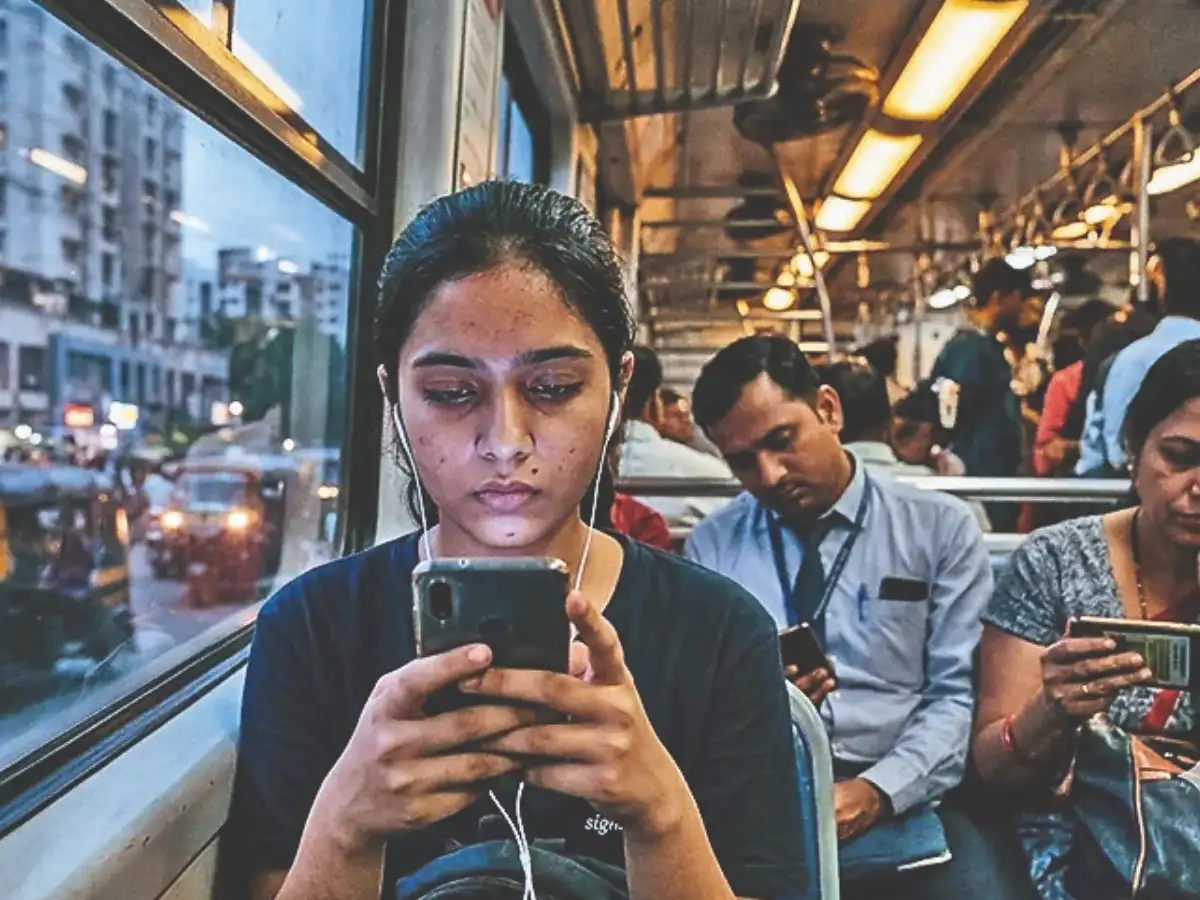
Even as you read this article, there's a reel vying for your attention. Or a podcast episode notification on your screen attempting to catch your eye. Industrialisation of attention can be termed as the defining shift of the media industry. Streaming platforms are competing with social feeds. Digital influencers are competing with TV protagonists. Events are competing with movies.

This evolution has resulted in one of the greatest paradoxes of our age in which attention is becoming increasingly fragmented, yet the experiences that command it are deeply interconnected. And the truth is, the M&E industry doesn't exist any more. Look around you. The contours of this industry are not confined to providing communication channels any more. Neither is it just informing or entertaining audiences.

Also Read: India's new drama is about the fight for your 1-minute attention

The term 'M&E' itself is obsolete. It feels inadequate for a sector that now shapes culture and commerce in more ways than one. As the industry steps into a new era of growth, it becomes imperative to solve this contradiction.

The dichotomy is engendering a new definition for the sector that is more befitting to its current proposition: content and attention (C&A) economy. Even as platforms and experiences proliferate, each more immersive than the other, it's increasingly demanding an integration of content, technology, platform, and the experience itself. This stems from the consumer's transition into seeking experiences rather than navigating between screens.

In fact, in this new attention economy, every consumer has evolved into a potential creator, and every creator has transitioned into a potential enterprise. Let's face it. As industry players, we're not competing against each other any more. A new landscape is emerging, where content remains king, but the attention that content can command forms the kingdom. Content is abundant, but attention has become scarce as consumers live through interconnected experiences. For instance, consumers may engage with a story on TV, but they will continue to watch it on OTT, interact with it on social media, experience it live on-ground and, perhaps, even sport the merchandise.

Amid this heightened convergence, it also becomes critical for policy and regulation to converge as well. The economic contribution of the sector is invaluable. Yet, it remains archaic in terms of policies that propel growth rather than limit it. Liberalisation enabled the sector to thrive. But the real question remains: how liberal is the sector today?

We continue to navigate complex legacy structures that were built for unilateral consumption. The challenge before us is not 'how to produce more content.' We are already scaling content production from India for the world. The real challenge is how to build a framework where creators, broadcasters, platforms, storytellers, and innovators can participate in a unified ecosystem designed for the realities of a converged world.

Also Read: Bigger picture: Media industry shifts focus to attention, data & tech

The last three decades have showcased how content and the sector at large are a firm reflection of society, mirroring ambitions and growth of its populace. But the influence of entertainment on democracy remains highly underestimated. Nurturing a significant share of human attention, the sector has been a beacon of creative expression and speech, critical proponents of democracy. The shifts only compel one to consider strengthening the fourth pillar of democracy, way beyond 'press'.

Today, there are diverse avenues of expression including cinema, literature, and music contributing immensely towards strengthening our democratic environment. India stands at a unique inflection point. We have among the world's largest young population, a burgeoning creator ecosystem, an unmatched legacy in storytelling, and rich culture that forms the intrinsic fabric of our stories. Success won't be defined by the amount of content we create, but by the attention and influence our content garners across the world.

More importantly, can we build platforms and frameworks that unite fragmented attention into a shared cultural and economic force? Ultimately, attention cannot be claimed for perpetuity. It can only be earned one moment at a time.

The writer is CEO, Zee Entertainment Enterprises

Sign up to read this article
Read news from 100's of titles, curated specifically for you.
Already a member? Sign in here
Related Stories
Top stories on inkl right now
One subscription that gives you access to news from hundreds of sites
Already a member? Sign in here
Our Picks
Fourteen days free
Download the app
One app. One membership.
100+ trusted global sources.