
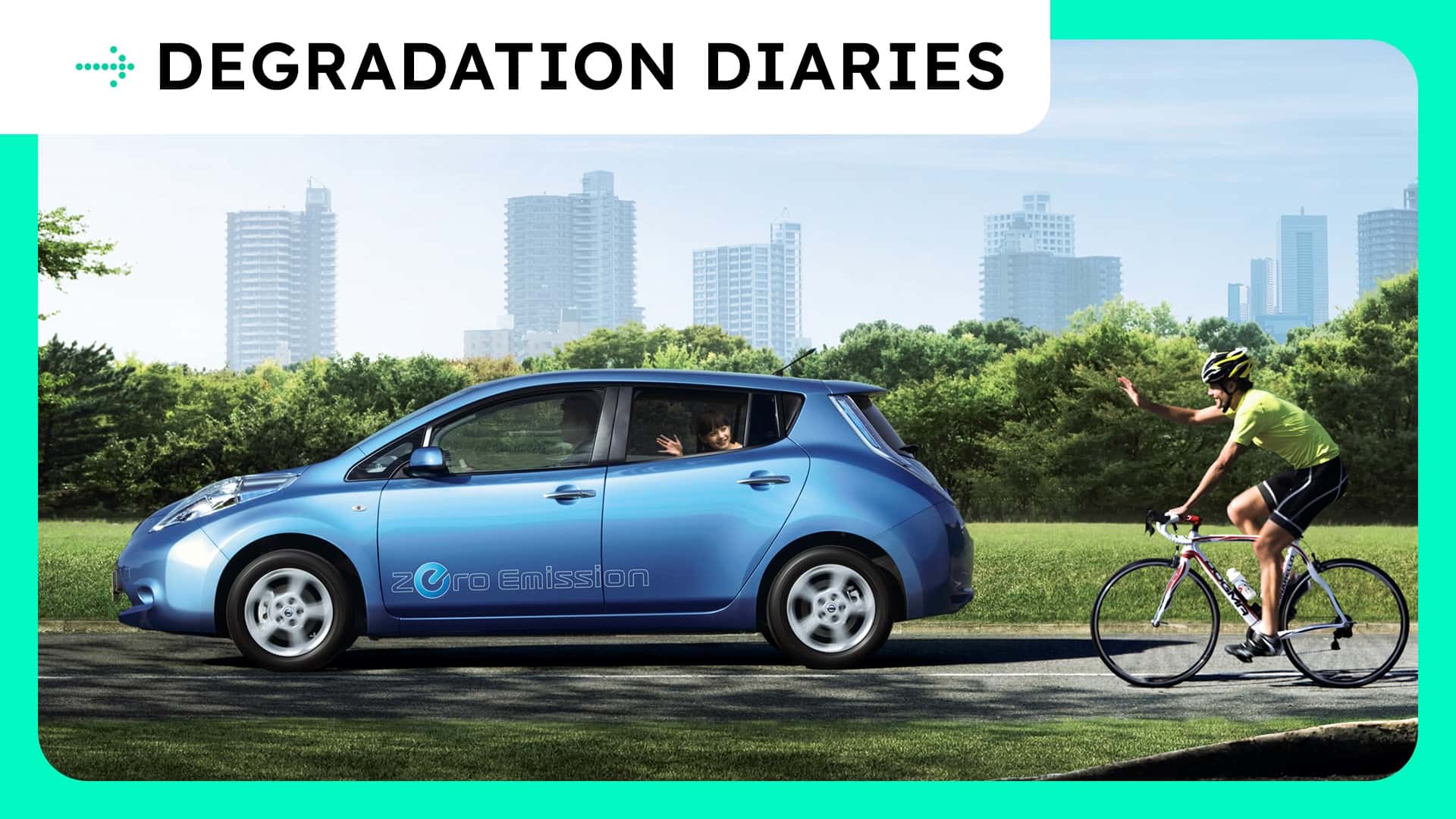
The Nissan Leaf is one of the original modern purpose-built electric vehicles, so it’s what many people still picture when they think of an EV. The Leaf was advanced, likable, and forward-thinking in many ways, and genuinely important, but it also had one engineering flaw that may be responsible for giving EV batteries a reputation they are still trying to shake.
Its battery pack was passively air-cooled, an engineering compromise that left it with very little control over cell temperature. The big downside was that Nissan Leafs tended to lose battery capacity more quickly than other EVs, especially those with an actively liquid-cooled battery pack, and especially in hot climates.