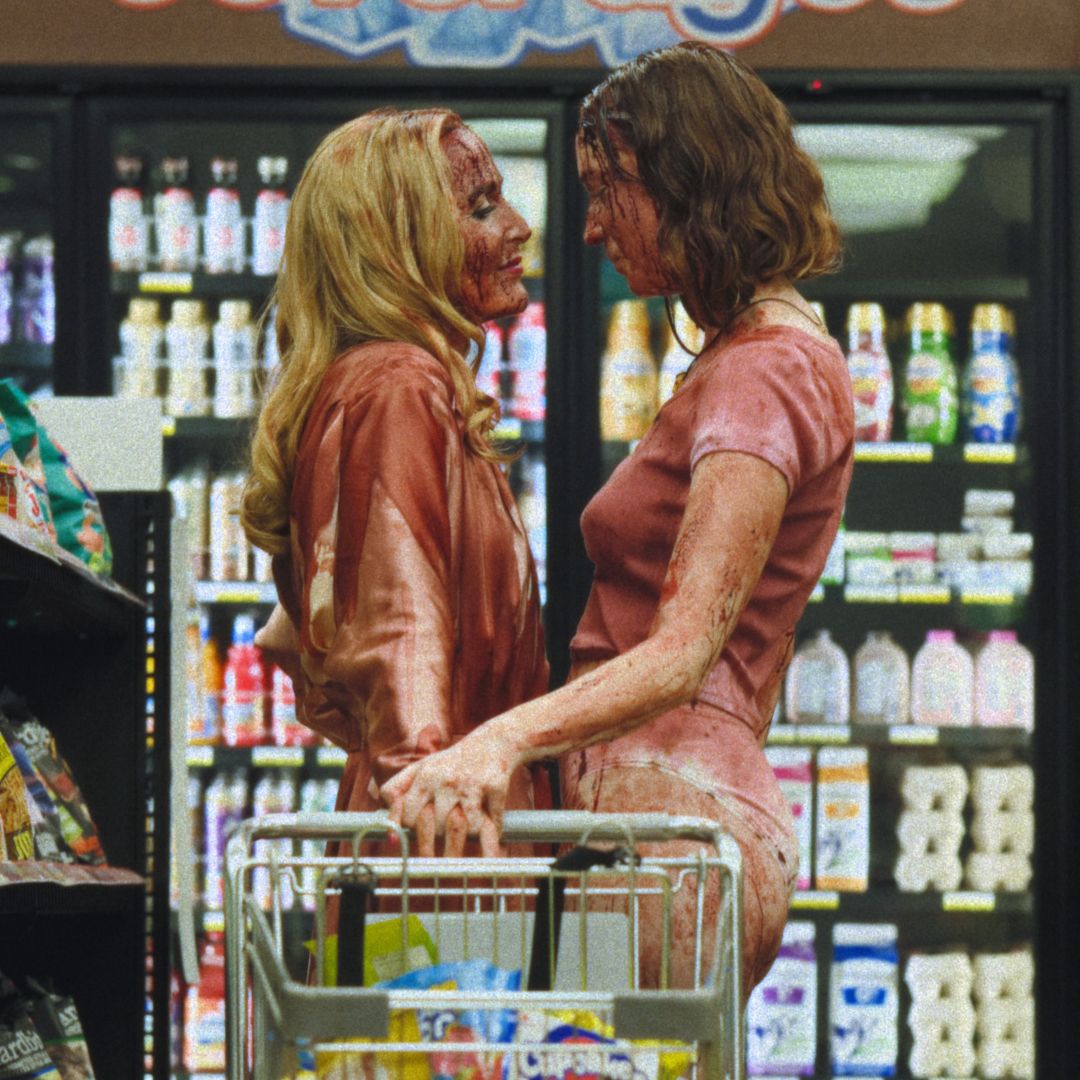
This essay contains spoilers about Teenage Sex and Death at Camp Miasma. Half an hour into Jane Schoenbrun’s viscous new film Teenage Sex and Death at Camp Miasma, I saw my own psyche on screen. While rising filmmaker Kris Williams (Hannah Einbinder) sits across from Billy Presley (Gillian Anderson), the final girl from the ‘80s slasher B-movie she hopes to reboot, she unpacks her tendency to intellectualize art that evokes deep feeling within her. Billy implies that Kris’ rumination is a means of avoiding said feeling—something I’ve been known to do, too, and I think a fair share of people my age would agree.
Kris and Billy’s exchange over fried chicken and dipping sauces isn’t just an astute table topic; it becomes essential to understanding Schoenbrun’s film—and offers more nuance to Gen Z's oft-discussed attitude toward sex and intimacy than any pundit to date. Like Schoenbrun’s previous works (I Saw the TV Glow and We’re All Going to the World’s Fair), Teenage Sex and Death hides a human story under metatextual commentary on genre media. I went in as blind as possible, only knowing that the film was a send-up of franchises like Sleepaway Camp, and followed Kris as she attempted to recruit Billy for her remake of a property deemed “zombie IP” due to its failed sequels and transphobic roots. Teenage Sex and Death’s true plot reveals itself to be a journey of reawakening, as both women grapple with how the in-universe killer, Little Death (Jack Haven), shaped their early views on sex. As reality and fiction dissolve in hilarious ways involving “flesh and fluids,” Kris goes from repressed prude to the star of her secret fantasy.