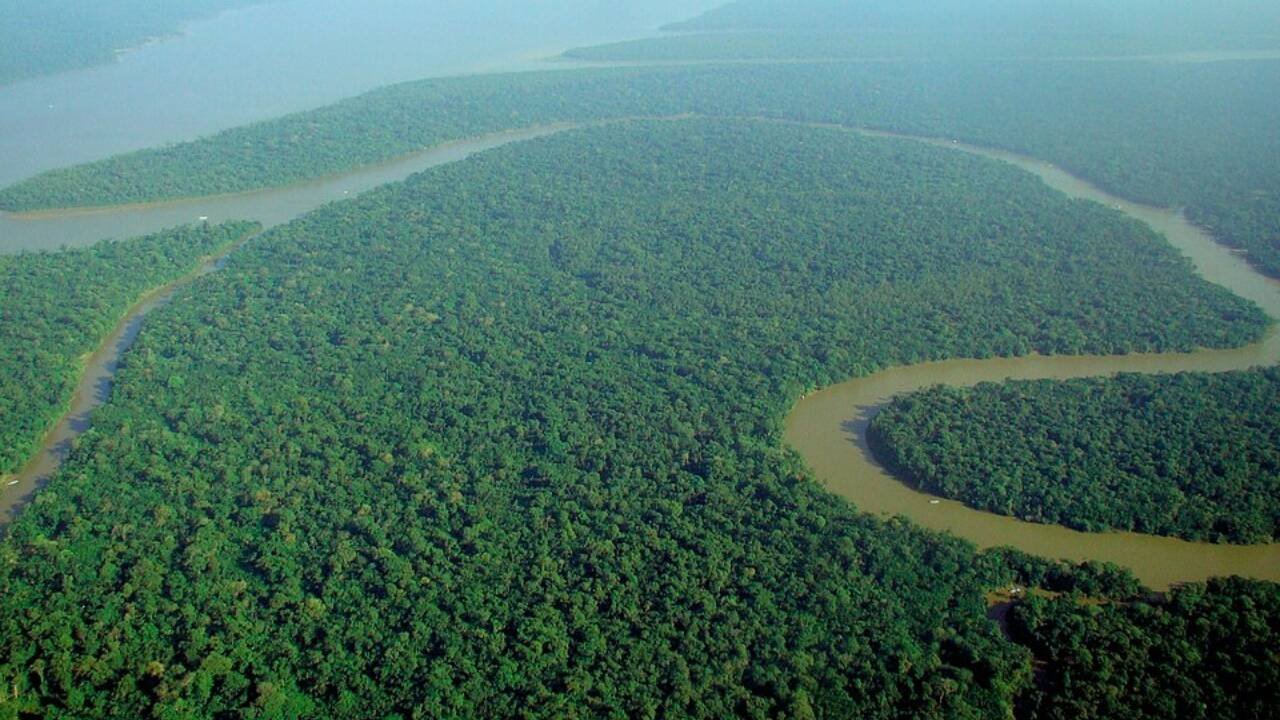
One of the planet’s driest landscapes might partly be the reason for the world’s largest rainforest’s remarkable productivity. According to NASA , each year, around 27.7 million tons of mineral-rich dust are carried by the wind from the Sahara Desert across the Atlantic Ocean before settling over the Amazon rainforest. According to a study published in Geophysical Research Letters led by Hongbin Yu, this airborne dust delivers approximately 22,000 tons of phosphorus annually, which is close to the amount of phosphorus the Amazon rainforest loses through rainfall and river runoff every year. According to SpaceDaily , this natural nutrient exchange has been occurring for thousands of years, thus playing a part in sustaining one of Earth’s most biodiverse forests despite its nutrient-poor soils.
Get breaking news anytime, anywhere. Download the TOI app now!

The connection is especially striking because the nutrient begins its journey in the remains of an ancient aquatic ecosystem. Much of the transatlantic dust is associated with the Bodélé Depression in Chad, a basin that once formed part of the much larger prehistoric Lake Mega-Chad. Its exposed sediments contain phosphorus-rich material, including the microscopic remains of freshwater organisms that accumulated when the region was far wetter than it is today. Strong winds channelled between nearby mountain ranges sweep across this dry lake bed, lifting fine particles high into the atmosphere. These particles can then spend several days travelling roughly 1,600 miles across the Atlantic before rain and gravity bring a portion of them down over South America. Once deposited, their phosphorus enters an ecosystem in which nutrients are quickly absorbed, recycled through vegetation and washed away by intense tropical rainfall. The process creates an extraordinary geological link: material produced in an ancient African lake is now helping support living trees in another continent’s rainforest. However, the dust does not single-handedly create the Amazon’s fertility. Most nutrients are continuously recycled through fallen leaves, roots and decomposing organic matter; Saharan dust principally acts as an external top-up, replacing part of the phosphorus that escapes through rivers, flooding and runoff.
A nutrient conveyor shaped by wind
According to the Geological Research Letters study , satellites from NASA’s Cloud-Aerosol Lidar and Infrared Pathfinder Satellite Observer (CALIPSO) mission allowed researchers to estimate the amount of dust that crossed the Atlantic between 2007 and 2013. According to SpaceDaily, scientists calculated that an average of 182 million tons of dust from the Sahara leaves North Africa every year, and roughly 132 million tons fall back over the Atlantic Ocean, while around 27.7 million tons reach the Amazon Basin. Despite a fraction of the dust completing the journey, it carries minerals that tropical species depend on but cannot obtain from local soils because heavy rainfall constantly washes nutrients away.
Notably, scientists believe that much of this dust originates from the Bodele Depression in northern Chad, a dried-up lake bed which is regarded as one of the world’s largest sources of airborne dust. According to NASA Earth Observatory, the sediments left behind by an ancient lake are rich in phosphorus-containing minerals and are easily lifted into the atmosphere by strong seasonal winds. Thus, once airborne, the particles become part of the atmospheric plumes that regularly cross the Atlantic before reaching South America, where rain slowly deposits them across the rainforest canopy and floor.
Why phosphorus matters more than any other nutrient
It is worth noting that, unlike nitrogen, which can be replenished naturally by biological processes, phosphorus is mainly derived from minerals and rocks. According to the 2015 GRL study, Amazon’s ancient soils have been heavily weathered over millions of years, thus leaving relatively little phosphorus available to support the plants. Furthermore, the continuous rainfall removes the nutrients through runoff, creating a persistent deficit. According to the researchers, Sahara dust supplies about 22,000 tons of phosphorus each year, nearly matching the amount lost annually from the central Amazon and making it an important long-distance fertiliser source.
Additionally, the researchers also observed considerable year-to-year variation in dust transport, with the annual delivery fluctuating by nearly 86% during the study. According to the authors of the study, changing rainfall patterns in Africa, shifting wind systems and climate variability all influence how dust ultimately reaches South America. However, despite these fluctuations, the long-term average indicates that this natural nutrient bridge has remained effective over the years. According to SpaceDaily, the annual dust migration suggests that the Sahara and Amazon are part of a much larger planetary system, with the desert helping nourish the rainforest over time.