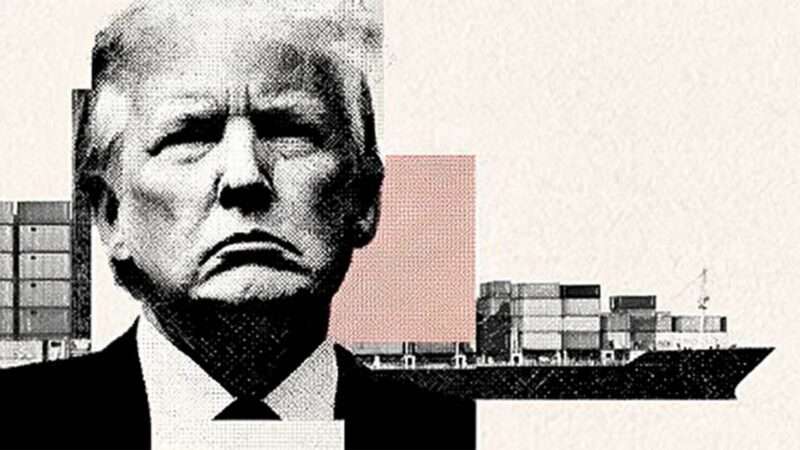
President Donald Trump suffered a major setback today at the Supreme Court, which rejected his claim of sweeping tariff authority under the International Emergency Economic Powers Act (IEEPA). Trump could have avoided that embarrassing defeat if he was not so keen on asserting broad, unbridled powers based on a dubious legal interpretation, which is part of a pattern with him.
"When Congress grants the power to impose tariffs, it does so clearly and with careful constraints," Chief Justice John Roberts notes in Learning Resources v. Trump, the decision rejecting Trump's interpretation of IEEPA. As that observation suggests, there is no shortage of statutes that empower the president to impose tariffs. Trump himself already has used some of them and can be expected to do so again now that the Supreme Court has closed off this particular route. But all of those laws restrict presidential action by specifying acceptable rationales, requiring agency investigations, or limiting the size, scope, or duration of tariff hikes.