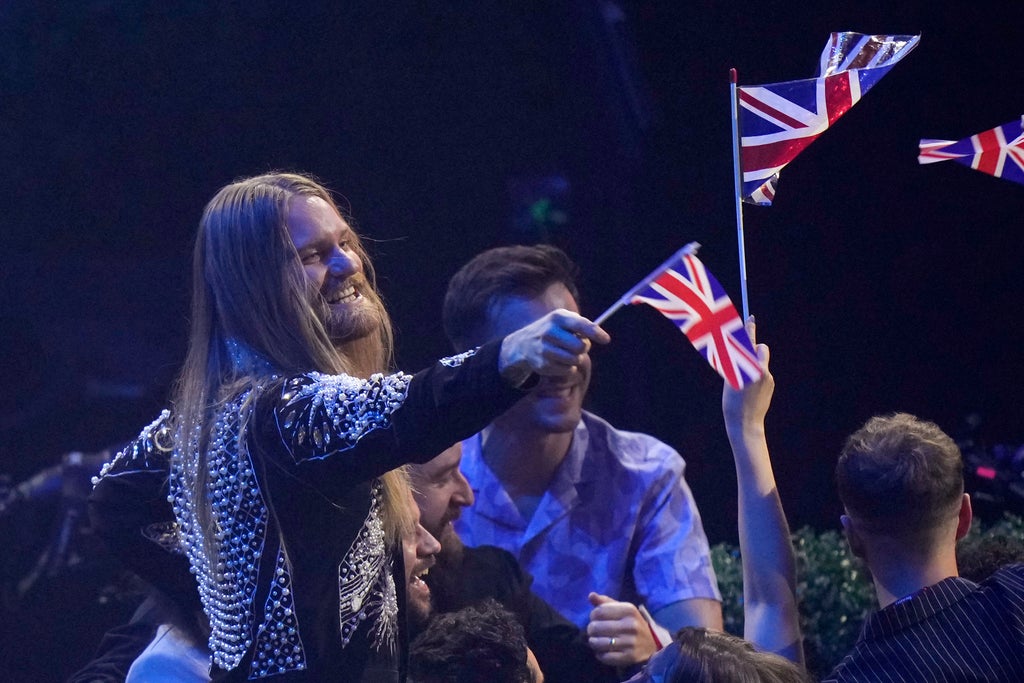
For the first time since Lordi, all eyes – beyond the flag-painted faithful – are on Eurovision. The 2021 ceremony elevated this once corny song contest to the standing of genuine international star-maker – whereas previous champions have generally had limited long-term success, and even Abba struggled for two years to escape the stigma of “Waterloo”, Italy’s glam-rockers Maneskin have enjoyed an instant and unprecedented global cut-through for ’Vision winners. Come 2022, the event’s significance rises again, to a statement of Europe-wide unity. Going in, only the most delusional Euro-Cyrus believes they have a chance of beating Ukraine’s Kalush Orchestra, no matter how many vocal cords they rupture in the trying. Eurovision’s supposedly non-political stance is, the bookies insist, for the dogs; even the waterfall festooned stage at the Turin PalaOlympico itself, seemingly in a perpetual state of flooding, could be construed as a subliminal protest against climate change.
Competitive aspect supposedly removed, Eurovision 2022 becomes a great chance to objectively assess the continent’s abilities to successfully merge their regional music with mainstream pop. Frankly, a lot of them appear to have cracked it. Sensing fresh opportunity, many countries opt to field their most celebrated and angst-ridden Adeles. Portugal’s Maro, boasting a voice like a woodland well, sings her lovelorn “Saudade, Saudade” in a support group circle of backing singers. The Netherlands’ S10 goes for a Florence Welsh bellow on “De Diepte” and Armenia’s Rosa Linn, sat in a bedroom made of Post-It notes, forgets she’s playing her acoustic folk lament “Snap” thirty seconds in and starts ripping down the wallpaper like a grief-deranged Lawrence Lewellyn Bowen.