
Europe’s desire to build as many data centres as quicky as possible could strengthen the argument to invest more in nuclear power as the bloc looks for more sustainable and reliable ways to power AI infrastructure, according to research by JP Morgan.
Data centres make up about 1.5% or 415 Terawatt-Hours (TWh) of the global energy consumption each year, with consumption projected to more than double to 945 TWh by 2030, driven primarily by AI computing needs.

In Europe alone, data centre electricity consumption is about 70 TWh and could rise to around 115 TWh by 2030, according to European Commission forecasts cited in the report.
However, JP Morgan expect an additional 89 TWh of annual European data centre power demand by 2030 compared with 2023, with Iberia and the Nordics accounting for about 45% of this growth.
Europe’s announced data centre pipeline stood at 66.1 GW at the end of 2025, compared with 10.8 GW of live capacity, according to research firm Aegir Insights.
The EU is aiming to triple data centre capacity by 2035, to strengthen its technological independence and digital sovereignty and put the bloc back in the race to develop cutting-edge technologies like AI.
The European Commission proposed a common rating scheme for data centres this month, to make reporting of data centre water and energy consumption more transparent and promote more sustainable models.
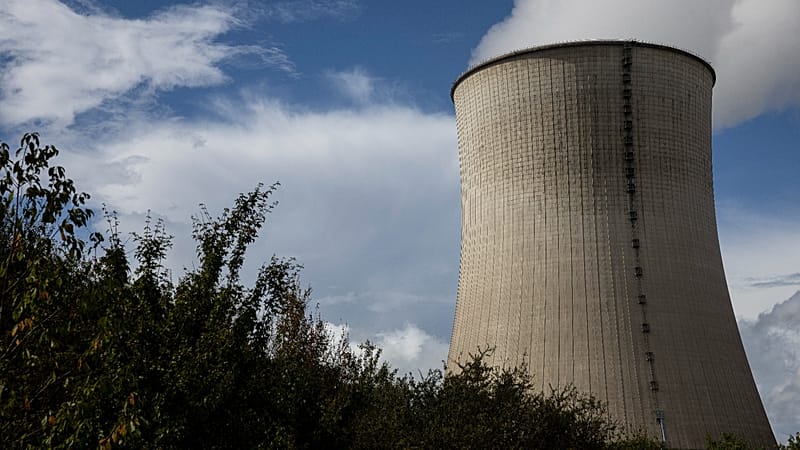
Nuclear power had already been experiencing a resurgence in Europe driven by a need for energy sovereignty and to cut greenhouse gas emissions, but the desire to ramp up AI capacity is driving investment further.
Nuclear power generated around 23.35% of all energy produced in the EU in 2024, with generation up 4.8% compared with 2023, the second consecutive year of growth after a period of decreases.
12 out of the EU’s 27 members run nuclear power plants, including Bulgaria, France, Czechia, Spain, France, Hungary, the Netherlands, Romania, Slovenia, Slovakia, Finland and Sweden.
France is by far the biggest generator of nuclear power, making up half of total generation, producing 380 Terawatt-hours in 2024.
Tech companies are also getting involved in Europe’s nuclear resurgence in an effort to secure reliable energy supplies for large-scale AI infrastructure.
Google signed a 22-year deal with Finnish energy company Fortum in September, to buy up to 50% of the capacity from their Loviisa nuclear power plant.
Amazon is investing in X-energy, a leading American developer of next-generation small modular reactors, is aiming to roll-out sites in the UK and across Europe.
While nuclear fission energy generation obviously comes with the problematic issue of nuclear waste, investment is also booming in prototype fusion plants, with the prospect of producing clean nuclear energy.
Microsoft has partnered with Helion Energy to source electricity from commercial nuclear fusion, particularly in leading nuclear countries such as France and Finland.
This is not the first time JP Morgan has talked of the prospect of a nuclear resurgence driven by the need to expand AI infrastructure. In April, the company’s 2026 energy outlook cited nuclear fusion as a sector to keep an eye on to power growth as well as fission.
The outlook projects that global nuclear energy capacity will increase by 75% by 2050 compared to current levels, driven by both new reactors and lifespan extensions to existing plants.