
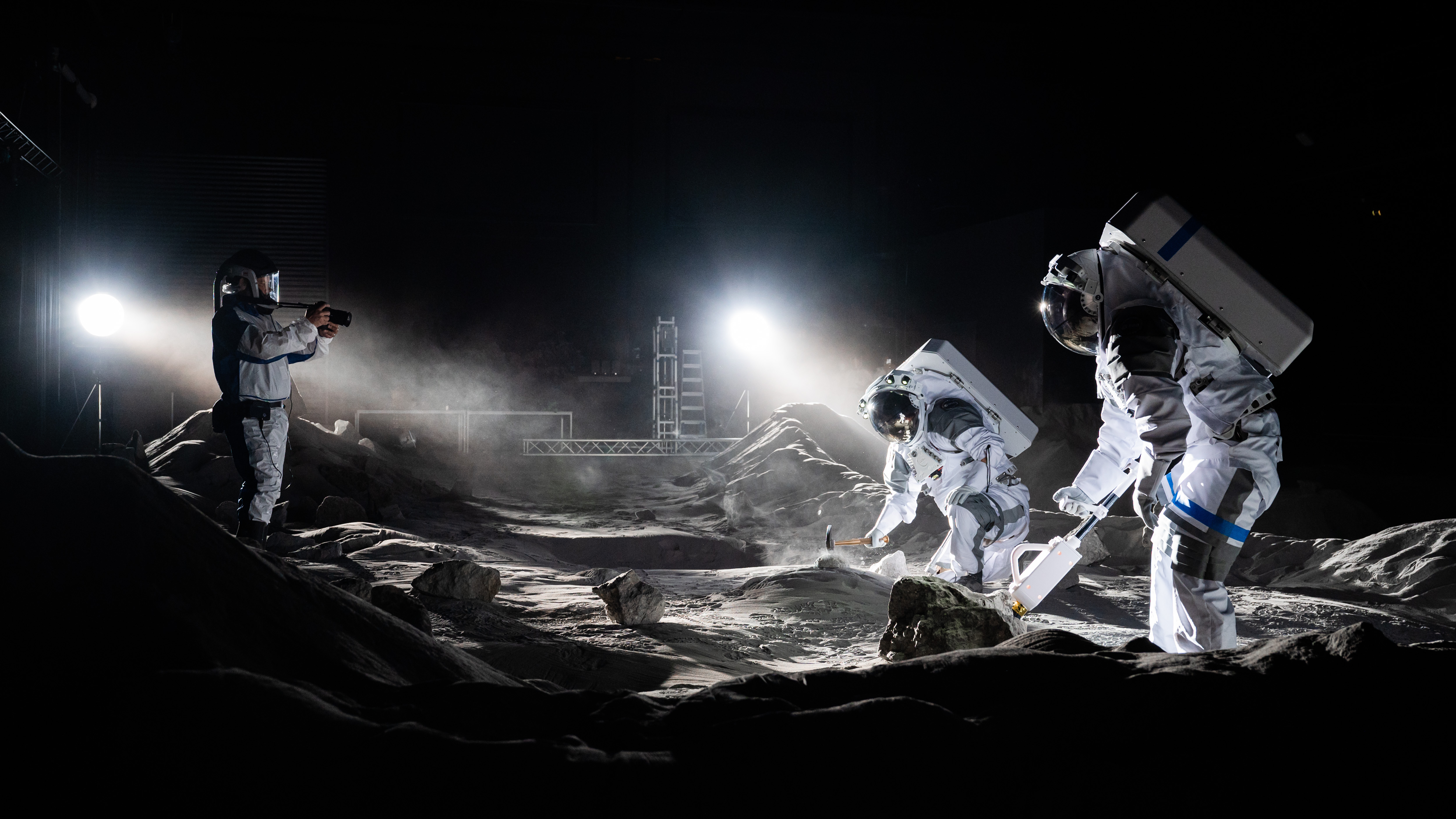
Pictures from a simulated moon landing, not designed to fool anyone into believing a fake but rather to provide a reference to make sure that we can get the best video images possible when astronauts finally do return to the moon, have been released by the European Space Agency (ESA).
When Neil Armstrong clambered down the Eagle's lander to take his "one giant leap" in 1969, it was captured by a black-and-white slow-scan television (SSTV) with a resolution of a mere 320 lines and 10 frames per second. The transmission, beamed back via NASA's Deep Space Network, was sketchy, plagued by ghosts and poor contrast. The available 900 to 1,000 kiloHertz bandwidth just wasn't sufficient to transmit in color. Things improved slightly with Apollo 12, which had a wider 2 to 3 megaHertz bandwidth that permitted color footage — at least until the video camera was accidentally pointed at the sun, the solar intensity damaging its vacuum tube.