
Update: This article was updated on May 23, 2024, with new information and images about Euclid's first science observations.
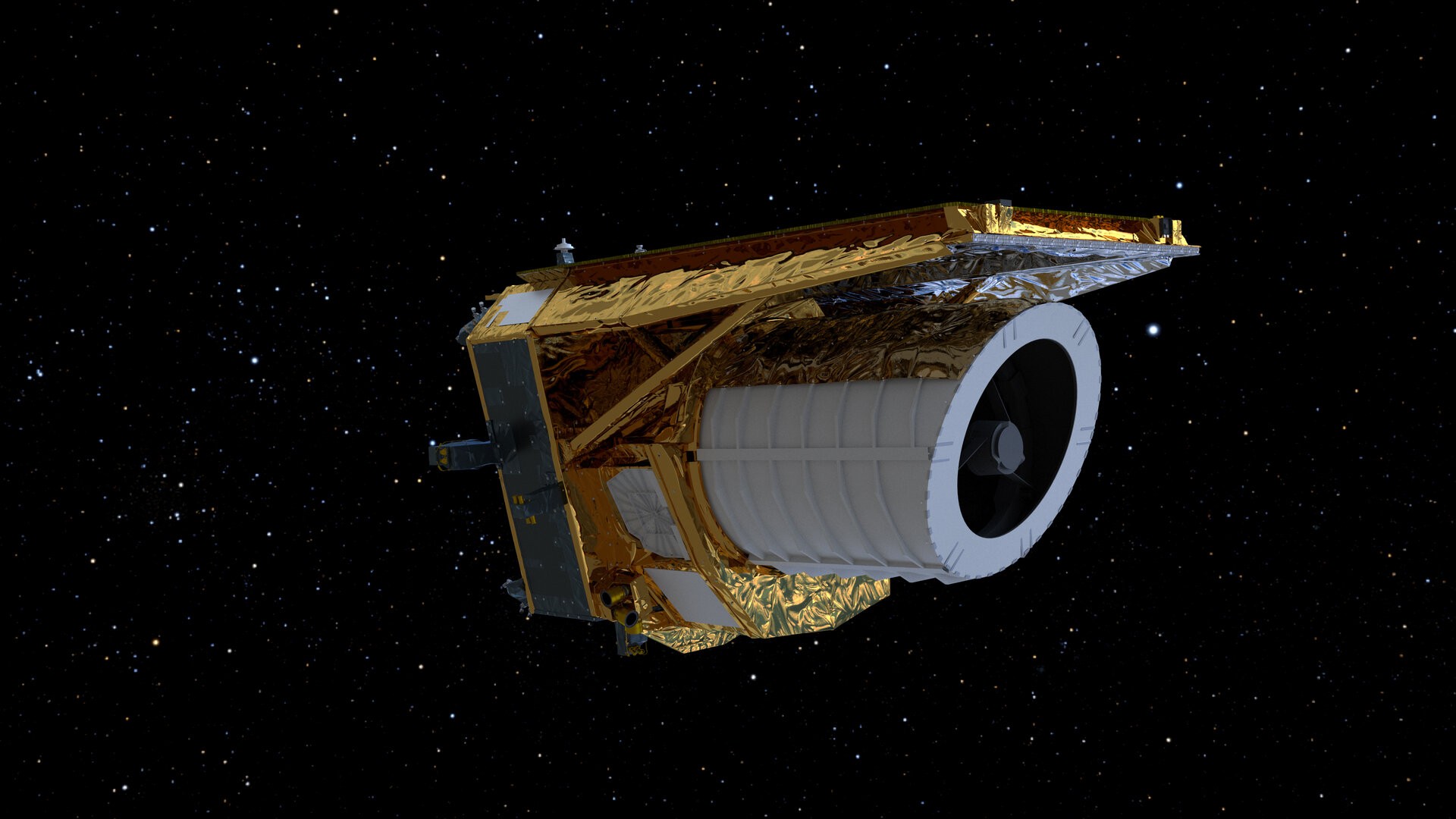
The European Space Agency's (ESA) Euclid space telescope successfully blasted off from Cape Canaveral, Florida, on July 1, 2023 and shared its first scientific observations on May 23, 2024. The groundbreaking space telescope will hunt for clues about two of the universe's greatest mysteries: dark matter and dark energy.
Despite making up an estimated 95% of the universe, dark matter and dark energy cannot be detected directly. Instead, scientists observe them in the gravitational warping effects seen in many galaxies across the universe. Euclid's enormous field of view will significantly expand this search for warped space-time.