
If working or studying in Europe has ever felt confusing or paperwork-heavy for Indians, that may soon change.
The European Union (EU) has announced that it will open its first Gateway Office in India, a move designed to make it easier for Indian students and professionals to find opportunities and move to Europe. The announcement came at the 16th India-EU Summit, marking a shift in how Europe looks at India not just as a trade partner, but as a key source of talent.

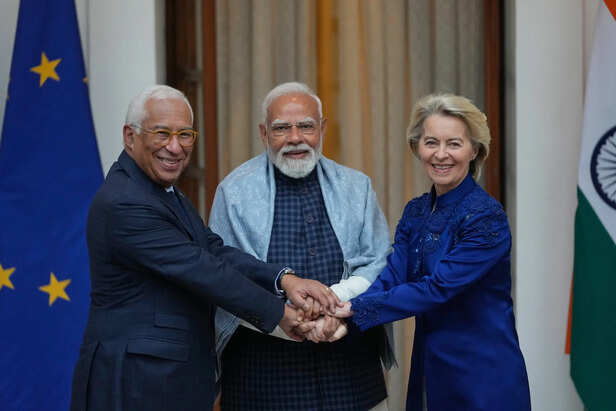
EU President Ursula von der Leyen, who attended India’s Republic Day celebrations as the chief guest, said the idea behind the office is simple: people matter more than anything else. Calling people the “greatest wealth” of both regions, she described the Gateway Office as a single place where Indian talent can get support for moving to Europe, in line with the needs of EU countries.
In her words, the office will help students, researchers, seasonal workers and highly skilled professionals navigate the process of working or studying in Europe. The goal is to reduce confusion, bring clarity, and make movement between India and Europe smoother. “This is good for our economies. This is good for the friendship between our people,” she said.
Why Europe is doing this
Many European countries are facing shortages of workers, especially in fields like IT, healthcare, nursing and engineering. At the same time, India has a large pool of skilled professionals looking for global opportunities. The Gateway Office is meant to connect these two realities.
Instead of Indians having to figure out different rules, visas and systems across EU countries, the office will act as a one-stop hub, guiding applicants and helping them understand where their skills are needed and how to move legally and smoothly.
The numbers show India’s growing role
Data from the European Commission already shows how important Indians have become to Europe’s workforce.
We are launching the first EU legal gateway office in India. It will be a one-stop hub to support Indian talent moving to Europe: EU President @vonderleyen#IndiaEUTradeDeal pic.twitter.com/ANuoJdCC3K
— Piyush Goyal (@PiyushGoyal) January 27, 2026
In 2024, Indians received about 16,300 EU Blue Cards, more than any other nationality. The Blue Card is meant for highly skilled professionals who move to the EU for work.
Indians also dominate intra-corporate transfers, where companies move employees from one country to another within the same organisation. Out of 10,200 such permits issued by EU countries in 2024, around 3,300 went to Indians, nearly one-third of the total.
Beyond work, Indians are also among the largest groups settling in Europe long-term. In 2024, around 1,92,400 Indians received first-time residence permits, placing them among the top non-EU nationalities granted the right to live in the EU.
How this fits into the bigger picture
The Gateway Office announcement comes alongside the India-EU Free Trade Agreement (FTA) signed at the same summit. While the FTA focuses on trade; cutting tariffs on most EU exports to India and giving Indian products like textiles, leather, gems and jewellery easier access to Europe, it also reflects a deeper partnership.
The trade deal aims to double EU exports to India by 2032 and create a massive free trade zone of nearly two billion people. The Gateway Office shows that this partnership is not just about goods and money, but also about people, skills and long-term cooperation.
For Indian students and professionals, the message is clear: Europe is actively looking at India as a trusted talent partner. And with a dedicated Gateway Office on Indian soil, the path to European opportunities may soon become far more understandable and far more accessible.