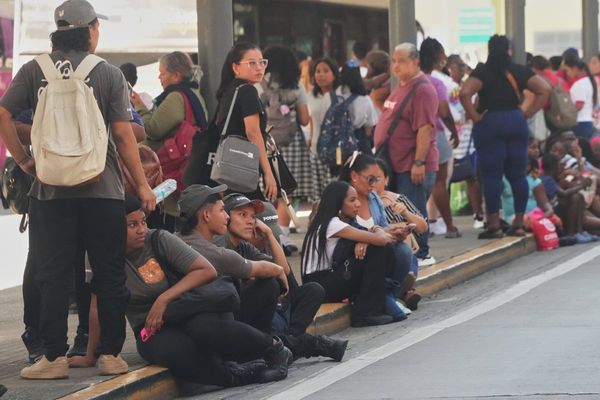
CEUTA, Spain — For roughly 48 hours in late July, Spain's North African outpost of Ceuta stopped functioning as a normal city. Somewhere between 50,000 and 75,000 people forced their way in from Morocco, swelling a territory of 84,000 residents by as much as two-thirds before most of them turned around and walked back out. What's left behind is a death toll still climbing more than a week later, a Spanish government fending off accusations it was warned in advance, and a European Union scrambling to look unified over a crisis that has already splintered it.
How Many People, Exactly, Is Still a Moving Target
Spain's Interior Ministry initially put the crossing at roughly 50,000 people, while Ceuta's regional president, Juan Jesús Vivas, gave a rounder figure of 60,000. That gap has only widened since: a Euronews report puts the true total anywhere between 60,000 and 75,000, describing it as the largest migration event in the enclave's history. Whatever the precise count, nearly everyone who crossed did so by water — swimming or floating around the breakwater at Tarajal beach — or by scrambling over gaps in the fence line itself.
For scale, compare this to the last time Ceuta saw anything similar. In May 2021, roughly 8,000 to 10,000 people entered over two days, though Vivas himself has more recently put that earlier figure at close to 12,000. Either way, this year's surge arrived at several times that scale, almost entirely within a single day and night.
A Death Toll That Keeps Climbing
The human cost has moved in a grim daily ratchet. Officials confirmed 18 deaths on the crisis's first full day, then 34, then 57, then 67 by August 1, and finally 72 confirmed dead by August 2 as search crews kept pulling bodies from the water. Most victims drowned attempting the swim from the Moroccan town of Fnideq, while others were crushed in the crowd trying to scale the breakwater. Ceuta's own leadership has floated a still-higher, unconfirmed number: Vivas told the newspaper El País that the city's morgue had taken in 88 corpses altogether, a figure that folds in earlier, smaller drowning incidents from the preceding two weeks alongside this week's crisis. Spanish Civil Guard forensic teams say identifying the dead through fingerprints and DNA could take another week or more.
The disruption to daily life was immediate and visible. Local workers' representative Rachid Sbihi described a "serious humanitarian crisis," with unaccompanied minors sleeping on sidewalks while security forces were stretched between rescue duty and crowd control. Hotel rooms vanished and shops pulled their shutters down within hours of the first wave. By the weekend, though, Ceuta's president struck a cautiously calmer tone, saying the process of people returning to Morocco had "begun satisfactorily" even as he acknowledged the city hadn't fully bounced back. Some who crossed chose to stay regardless of the pressure to leave, telling reporters they had nothing to return home to.
Sánchez Sends in the Army and a Sea Barrier
Prime Minister Pedro Sánchez flew to Ceuta within a day of the crossing beginning, framing it as a breach of Spain's territorial integrity and ordering the army to back up the Civil Guard. Reinforcements followed — additional troops and roughly 30 more Civil Guard officers, on top of a floating containment barrier authorities strung 500 meters into the sea along the Tarajal breakwater. Interior Minister Fernando Grande-Marlaska claimed Spain had reversed the bulk of the crisis within about 24 hours through cooperation with Morocco, while insisting his ministry would remain "relentless against those who break the law." He also waved off any suggestion that Rabat bore blame, describing Morocco as posing no threat to Spain.
By the following Saturday, Spain's Interior Ministry said the overwhelming majority of arrivals — an estimated 48,300 people — had already gone back to Morocco, many under military escort.
Why It Happened Is Still Contested — and Spain May Have Been Warned
No single cause has stuck. Spanish officials point to smuggling networks accused of twisting the meaning of a July Supreme Court ruling that bars the summary return of migrants intercepted at sea — a rule that, notably, has nothing to do with people crossing by land. Migration researchers have cast doubt on how far that explanation stretches, since most people making the crossing would have had no real awareness of a Spanish court decision. Morocco's own Interior Ministry has instead blamed a mix of social-media misinformation and trafficking networks for misleading tens of thousands of people into attempting the crossing.
More strikingly, Euronews reporting indicates Spanish intelligence services flagged the risk well before it materialized — warning that Morocco's King Mohammed VI might make a symbolic gesture at the border around the country's Throne Day holiday, and later noting bus convoys converging on the border town of Fnideq. That account suggests the government's reinforcement of the border came only after the crisis had already begun, despite the earlier alerts — a sequence Spain's Interior Ministry disputes. Some analysts have floated a geopolitical angle too, suggesting Rabat may have eased enforcement to press Madrid over the long-unresolved status of Ceuta and Melilla.
Brussels Splits Over How to Respond
The diplomatic shockwaves reached well past Spain's borders. Twenty-two of the EU's 27 member states — a bloc led by Italy and Denmark, and pointedly not including Spain, France, Portugal, or Luxembourg — signed a joint letter demanding tighter external borders and warning against letting anyone believe illegal entry into the EU is achievable. That pressure pushed Ireland, which holds the EU's rotating presidency, to convene an emergency videoconference of interior ministers.
Italy went further on its own, ordering a month-long reintroduction of passport checks on non-EU travelers arriving from Spain by air or sea — a real, if narrowly targeted, measure rather than a purely symbolic one, since it does apply concretely to non-EU nationals even though Italy and Spain share no land border and EU citizens are unaffected. France's interior minister said police presence along the Spanish border would be quintupled by that Saturday, and Spain's foreign minister summoned Italy's ambassador in protest. Manfred Weber, who leads the European Parliament's largest political bloc, pushed for the bloc to lean harder on Frontex — the European Border and Coast Guard Agency — and fast-track its new migration pact. Domestically, opposition leader Alberto Núñez Feijóo accused the Sánchez government of a slow, improvised response and demanded Frontex's rapid-deployment units be activated immediately, while far-right figures from across Europe traveled to Ceuta to broadcast the crossings on social media.
Washington Turns the Crisis Into a Midterms Talking Point
The episode also drew commentary from well beyond Europe. Speaking from Camp David, President Donald Trump described the images from Ceuta as looking like "an invasion of a country by hundreds of thousands," warning that the same scenario could play out in the U.S. if Republicans lose in November. The comments echoed similar language from other administration figures. Days later, the U.S. State Department raised its travel advisory for Ceuta specifically to Level 3, warning of unpredictable security conditions, even as Spain's overall advisory level stayed unchanged. Human rights groups pushed back against the political framing: Amnesty International Spain's director, Esteban Beltrán, stressed that "the principle of non-refoulement is absolute," regardless of how large or chaotic the crossing became.
What's Left Unresolved
Ceuta's streets have quieted, but very little of the underlying dispute has actually been settled. Spain's reinforced troop presence and new sea barrier look set to stay for the foreseeable future, and the emergency EU talks could accelerate long-resisted proposals to hand Frontex more direct authority over national borders. The legal fight over the Supreme Court's sea-return ruling isn't going away, and the tension between Rabat and Madrid over Ceuta's disputed status remains as unresolved as ever. Migrant rights advocates warn that without addressing the economic pressure pushing young Moroccans toward Europe, further attempts at the crossing are close to inevitable — though even the scale of that pressure is contested, with unemployment estimates for young Moroccans ranging anywhere from roughly one-fifth to well over a third depending on which dataset you use.