
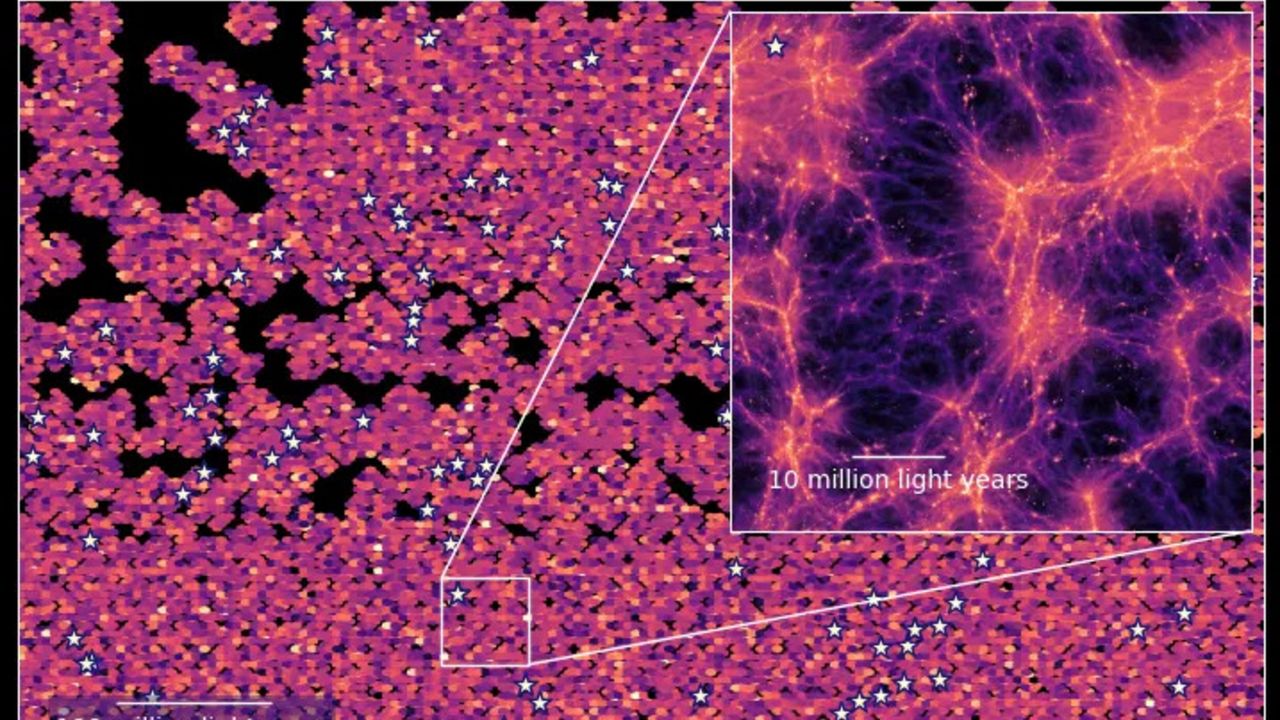
Astronomers have produced one of the most accurate, comprehensive cosmic maps ever made, revealing a brilliant "sea of light" that permeated the early universe. Unlike other universal maps, this 3D representation is composed of light emitted by a single element: hydrogen, the simplest and most abundant element in the universe, which emits large quantities of a specific wavelength of light when it becomes excited by energy from nearby stars. By measuring this light across a vast patch of sky, astronomers got a glimpse of what the universe looked like 9 billion to 11 billion years ago, during an epoch of vigorous star formation.














