Get all your news in one place.
100’s of premium titles.
One app.
Start reading
The Independent UK
The Independent UK
Harry Latham-Coyle

England’s leaders let them down against Ireland – what happens next will be vital

England suffered a record defeat to Ireland at Twickenham - (Getty)

Two years after Marcus Smith’s drop goal had sent Twickenham into cacophonous ecstasy, the strike of another England fly-half was greeted with a rather different sound. George Ford will not have been jeered that often during an international career that now extends to 107 caps, but as he twice lined up to punt for the left corner, he will surely have noted the accompaniment of sarcastic cheers.

While there was a healthy Irish contingent inside the Allianz Stadium, there were plenty of English voices joining in with the din. Ford had earlier twice missed touch with the sort of uncharacteristic errors that defined England’s day. “It’s not good, it’s not acceptable to do that,” he would later admit. “Stuff like that happens in sport, and games, and it’s not for a lack of intent or endeavour.”
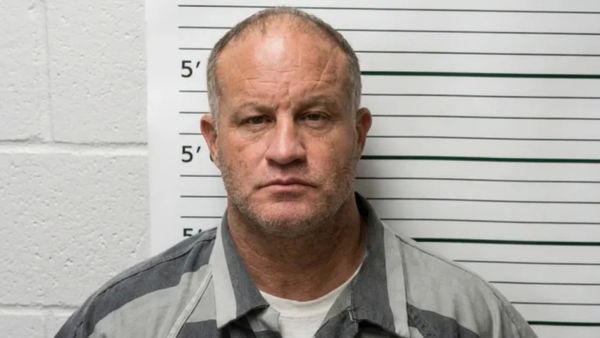
George Ford uncharacteristically missed touch twice from penalties and was sarcastically cheered when he finally found it (Getty)

Perhaps not. But Ford’s errors of skill encapsulated a day on which so many of their senior figures fell short of the level they would have demanded of themselves. Ahead of this tournament, England’s leadership corps had been among the most vocal in setting understandably sky-high expectations. “We probably believed the hype from the first week too much,” prop Ellis Genge conceded to the BBC – a revealing insight from a key figure in a side whose identity has been built around never getting too high or too low.

It was tough to explain all of England’s failings against Ireland, not least the usually unflappable Ford following a shaky showing against Scotland with something altogether more ugly. The day of Luke Cowan-Dickie, a two-time British and Irish Lion, began poorly and ended prematurely, the hooker hooked before the half-hour mark after England’s lineout woes. “I think Steve felt something needed to change and I was probably the most experienced person on the bench to be able to come on,” Jamie George, his replacement, suggested. “He’s disappointed. Luke has been playing brilliantly, he’s a two-time British Lion and a fantastic player.”

Luke Cowan-Dickie lasted just 29 minutes for England against Ireland (Getty)

Cowan-Dickie was not the only one short of his best. Genge scrummaged well but tackled poorly; Tom Curry was similarly inaccurate defensively. Ben Earl got through his usual mountain of work but lacked his typical impact, while Ford’s struggles were obvious. So many parts of the performance felt much too similar to those that England had produced in Edinburgh. On a day where Ireland’s experience counted for plenty, England’s did not.

“We certainly are not a bad team overnight,” George insisted. “It doesn’t feel like it has changed drastically. The results have not been good enough. Those last two games have been poor. To be beaten as comprehensively as we have is disappointing. It’s really hard to put my finger on, other than when you chase a game that much from the start, and with 14 men on the field for too long, that then becomes a really challenging thing.”

The peculiar thing was that the leadership density developing with the England squad had felt such a strength during the 12-match winning run last year. If it was easier to stay tight and together when on a run of such success, a collaborative approach to leadership had worked well, with Maro Itoje handing off certain duties to trusted lieutenants. Genge and George set much of the emotional tone; Ford leads tactically. Borthwick’s tendency to name more than one vice-captain has been chuckled at, but it seemed, for a time, to reflect a broader pool of figureheads than has previously existed.

Maro Itoje looks short of form and fitness (Action Images/Reuters)

What now? It is time for those leaders to stand up again, including Itoje. His head coach admitted on Saturday evening that the lock was lacking sharpness, which is entirely understandable after a December disrupted both by injury and the emotional toll of losing his mother to conclude a long year. Having replaced George as skipper with his Saracens teammate in part because of Itoje’s capacity to be an 80-minute man, Borthwick has hooked his captain on 56 and 54 minutes in their last two defeats. For the first time, really, in his England career, one could entertain an argument that there are currently two locks in better form and fettle than Itoje; it would not be a great surprise to see Alex Coles and Ollie Chessum united in Rome.

There is a sense from within the squad that they do not feel they have been able to get their best game on the pitch in the last two weeks due to early errors of skill rather than strategy; outside voices understandably would call for more radical change, given how far short England fell. The timing of the fallow week is welcome for grappling with those questions, and there is reason to trust an experienced group to find a way forward. Within that may come training tweaks, too – having upped the intensity ahead of this campaign, England have looked a little enervated.

“I think it comes at a really good time for us,” George said. “It’s interesting, whenever I think about tough times in sport, it is never as bad or as good as you think it is. Actually, it gives us an ability to step back from it and go: ‘Where are we at? What do we need to reinforce?’ I think they are easily fixed and that’s what we need to focus on.”

There may be a wider thought of who the best voices are to deliver those messages. It was notable on Saturday the contrast between the two head coaches: Andy Farrell living every minute, even late on when the result was a foregone conclusion; Borthwick as impassive as ever.

One would not, and should not, ask England’s head coach to be anything other than himself, but there are some, including past players, who wonder if his dispassionate approach may ultimately hold England back. Farrell’s dressing-down of the Irish squad, subsequently repeated in part publicly, after the France defeat seemed to work – will, or can, Borthwick do the same?

Steve Borthwick’s dispassionate style perhaps requires contrasting characters around him (PA Wire)

The head coach was firm in insisting that he, along with the wider squad, would deliver tough truths if they had to be heard. But his senior players know they need to grasp the nettle, too.

“I don’t think straight after the game is a time to speak about where things went wrong and what could be better,” stressed George. “Steve was clear that we turned the ball over too much. He was clear that we didn’t start the game well enough. But the technical bits are for Wednesday and Thursday when we come back together. That’s the big thing.

“Our leadership group has been very strong for a long period of time. Our coaching staff are fantastic, our leadership are fantastic. Everyone needs to step up.”

Sign up to read this article
Read news from 100’s of titles, curated specifically for you.
Already a member? Sign in here
Related Stories
Top stories on inkl right now
One subscription that gives you access to news from hundreds of sites
Already a member? Sign in here
Our Picks
Fourteen days free
Download the app
One app. One membership.
100+ trusted global sources.