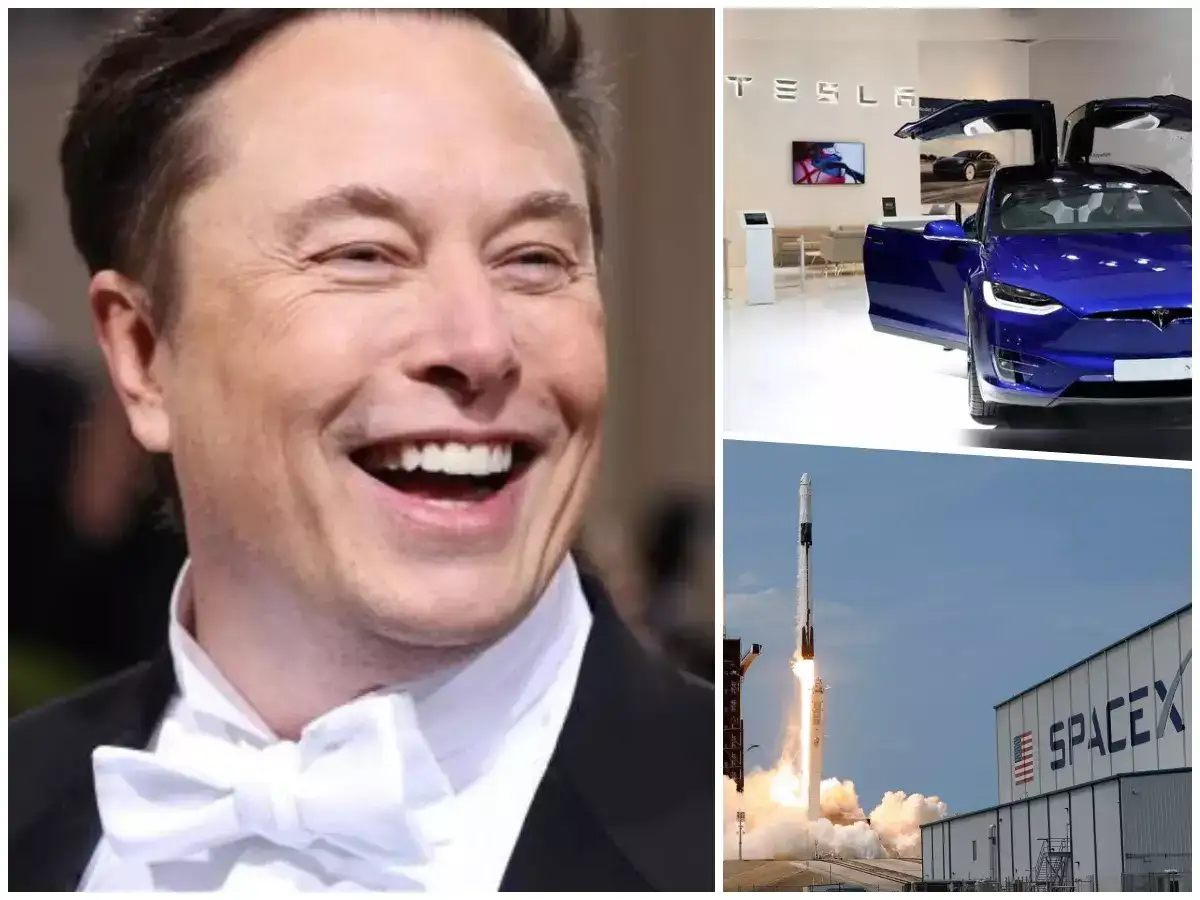
Elon Musk's net worth in June 2026 has reached $788.8 billion, widening the gap between him and every other person on earth. Forbes' real-time tracker confirmed the figure on June 8, 2026, keeping Musk firmly at the top of the 2026 Billionaires List. What is striking is not just the scale of this wealth — it is the speed at which it is growing. With SpaceX's IPO reportedly set to launch within days and the combined entity valued at $1.77 trillion, analysts now openly debate whether Musk will become the world's first trillionaire within the year.
That trajectory is almost impossible to absorb without context. One trillion dollars is one million million. Spending $1 million every single hour, without sleeping, without stopping, would still take more than a century to exhaust $1 trillion.
Musk's fortune is not cash in a vault — it is a vast, concentrated pile of equity in two companies: Tesla and SpaceX. Both are moving markets in ways that few anticipated even five years ago. The numbers are no longer just statistics. They are a reflection of how artificial intelligence, electric vehicles, and private spaceflight have reshaped who holds the most power on the planet.
How Tesla and SpaceX Built Musk's $788.8 Billion Net Worth
Musk's wealth rests on two pillars, each formidable on its own. He holds approximately 12% of Tesla with options to acquire an additional 8%, giving him extraordinary leverage over every dollar of Tesla's market cap. Tesla's recovery from its 2022–2023 turbulence, powered by price normalization and AI-driven autonomous vehicle promises, restored investor confidence substantially.
SpaceX is the other engine. Following the February 2026 acquisition of AI startup xAI, the combined entity was valued at $1.25 trillion — a private valuation that few companies in history have ever touched. Musk owns an estimated 41% stake in SpaceX, meaning his paper wealth from that single holding alone dwarfs the GDP of most nations. Ireland's entire economy is worth roughly $779 billion. Sweden's is $760 billion. SpaceX, a private company, now trades blows with sovereign economies.
Then comes the IPO angle. If SpaceX lists next week at a projected $1.77 trillion valuation, Musk's stake grows by an estimated $841 billion. Combined with his $273 billion in Tesla stock and options, that pushes his total above $1.1 trillion. The trillionaire threshold — once theoretical — is now a matter of timing.
What $1 Trillion Actually Means Compared to the Real World
Numbers like these require translation. All new cars purchased in the United States in 2025 — 16.3 million vehicles at an average price of $48,402 — totaled $789 billion. That is less than Musk's current net worth. Every piece of residential and commercial property in Houston, the third-largest city in the United States and the heartbeat of America's oil industry, is worth roughly $879 billion. Still less.
Manhattan, home of Wall Street and corporate America's nerve center, produced a GDP of just over $1 trillion in 2024 — roughly on par with where Musk stands before the SpaceX IPO. After it, he would surpass the economic output of New York's most powerful island. And if you added up the combined wealth of the next four richest people — Google's Larry Page and Sergey Brin, Oracle's Larry Ellison, and Amazon's Jeff Bezos — their estimated $1.09 trillion combined still falls short of where Musk may stand by end of month.
All 50 of the world's most valuable professional sports franchises combined, from the Dallas Cowboys to the Toronto Raptors, are worth an estimated $353 billion. A third of Musk's current net worth.
How much would each Elon Musk child receive if wealth were divided equally?
Elon Musk currently has at least 14 publicly known children. If his June 2026 net worth of $788.8 billion were hypothetically divided equally among 14 children, each would receive approximately $56.3 billion.
If Musk's fortune reached $1 trillion, each child would theoretically inherit around $71.4 billion under an equal distribution scenario.
Of course, inheritance rarely works that way. Estate planning, trusts, philanthropy, taxes, and personal decisions often influence how wealth is transferred. Musk himself has previously stated that he prefers allocating resources toward projects that benefit humanity's future, including space exploration and technological advancement.
The Billionaire Rankings Are Shifting Fast in Mid-2026
Musk's ascent is not happening in isolation. According to Forbes' June 2026 rankings, the top billionaires now collectively hold nearly $2.9 trillion, most of it driven by the AI and cloud computing surge of the past 60 days. Oracle's Larry Ellison saw the biggest single-month jump, gaining $71 billion in May to reach $276 billion — his climb driven by Oracle's deepening role in AI infrastructure.
Michael Dell was the second-largest gainer, adding $67 billion as AI tailwinds pushed Dell Technologies higher. Both now rank ahead of Meta's Mark Zuckerberg, who dropped to seventh place despite adding $7 billion. At 41, Zuckerberg remains the youngest person in the top ten — a distinction that will matter less if his growth pace continues to lag behind hardware and infrastructure players benefiting more directly from AI data center spending.
Bernard Arnault, the French luxury magnate and LVMH chairman, climbed back to ninth place after briefly falling out of the top ten in April. Steve Ballmer returned to tenth as Microsoft shares gained 10% on the back of its AI platform expansion.
Why the SpaceX IPO Could Rewrite Every Wealth Record in History
The IPO narrative is what separates Musk's current moment from anything that has come before. Tesla made him the richest person on earth. SpaceX, if it lists publicly at or above its projected $1.77 trillion valuation, could make him richer than most of the world's developed nations.
This is paper wealth, and markets can reverse. Musk himself has seen his fortune drop hundreds of billions in a single year — as it did in 2022 when Twitter's acquisition rattled Tesla investors. The xAI merger, announced in 2025 at a $113 billion combined valuation for Twitter and xAI, has since been dwarfed by SpaceX's separate AI-driven growth.
His portfolio now spans Tesla, SpaceX, The Boring Company, Neuralink, and the merged xAI-Twitter entity — seven companies in total that have collectively raised around $2 billion from private investors in recent years, on top of their market valuations.