Get all your news in one place.
100's of premium titles.
One app.
Start reading
The Conversation
The Conversation
Lynsey Cowlishaw, PhD Candidate in History and Culture, Media and Creative Industries, King's College London

Elizabeth I refused to go to bed before she died – a stubborn final act that reflected her reign

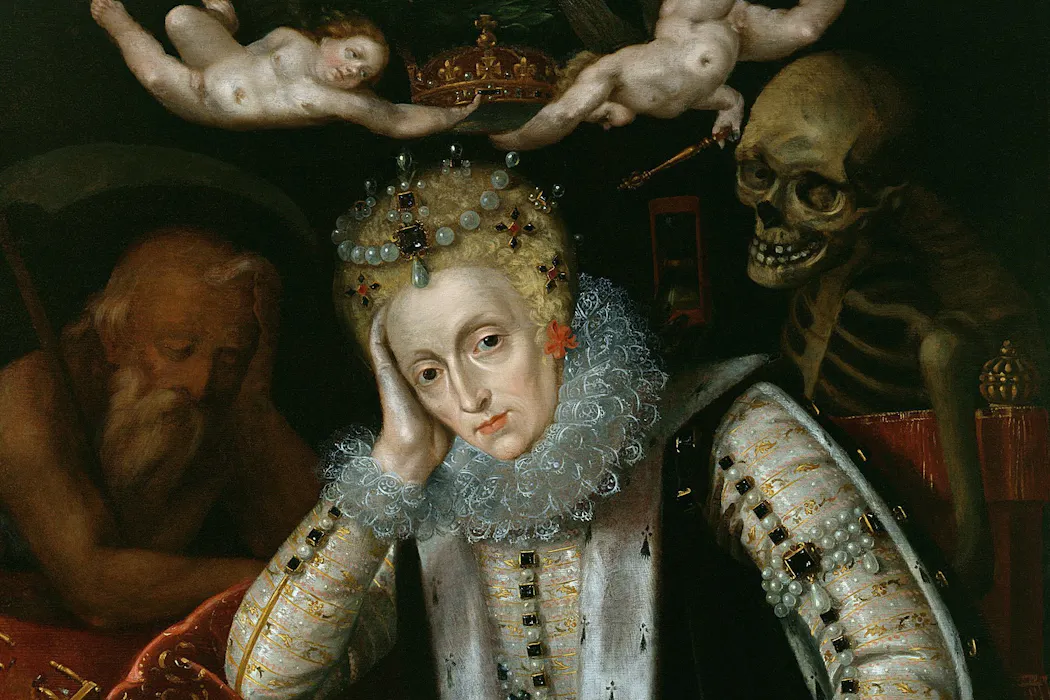
Allegorical Portrait of Elizabeth I, unknown artist (1610). Corsham Court

In March 1603, Elizabeth I refused to go to bed. For days, she sat on cushions in her Richmond Palace chamber, silent and withdrawn, as her courtiers waited for the end. It’s a final moment that can be read not simply as the failing of her body, but as the last expression of a life defined by the quest for control.

Elizabeth’s vitality had been central to her image, so her retreat marked a striking change. The Venetian envoy Scaramelli and the courtiers John Clapham and Robert Carey describe her prolonged withdrawal from court, sleeplessness and rejection of food. Clapham noted that Elizabeth sat for six days without sleep and wanted to die.

Sign up to read this article
Read news from 100's of titles, curated specifically for you.
Already a member? Sign in here
Related Stories
Top stories on inkl right now
One subscription that gives you access to news from hundreds of sites
Already a member? Sign in here
Our Picks
Fourteen days free
Download the app
One app. One membership.
100+ trusted global sources.