Former Theranos CEO Elizabeth Holmes has been approved for placement in a halfway house and is scheduled to move to the Austin Transitional Center in Del Valle, Texas, on Aug. 23, 2027, ABC News reported, citing a Justice Department notification. Her projected release date is now Feb. 22, 2030. Her sentence was reduced from 11 years and 3 months to 10 years and 3 months through a retroactive change to federal sentencing guidelines and time credits earned under the First Step Act.
The news landed the same day a federal advisory panel voted in favor of Galleri, a blood test designed to screen for many types of cancer. Nothing suggests Galleri resembles Theranos. The contrast is useful because the panel's public vote showed the kind of evidence review that Holmes' company never passed.

Holmes was convicted of defrauding investors with false claims about her company's blood-testing technology. For patients, her case left a lasting question: When a lab or company says a test works, who has checked?
Her sentence changes do not alter her conviction. In November 2024, a federal appeals court upheld her fraud convictions and a $452 million restitution order. U.S. District Judge Edward Davila wrote in a March order that her "revised sentence continues to reflect a just punishment for her serious offense."
Two Paths for Proving a Lab Test Works
In the United States, diagnostic tests generally reach patients through two routes. Test kits and systems sold to labs are regulated by the FDA as medical devices, and higher-risk tests may need premarket approval. Tests designed and run inside a single laboratory, known as lab-developed tests, have mainly been overseen through the Clinical Laboratory Improvement Amendments (CLIA) program run by the Centers for Medicare & Medicaid Services.
The two systems check different things. According to a CMS explainer on lab-developed tests, CLIA regulates laboratories to ensure accurate and reliable results, while the FDA reviews devices to ensure they are reasonably safe and effective. In plain terms, lab certification focuses on whether a lab measures correctly, while FDA review can also examine whether a result is clinically meaningful.
That gap has been debated for years. The FDA finalized a rule in 2024 to regulate most lab-developed tests as devices, but a federal court in Texas vacated it in March 2025, and the agency then moved to rescind it, according to a legal analysis by Hogan Lovells. Most lab-developed tests therefore remain outside FDA premarket review. Patients usually cannot tell from a lab report which path a test took, which is why asking matters directly.
The Galleri Vote Shows the Evidence Bar in Action
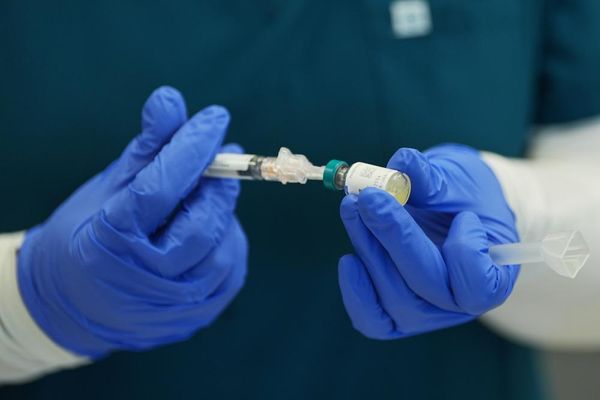
The FDA's Molecular and Clinical Genetics Panel reviewed Grail's application for Galleri, intended for adults 50 and older. Panelists voted 10 to 0 that there was reasonable assurance the test is safe, 6 to 4 on effectiveness, and 7 to 2, with one abstention, that its benefits outweigh its risks, according to STAT. The FDA is not bound by the vote and is expected to decide in the coming months.
Galleri does not diagnose cancer. Grail says it can detect signals from up to 50 types of cancer, and any positive result must be confirmed with further testing. The application draws on large studies in the United States and in England's National Health Service.
People can already get Galleri by prescription, before any FDA decision, which shows how the two-track system works. A test can reach patients through a certified lab before the FDA completes a premarket review.
Dr. Phil Castle, director of the National Cancer Institute's Division of Cancer Prevention, urged caution before the vote. "Routine approval and broad population rollout would risk harm and waste resources," he said, according to NPR. The panel recommended that marketing tell patients to continue routine screenings and avoid calling Galleri an early detection tool.
Dr. Michelle Tarver, who leads the FDA's Center for Devices and Radiological Health, said the concept "represents a genuinely promising opportunity." The test costs $949, NPR reported, and FDA approval could affect whether insurers cover it.
Questions Patients Can Ask Before Trusting a Result
Most routine blood work is well established and performed in certified labs. The questions below matter most for newer, expensive, or direct-to-consumer tests, especially those promising to detect serious disease early.
Patients can ask whether a test is FDA-approved or cleared, or whether it is a lab-developed test. They can also ask whether the lab holds CLIA certification, how often the test gives false positives or misses disease, and whether a result would change their care. Asking about insurance coverage and the cost of follow-up scans or biopsies can prevent surprise bills.
False results carry real costs. A positive screening signal can lead to imaging, biopsies, and weeks of worry, while a negative result may offer false reassurance, a concern Castle raised at the meeting.
No screening test replaces medical evaluation for symptoms. Unexplained weight loss, persistent pain, blood in stool or urine, a new lump, or ongoing fatigue should prompt a visit to a clinician regardless of any test result. Recommended screenings, such as colonoscopies and mammograms, should continue unless a clinician advises otherwise.
Holmes' story will soon return to screens in You Can See Everything, a forthcoming documentary by Nathan Fielder, ABC reported. The more useful takeaway is practical: A trustworthy test comes with published evidence, a clear regulatory status, and honest limits.
Key Questions Answered
When will Elizabeth Holmes move to a halfway house? She is scheduled to be placed at the Austin Transitional Center in Del Valle, Texas, on Aug. 23, 2027, according to ABC News.
When is Holmes expected to be released? Her projected release date is Feb. 22, 2030, after her sentence was reduced to 10 years and 3 months.
What did FDA advisers decide about Galleri? The panel voted that the test is reasonably safe and that its benefits outweigh its risks for adults 50 and older, but split 6 to 4 on effectiveness. The FDA has not made a final decision.
Does Galleri diagnose cancer? No. It looks for a cancer signal that must be confirmed with additional tests.
How are lab tests checked in the U.S.? The FDA reviews many test kits as medical devices, while most lab-developed tests are overseen through the CLIA lab certification program.
What should I ask before taking a new test? Ask about its regulatory status, false-positive rate, whether results would change your care, and what follow-up testing could cost.
Published by Medicaldaily.com