Get all your news in one place.
100's of premium titles.
One app.
Start reading
MarketBeat
MarketBeat
Leo Miller

Eli Lilly Wins Back CVS Health, Reverting Novo's Advantage

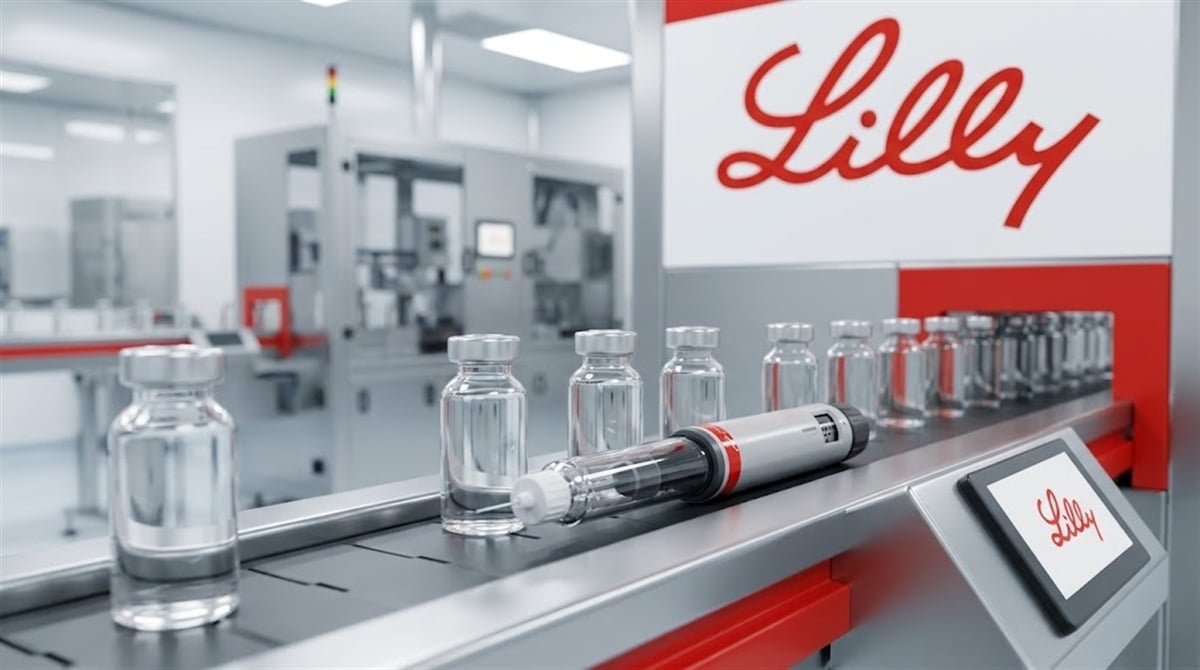
After its blockbuster Q1 2026 earnings report that caused shares to gain 9.8%, pharmaceutical behemoth Eli Lilly and Company (NYSE: LLY) continues to rack up wins. These include a Food and Drug Administration (FDA) proposal that would pressure compounders, as well as strong clinical results for its oral GLP-1, Foundayo.

Now, the company is back in the news with a key development that highlights its strong position in the GLP-1 arena. Lilly has reached an agreement with CVS Health (NYSE: CVS), the owner of the nation’s largest pharmacy benefit manager (PBM), Caremark. The agreement will extend coverage of Lilly’s top GLP-1s, allowing patients to access them through their existing insurance.

Clearly, this is a positive as it should increase demand for Lilly’s products. However, it also weakens Lilly’s biggest competitor, as CVS backtracks on its prior move to cut Lilly out of its coverage.

CVS Reunites With Lilly After Backing Novo

With this announcement, all three of the United States' largest PBMs will soon cover Lilly’s entire portfolio of approved obesity medications. Express Scripts, owned by Cigna Group (NYSE: CI), and Optum Rx, owned by UnitedHealth Group (NYSE: UNH), already covered the drugs. Caremark will begin to cover Foundayo on June 1, while coverage will begin on Oct. 1 for Zepbound.

However, what makes this announcement particularly interesting is the context. Just over a year ago, CVS struck a deal with Lilly’s main competitor, Novo Nordisk A/S (NYSE: NVO). This made Novo’s Wegovy CVS’s preferred GLP-1 treatment and excluded Zepbound from its coverage. Combined with its slightly disappointing earnings report on May 1, 2025, this power move between Lilly’s top rival and the largest PBM sent LLY shares down almost 12%.

Now, CVS has reneged on that decision that delivered a real blow to Lilly shares. According to a CVS spokesperson, “What this change means is that, for those clients that do (choose to provide coverage), they will have equal access to both the Novo and Lilly products, and consumers will have the same co-pays for each.” In other words, if an employer covers GLP-1s for obesity, their employees can access Novo and Lilly’s products equally and for the same co-pay.

This should largely reverse the negative effect of CVS’s initial decision—limiting access to Lilly’s drugs and hurting demand. Additionally, it removes the advantage that Novo had of being the only available option to CVS clients.

Timing is another positive aspect of this decision, as Lilly is looking to increase demand for Foundayo. Its oral GLP-1 has fallen behind Novo’s Wegovy pill—which received FDA approval several months earlier. By now being on equal footing with Novo within Caremark, Lilly may have an easier time catching up. Lilly shares gained by 4% on the day of this announcement as investors noticed the positive implications for the company.

Zooming in on Valuation Amid Lilly’s Rebound

Despite the many positive developments that Lilly has seen in late 2026, the stock has underperformed overall. Shares are down around 1% compared to the S&P 500’s gain of over 10%. This comes as its latest earnings really kicked off the recovery—prior to the report, shares were down nearly 21% in 2026. Now, Lilly trades less than 5% below its all-time high. Given this, it is worth examining the stock’s valuation to get a more complete understanding of the outlook for LLY shares.

Currently, the stock trades at a forward price-to-earnings (P/E) ratio near 29x. This is substantially above the S&P 500’s forward P/E near 21x, and even further above the S&P 500 healthcare sector’s forward P/E near 17x. Based on these measures, Lilly’s valuation looks fairly elevated.

However, when compared to Lilly’s own history, that is not the case. Over the past three years, Lilly’s average forward P/E is nearly 43x. Thus, its current level is around 33% below this average—a much more favorable comparison. When looking over the past 52 weeks, Lilly’s average forward P/E is around 30x, just slightly above its current level.

Lilly’s forward P/E has also come down meaningfully from 32x—when the stock traded near its current price in February. This signals that earnings estimates have caught up with the stock price a bit—a positive signal. Overall, Lilly is certainly not a cheap stock, and it will need to continue putting up strong growth in order to maintain its valuation. However, these metrics show that it is also not a name that necessarily screams "overvalued."

Analysts Remain Constructive on Lilly’s Upside Potential

The outlook for Lilly shares, according to Wall Street analyst price targets, remains positive. The MarketBeat consensus price target on the stock currently sits near $1,227, implying about 15% upside in shares.

The average of targets updated after the company’s earnings report is moderately higher at $1,239.

Among these updates, Rothschild & Co Redburn’s $900 target is the most bearish. Meanwhile, Barclay’s $1,400 target is the most bullish.

The article "Eli Lilly Wins Back CVS Health, Reverting Novo's Advantage" first appeared on MarketBeat.

Sign up to read this article
Read news from 100's of titles, curated specifically for you.
Already a member? Sign in here
Related Stories
Top stories on inkl right now
One subscription that gives you access to news from hundreds of sites
Already a member? Sign in here
Our Picks
Fourteen days free
Download the app
One app. One membership.
100+ trusted global sources.