
Get all your news in one place.
100's of premium titles.
One app.
Start reading
Tom’s Hardware
Tom’s Hardware
Technology
Mark Tyson

Electronics enthusiast begins breadboard-based Intel 386 system build — a large step up from their previous PC-XT and PC-AT breadboard projects

Breadboard-based 386 PC project.

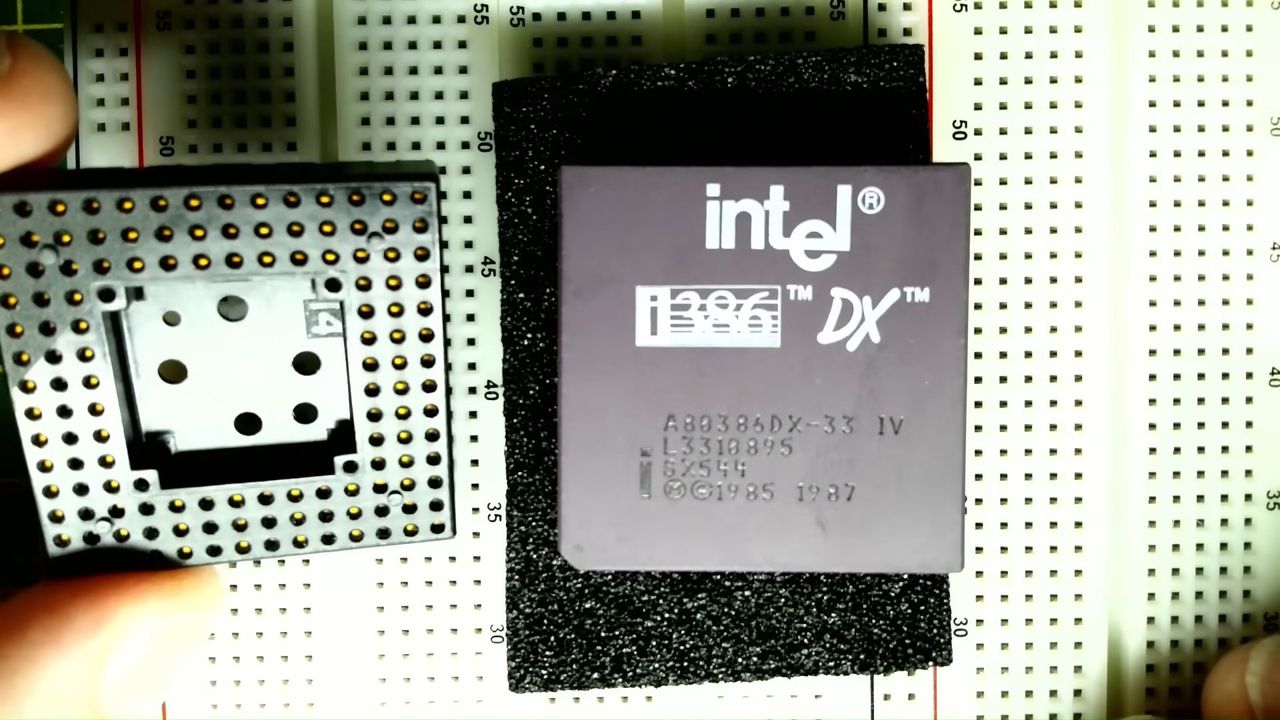
Motherboards, who needs them? Not Breadboarding Labs, which recently outlined plans to build a retro Intel 80386 (i386) PC using solderless breadboards. Don’t worry, this project isn’t pie-in-the-sky. Breadboarding Labs has two prior similar and successful feats behind them – two breadboard-based PC-XT and PC-AT (Intel 8088) computers. However, this new project, aiming to replicate the functionality of Compaq’s milestone DeskPro 386 system, will be a tougher challenge.

A new breadboard PC project based on the 386 CPU is a more advanced electronics maker task due to the generations newer, relatively complex hardware involved. The maker will be spared making everything from scratch, though, as some breadboard modules from previous 8088 projects will be able to be reused.

(Image credit: Breadboarding Labs)

The 386 Breadboard PC will be able to reuse the following prior works:

  • Clock and bus controller
  • MDA video controller
  • CGA video controller
  • Timer
  • Parallel port
  • Speaker
  • Real-time clock
  • Serial port
  • Dual interrupt controller
  • Power on self test port
  • IDE hard disk and controller
Prior breadboard-based 8088 PC project (Image credit: Breadboarding Labs)

Above you can see an annotated image showing the maker’s immediately previous project, the Breadboard PC 8088 Version 2. It is clear some of those assemblies will be taken forward for the 386 Breadboard PC project.

There remains a lot of extra work that needs addressing to complete the 386 project, such as:

  • 80386 CPU interface
  • 32-bit RAM, DMA, 16-bit ISA bus
  • 16-bit DMA
  • Timer 2 and variable speed control
  • DMA-free DRAM refresh logic
  • 16/8 MHz (reduced clocks)
  • PS/2 mouse and keyboard
  • VGA video
  • 3.5-inch floppy drive and controller

Work will begin with the breadboard adapter for the 386 CPU. This will be a significant challenge compared to the prior 8088 processor-based systems the enthusiast has made. Not least because a 386 chip has 136 pins that need wiring up, compared with just 40 for the 8088.

If you are interested in following the progress of the freshly started 386 Breadboard PC project, then it will be worth staying tuned to the YouTube channel. We also hope to keep up to date with this and check out the finished remake. Some performance tests and comparisons of the functioning PC system would be very interesting to see. Overall, it is a far more complex grade of PC DIY than we are accustomed to.

Sign up to read this article
Read news from 100's of titles, curated specifically for you.
Already a member? Sign in here
Related Stories
Top stories on inkl right now
Our Picks
Fourteen days free
Download the app
One app. One membership.
100+ trusted global sources.