
Get all your news in one place.
100's of premium titles.
One app.
Start reading
Cycling News
Cycling News
Sport
Dani Ostanek

Eight things we learnt from a spellbinding edition of the Tour de France Femmes

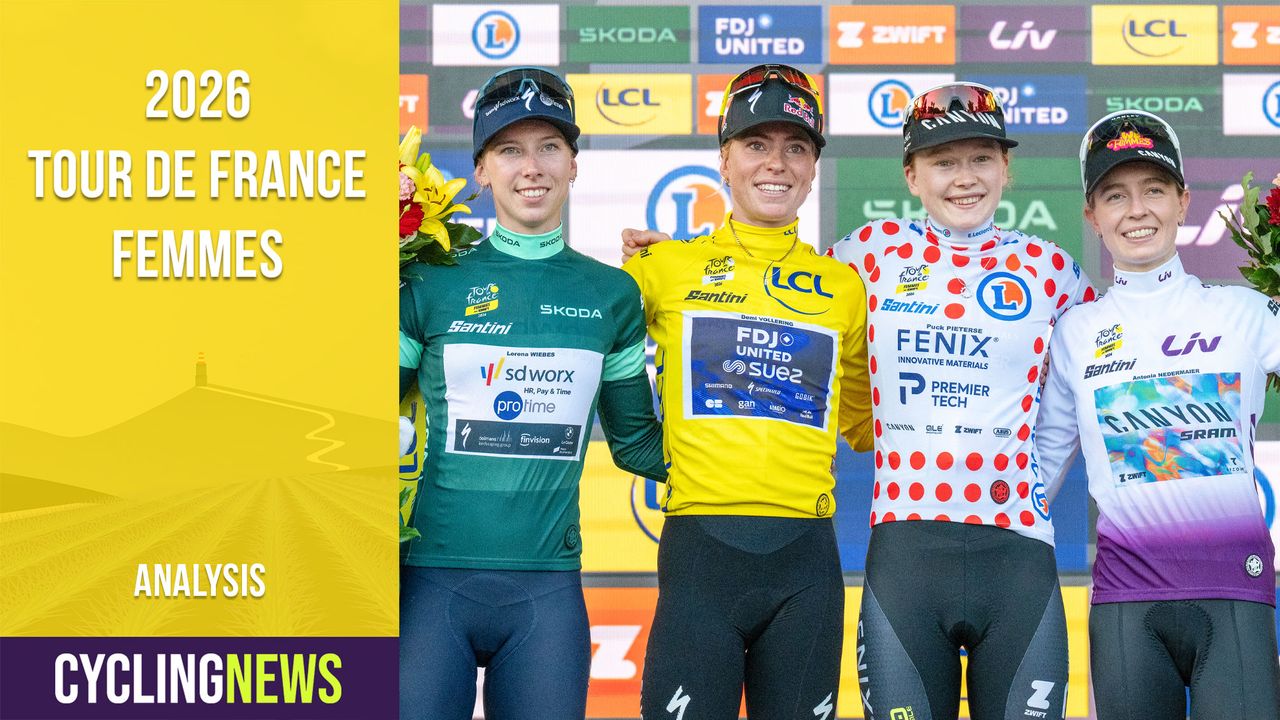
NICE, FRANCE - AUGUST 9: Lorena Wiebes of Netherlands and TEAM SD WORX PROTIME (left), Demi Vollering of Netherlands and FDJ UNITED - SUEZ, Puck Pieterse of Netherlands and FENIX-PREMIER TECH, and Antonia Niedermaier of Germany and CANYON//SRAM (right) celebrating at the podium of after the 5th Tour de France Femmes 2026, Stage 9 a 99.2km stage from Nice to Nice / #UCIWWT / August 9, 2026 in Nice, France. (Photo by Silvina Brodersohn - CameraSport via Getty Images).

After a fantastically entertaining final weekend in Nice, the Tour de France Femmes avec Zwift is over for another year, and the latest winner has been crowned after a thrilling finale on the Côte d'Azur.

Following a hard-fought battle that saw her win three stages but only take yellow on the penultimate day, Demi Vollering (FDJ United-SUEZ) became the first rider to win this race twice in the modern era, and brought the yellow jersey home to a French team for the first time.

In its fifth year of existence, the Tour de France Femmes somehow just keeps getting better, and this year was no exception, with a decisive and challenging time trial, a historic ascent of Mont Ventoux, and a perfectly-designed finale that kept the battle alive up until the very last hour of racing.

We've covered the whole event in depth with news, analysis and exclusive interviews, but as the dust settles on this year's edition, it's time to look back on a truly fantastic nine days of racing, and what it means for its protagonists, the sport and the races still to come this year.

After 10 days on the ground in Switzerland and France, here are eight key things we learnt from the 2026 Tour de France Femmes

The Vollering - Niewiadoma-Phinney rivalry continues, but it’s far from predictable

Cycling, as we've seen proven time and again through the years, is a sport of generations. The Classics and the Grand Tours always bear witness to extended spells of dominance by a handful of riders before they naturally age out of contention and the next generation comes along.

In recent years, the men's Tour de France has been dominated by the Pogačar - Vingegaard rivalry, the two men duking it over the yellow jersey year after year at a level well above their GC rivals.

With the conclusion of the 2026 edition, the Tour de France Femmes can say that it's firmly in the Vollering - Niewiadoma-Phinney era. The final three stages of this year's race played host to a thrilling back-and-forth battle between the pair, with more contention than past years, too, after the events of stage 8. As things stand, they’re the only riders to have stood on the podium of every edition of the Tour.

Demi Vollering vs Kasia Niewiadoma-Phinney is the major rivalry of the the Tour de France Femmes (Image credit: Getty Images)

Both came into the race among the very top favourites for the yellow jersey, but with the likes of Pauline Ferrand-Prévot, Marlen Reusser, Elisa Longo Borghini, and more also racing, their success was far from a foregone conclusion.

Without wishing to constantly compare women's and men's racing, that simply isn't the case at the men's Tour, where few others beyond the 'big two' stand a realistic shot at yellow. There are no such foregone conclusions at the Femmes, and we should be grateful for that. (DO)

Pauline Ferrand-Prévot is not untouchable – in fact she still has a lot to learn

A year ago, Pauline Ferrand-Prévot was an unstoppable force as she sailed to her first Tour de France Femmes title, and I think we were all expecting a similar show of strength in this year's edition. Vollering had had the more impressive season beforehand, sure, but PFP's singular focus and unrivalled commitment to training and form was expected to bring her back to the Tour in fantastic shape.

But instead, her race was pretty much a flop, rarely matching the level of the best riders, neither on the punchier stages, the time trial nor the long climb of Mont Ventoux before dropping out with a vague illness.

Reigning champion Pauline Ferrand-Prévot struggled during the race before withdrawing (Image credit: Getty Images)

The Frenchwoman was in good spirits and not frustrated by her performance, but this week has dispelled the idea that perhaps we had last year that if she puts her mind to something, she can do it at will. Clearly, the TT is still a major weakness that you have only been able to improve so much, and even her dialled training approach can fail her and bring her to the Tour without the level to compete.

Ferrand-Prévot has already achieved her major goal of winning the Tour and she's still a legendary and decorated rider. However, after thinking last year that she could just pick an aim and achieve it straightforwardly, this year has reminded us that she is human and fallible, and even she still have areas to improve and learn. (MP)

Route design is everything

It's not controversial to say that this Tour de France Femmes was one of the best, if not the best, editions of the race in terms of excitement, intrigue and competition. But that wasn't just down to the talented riders, most of whom have been here every year. It was also down to the route design.

When the route was unveiled last autumn, it was clear that the route designers had gone big on difficulty, eschewing the flat sprint stages in favour of multiple one-day-style punchy routes and, crucially, a time trial. They opted for just one mountaintop finish on Ventoux, and a circuit race finale that could keep things alive to the final day.

It was a little bit of a gamble, I think, because the race could have been signed, sealed and delivered on Ventoux on Friday and the final weekend could have been a bit anti-climactic, but actually, I think the organisers got it just right. They know the dynamics of cycling and they designed the route to reach a high point in its final few days.

Tour organisers struck gold with a route which encouraged attacks (Image credit: Getty Images)

And that's exactly what we got. The GC riders tested their legs as early as the first day in Lausanne, and took every single opportunity to race, be it on stage 5, Ventoux, or the Col d'Eze finale. The time trial also offered fantastic intrigue, bringing Marlen Reusser into the fight and ensuring the winner was a true all-rounder.

By including punchy stages but only one big climb, the route ensured that there were time gaps and an extended GC fight, but the gaps were never once big enough to be considered done, not until Vollering crossed the line on Sunday.

Grand Tours will always have mountaintop finishes and sprint stages, but it's what the route includes between those extremes which really makes the race, and this Tour got that utterly spot on. (MP)

The level is high enough to add more stages

The topic of race expansion seems to be brought up year after year in women's cycling, from the length of Classics and stages to the number of days featuring in a Grand Tour.

This summer, after five years of the race, it seems barely believable that the Tour de France Femmes didn't even exist before 2022, with the one-day La Course running as its predecessor since 2014.

Since its inception, the Tour has grown from eight stages in its first three years to nine stages in 2025 and 2026. This year's was, by the numbers, the toughest edition yet, featuring 18,795 metres of elevation gain as three hours covered first to last places.

Is it time to add another stage? The final stages certainly left us wanting more, with exciting racing all the way to the finish line, and another mountain stage – not necessarily another summit finish – wouldn’t have gone amiss.

2026 Tour de France Femmes stage 7: the third chase group on the Mont Ventoux (Image credit: Getty Images)

Women riders are often asked if they'd like to race three weeks, and Cédrine Kerbaol, who finished sixth overall, told L'Equipe after the race that she'd be "very happy" if the Tour were expanded to that length, even if "my teammates don't share that opinion."

Three weeks might be too far of a leap right now, but the level of competition at the Tour means that it could certainly expand to 10 or 11 days, or maybe even 12 with the addition of a rest day. The gradual expansion has worked so far, after all.

Meanwhile, in her closing press conference, Elisa Longo Borghini reminded us of the importance of supporting women's racing at lower levels and the youth ranks, too.

"We are reaching a great level in general in cycling. What I would like to see is the base to be a little bit more wide, let's say, and to not see small teams disappearing. Because otherwise we will not have a change of generation. Young girls will not have a chance to have experience," she said. (DO)

Célia Gery was the MVP of the Tour

Célia Gery's debut Tour ended in a bit of a cloud as the 20-year-old found herself at the centre of drama and online nastiness after a racing clash with Kasia Niewiadoma-Phinney. But we shouldn't forget that she was one of the most influential, important and strong riders of the entire race.

Juliette Berthet may have won the official, fan-voted teammate of the race prize, but honestly, I'd have given it to Gery. Only 20 this year, U23 World Champion Gery has already won the elite French National Championships and been entrusted to join Demi Vollering at two Grand Tours, and this week it was clear to see why. The Frenchwoman is so strong, often the last rider left with Vollering on the punchy stages, and really brave with her riding despite being one of the youngest riders in the bunch.

You could argue that riders like Berthet and Évita Muzic had a slightly lacklustre race compared to previous years, though I'm sure they did important work that we didn't always see. But Gery was always there, always making the race, and I don't think Vollering could have won this race without her.

French champion Célia Gery was a standout performer in service of Demi Vollering (Image credit: Getty Images)

The other point of strength is that Gery did not get overexcited or drawn into her own ambitions, and every attack was smart and to the benefit of the team. And to be honest, that move on Niewiadoma-Phinney, whether she liked it or not, was a really bold one from Gery, a rider who is willing to fight tooth and nail for the win.

As long as it's legal, we shouldn't punish that tenacity. She wasn't rewarded with a stage win like she was at the Giro d'Italia, but she got to be part of the first French team to win the yellow jersey, and surely carved out her place in Tour teams for years to come. (MP)

The next generation is waiting in the wings

The main storyline of the Tour saw a host of established GC stars battle it out at the top of the standings. However, there were several standout performances from the next generation of riders who will inevitably be in a similar position in the years to come.

In Nice, the final top 10 featured three riders aged 23 or under in Antonia Niedermaier, Paula Blasi, and Isabella Holmgren, with the former pair spending much of their race working for more experienced GC leaders in Niewiadoma-Phinney and Longo Borghini.

Paula Blasi and Antonia Niedermaier were among the young riders to shine during the race (Image credit: Getty Images)

This time next year, both may be leading their own teams, if rumoured transfers are to be believed, with Niewiadoma-Phinney rumoured to be joining Holmgren at Lidl-Trek, and Blasi seemingly set for a Movistar switch.

All three are already Grand Tour forces in their own right, and they’re all still growing and improving as riders, too. Niedermaier took the white jersey home, while Blasi – second on the final stage – and Holmgren – launching a solo attack on the Col d’Eze – both went out with a bang.

You can also add 20-year-old Gery, immaculate in her service for Vollering at both Giro and Tour, and 25-year-old Niamh Fisher-Black, still on the rise as a GC racer, after her switch to Lidl-Trek last year, to the list. (DO)

From feast to famine for French riders

Last summer saw the home nation experience its most successful Tour de France Femmes yet as Pauline Ferrand-Prévot won France’s first yellow jersey in decades while she and breakout star Maëva Squiban shared four of the race’s nine stages between them.

This year, the end results for home riders made far bleaker reading, even if home team FDJ United-SUEZ took home the yellow jersey with Demi Vollering’s second triumph.

Beyond the French squad’s success, there was little to shout about for the masses of French fans at the roadside. EF Education-Oatly’s Cedrine Kerbaol was the sole shining light as far as the general classification goes, improving on her eighth place last year to sixth this time around. She also took the home nation’s only stage podium finish with a second place behind Kim Le Court-Pienaar in Tournon-sur-Rhone.

Ferrand-Prévot, meanwhile, was well below the astonishing level she showed last year. The Visma-Lease a Bike leader lost two minutes in the time trial and two more in the hills the next stage before cracking altogether on Mont Ventoux and withdrawing with a reported illness the next morning.

Home fans didn't have a lot to cheer for as French riders largely failed to make an impact (Image credit: Getty Images)

It’s not all bad news for France, however – young guns Célia Gery and Ferrand-Prévot’s teammate, 21-year-old Marion Bunel who took third at La Vuelta, look certain to contest Grand Tours in the near future.

Then there’s Maëva Squiban, who switched from swashbuckling freelance attacker to domestique this year, though won’t always be consigned to that role, and Ferrand-Prévot, who will surely be back to battle for another yellow jersey. (DO)

The appetite and viewership for full TV coverage is there

Those of us who have been involved in women's cycling for years have been banging on about TV coverage for ages, when we had to ask and fight for there to be any coverage at all of even the biggest races. Thanks to a combination of fan interest, investment and UCI rules, coverage of the Women's WorldTour is now better than ever. But the Tour de France showed that viewers still want more – and that asking for more coverage is now a mainstream opinion, not the reserve of a select few women's cycling obsessives.

The coverage this year was more extensive than ever, with three stages shown in full, but the racing convinced most of us that full coverage of every stage would be completely justified. Stage 3 seemed to be the most galvanising, with the two hours of live coverage meaning that we never got to see the winning attack from Sigrid Haugset (Uno-X Mobility), and reminding us that just showing the second half of a race is no longer enough.

Tour de France Femmes race director Marion Rousse is hoping for full coverage of the race in future (Image credit: Getty Images)

Of course, there are financial considerations, and the broadcasters and organisers have to see the economics of such a move, but TV viewership this year is surely on the way to justifying such a move. Full figures aren't out yet, but France TV said that over 2 million people watched the opening stage last Saturday, only 20% less than the figures for the opening men's stage, and Dutch broadcaster NOS reported that viewing figures for the Ventoux stage exceeded viewership for all but two stages of the men's race.

"I've discussed this at length with France Télévisions and we’re giving serious consideration to broadcasting all the stages in full in the future because the women deserve it, and because it works well in terms of audience figures," race director Marion Rousse said on the topic. "We’re currently giving it real consideration, which is a step forward. Things are moving in the right direction.”

Whether it's full coverage next year or expanded coverage and flag-to-finish images in the future, Rousse is right that things are definitely going in the right direction. Coverage that matches the men's race is already wanted, and is surely not far from being achievable. (MP)

Support our unrivalled coverage of the Tour de France Femmes and women's cycling by subscribing to Cyclingnews. In return, you get unlimited access to high-quality journalism, with breaking news, race analysis, and expert insight from inside the women's peloton. Plus, the Cyclingnews app lets you follow the action wherever you go! Join today.

Sign up to read this article
Read news from 100's of titles, curated specifically for you.
Already a member? Sign in here
Related Stories
Top stories on inkl right now
One subscription that gives you access to news from hundreds of sites
Already a member? Sign in here
Our Picks
Fourteen days free
Download the app
One app. One membership.
100+ trusted global sources.







