
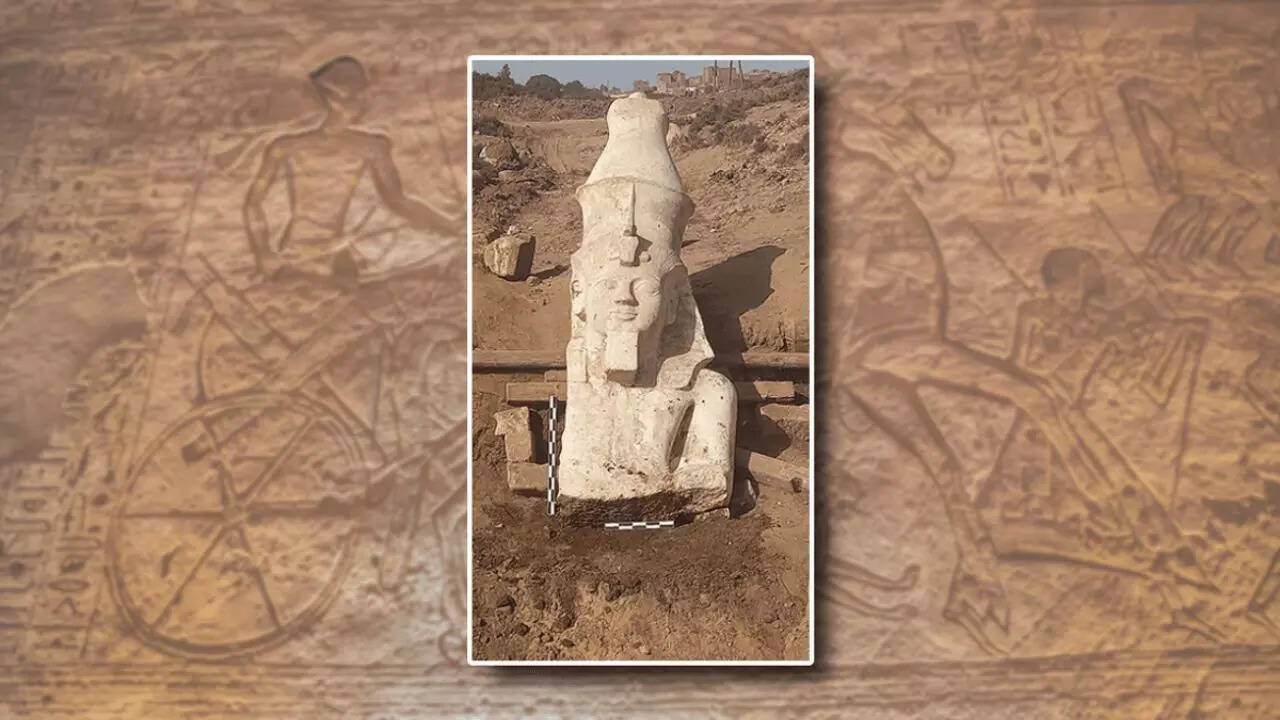
Hidden beneath Egypt’s shifting sands for almost a century, a missing piece of history has quietly returned. Archaeologists working in central Egypt have uncovered the upper section of a colossal seated statue of Ramesses II, one of the country’s most recognisable rulers. The fragment connects to a lower portion discovered in the 1930s, sparking renewed interest in restoring the monument as a single sculpture. Experts say the discovery appears unusually well preserved, with traces of original pigment still clinging to the limestone surface. The broader significance might lie in what it reveals about royal imagery beyond Egypt’s main temple cities. Sometimes archaeology feels like detective work stretched across generations, and this discovery fits that description almost perfectly.













