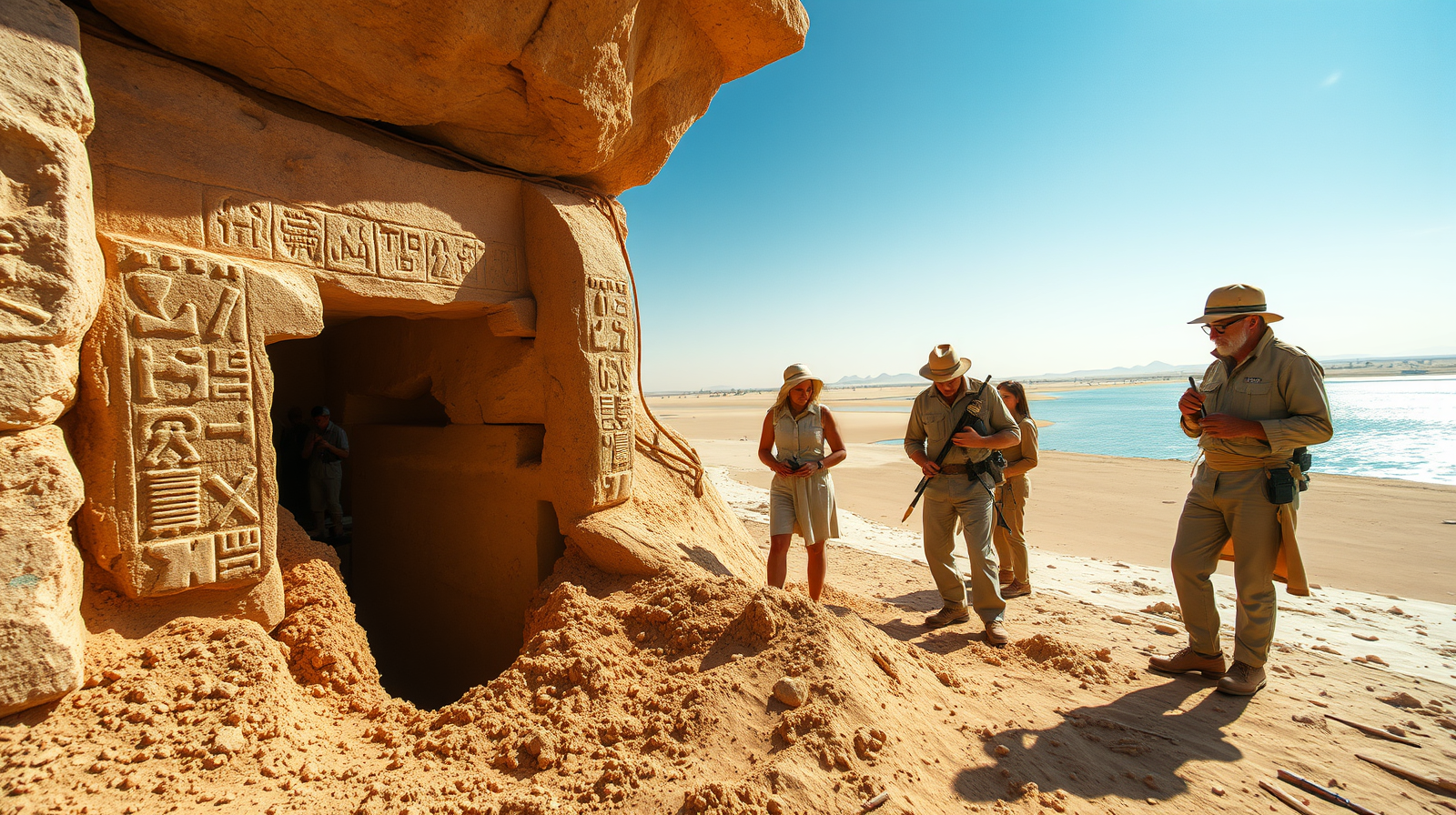
The pyramids of Egypt are so iconic that it's easy to forget they had to be invented. Somebody, at some point, had to figure out how to build increasingly ambitious stone structures and that process of trial and error didn't happen overnight. A new discovery on the eastern bank of the Nile in Egypt's Minya Governorate is now offering rare physical evidence of what that experimental phase looked like. Archaeologists from Egypt's Supreme Council of Antiquities have uncovered two Early Dynastic tombs at the Jabal al-Tayr site dating back roughly 5,000 years, along with a cluster of older Predynastic burials and later graves from the Late Period. Taken together, the finds suggest this stretch of the Nile was a significant burial ground for millennia and that the people who built these early tombs were already working with engineering ideas that would eventually lead to the step pyramid and beyond.
The Jabal al-Tayr excavation: what the Supreme Council of Antiquities found at this Minya necropolis