Capital markets still rely on more manual coordination than most institutions admit. Settlement cycles, reconciliation, documentation, and cross border compliance often depend on human paced processes that introduce delays, data errors, and visibility gaps. Those weaknesses can stay hidden in normal conditions. They become unavoidable when transactions are large, multi-jurisdictional, or connected to sovereign and state linked assets where auditability and certainty are non-negotiable.
This is the context in which EDENA Capital Partners positions its work. With operations originating in 2023 and the formal establishment of its global headquarters in Singapore in 2025, EDENA is built around a clear premise: the limiting factor in global finance is no longer access to data or capital, it is operational integrity. When infrastructure cannot move assets cleanly, risk compounds in the gaps. When infrastructure can, capital formation accelerates because trust becomes easier to verify at scale.
Sovereign grade is not a marketing label. It is a system requirement. In practice, sovereign grade infrastructure must make three things true at the same time. Assets must be enforceable and verifiable across jurisdictions, not merely represented digitally. The workflow must reduce discretionary manual handling that creates latency and disputes. Governance must be legible to regulators and compatible with the standards state linked entities operate under. This is the bar EDENA is designed to meet, and it is why its language consistently centers on reliability, security, and institutional permanence.
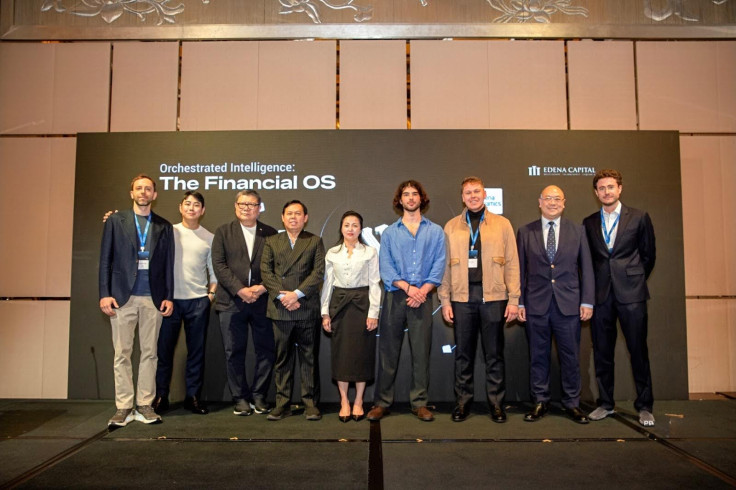
EDENA's core construct is the Autonomic Financial OS. The concept reflects how modern markets are evolving. As finance moves toward machine speed execution, infrastructure cannot depend on human speed for the most sensitive steps. EDENA frames the solution as autonomic, meaning critical processes are designed for automated execution with embedded controls, rather than being stitched together through back office coordination. The target is not novelty. The target is reducing operational fragility by removing the points where manual delays and mismatched data typically enter the system.
Settlement is where this shift becomes measurable. EDENA emphasizes T plus zero settlement because time gaps create exposure. When settlement stretches out, liquidity is tied up, collateral becomes less efficient, and reconciliation burdens expand. Compressing the settlement window forces precision in permissions, data consistency, and finality. It also aligns with the reality that AI increases throughput across markets, which raises the cost of operational breaks. In an AI scaled environment, the infrastructure must carry higher velocity without increasing error rates.
Security is the other non-negotiable layer. Sovereign grade systems cannot treat security as a perimeter problem. They must assume adversarial behavior and build for resilience. EDENA's positioning includes a technology alliance designed to support critical infrastructure protection and behavioral threat analytics, which is how institutional systems reduce silent risk accumulation over time. The goal is not simply to prevent incidents. It is to sustain continuity under stress while preserving audit trails, permissions, and controls.
EDENA also frames interoperability as part of infrastructure credibility. Sovereign-grade rails must connect into institutional liquidity, not exist as an isolated environment. EDENA references integration with established networks and technologies, including Cantor8, Canton Network, ZKsync, and Chainlink, as part of the broader architecture narrative. In institutional terms, the relevance is functional. Can the system operate within permissioned frameworks? Can it support regulated workflows? Can it coordinate data integrity across participants without creating new reconciliation failure points?
Scale is not an afterthought in this model. EDENA states it is managing an initial pipeline exceeding twenty billion dollars across sovereign energy, infrastructure, and natural capital projects. Pipeline should be read correctly. It represents scope and migration intent, not a completed balance sheet. Still, the existence of a sovereign linked pipeline changes the infrastructure requirements because these assets demand governance, reporting discipline, and risk controls that cannot be improvised later. Systems built for small scale experimentation rarely survive sovereign scrutiny. Infrastructure built for sovereign scrutiny becomes a foundation institutions can adopt with confidence.
EDENA's geographic strategy reinforces the same thesis of institutional rigor. Geography is therefore a strategic pillar of EDENA's value-capture model. While global operations are anchored by the Singapore headquarters, Hong Kong serves as the primary engine for global asset management and the epicenter of EDENA's financial infrastructure. The Hong Kong AMC holds the core intellectual property (IP) of the OS and maintains the exclusive mandate to manage the global pipeline, bridging strategic operating nodes in Jakarta and Seoul into the world's most sophisticated capital markets. This centralization in Hong Kong creates a definitive institutional gateway for sovereign-grade assets seeking global liquidity. This layout signals where regulatory coordination, market access, and execution capability must coexist to bridge sovereign assets into global markets.

The NYSE roadmap fits inside this infrastructure narrative as institutional signaling. EDENA has referenced a roadmap aimed at developing a global listing framework aligned with regulated digital securities. This is best understood as a direction of travel and a credibility anchor, not a promise of timing. In sovereign grade infrastructure, trust is built through sequence. Governance first. Control first. Operational reliability first. Distribution and venue expansion then follow from foundations that are already proven.
EDENA's position is direct. Legacy finance is moving into an era where AI increases velocity, complexity, and the cost of errors, and markets will demand a master rail that can carry regulated assets with speed, proof, and resilience. EDENA is built as institutional infrastructure, an operating system layer for sovereign grade finance, designed to reduce human error, automate critical workflows, and support the standards that governments and large allocators require. This is the case for sovereign grade infrastructure, and it is the work EDENA is executing.