Get all your news in one place.
100's of premium titles.
One app.
Start reading
Medical Daily
Medical Daily
Dorothy Brooks

Ebola Has Now Spread to a Fourth DRC Province Near the South Sudan Border as Regional Health Concerns Grow

The Bundibugyo Ebola outbreak spreading across the Democratic Republic of the Congo has reached a new geographic boundary — and the consequences for containment are significant.

A case was detected in Haut-Uele province after a patient traveled from Ituri province, the outbreak's epicenter. Haut-Uele is north of Ituri and borders South Sudan and the Central African Republic. With Haut-Uele joining Ituri, North Kivu, and South Kivu, the country's entire northeast — home to around 15 million people — is now affected.

The outbreak stands at 1,274 confirmed cases in DRC, with 360 deaths, as of July 1. A subsequent Al Jazeera update on June 30 put the confirmed total at 1,307 cases with 377 deaths, reflecting the outbreak's continued growth. Neighboring Uganda has 20 confirmed cases and two deaths.


Why This Matters

Every province that Ebola crosses represents a new set of community networks, health facilities, funeral customs, and cross-border movement patterns that contact tracers must map and contain. Haut-Uele is particularly significant because of its geography.

Like Ituri, the province sees heavy cross-border movement and trade, which health officials fear is helping the virus spread. South Sudan — which Haut-Uele borders to the north — has a high degree of political instability and "some of the weakest public health infrastructure in the region," according to the World Health Organization. An Ebola case imported into South Sudan would face a health system with substantially less capacity to detect, isolate, and respond than even the already-strained facilities in eastern DRC. WHO has estimated a 70 percent chance of Ebola spreading into South Sudan.

The Central African Republic, bordering Haut-Uele to the west, faces similar infrastructure challenges.


What We Know So Far

One case was detected after an infected person traveled from Bunia, Ituri's capital, into Haut-Uele. That person has since died. Authorities are now trying to trace the chain of transmission and identify contacts.

The outbreak was formally declared on May 15, 2026, though it is believed to have begun earlier — with some suspected cases dating back as far as January. The conflict-hit Ituri province remains the epicenter, reporting 1,165 cases and 301 deaths, according to health authorities. Scientists and aid workers say the real numbers are likely higher.

The growing outbreak has prompted the DRC government to ban mass public gatherings in the country's capital, Kinshasa. Mass gatherings have already been banned in Ituri, North and South Kivu, Haut-Uele, Bas-Uele, and Tshopo provinces.

In a significant development on the treatment front, the Administration for Strategic Preparedness and Response (ASPR), part of HHS, has said it is sending investigational doses of the monoclonal antibody MBP134 to DRC and Uganda for compassionate use. Developed by Mapp Biopharmaceuticals, MBP134 has demonstrated activity against multiple Ebola virus species and will be evaluated in a randomized clinical trial run by Oxford University.


What Is Making Containment So Difficult

The outbreak has also hit medical staff, with 78 health workers infected while 18 have died so far. Health care systems in the regions remain overwhelmed: Ebola treatment centers, set up with support from the WHO and aid groups, are operating at more than 138 percent capacity.

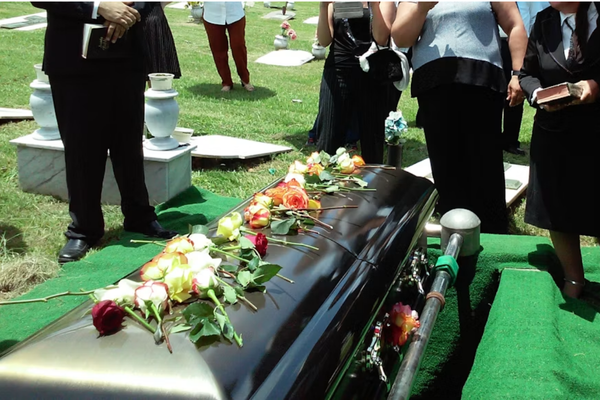
In many cases, the virus has spread at funerals, where the highly infectious bodies of Ebola victims are handled. In DRC, as in much of Africa, funerals often last several days, during which family and friends traditionally touch the body of the deceased. Health centers have reported incidents of angry confrontations after relatives demanded they hand over the body of their family member.

Contact tracing — the fundamental containment tool — remains critically below the level needed. The head of the Africa Centres for Disease Control and Prevention recently stated that the rate of contact tracing in DRC is far from where it needs to be to contain the viral hemorrhagic disease.

Opposition leaders have criticized the mass gathering bans as pretextual, accusing the government of using Ebola as an excuse to prevent protest marches. That political dynamic complicates community cooperation with response efforts.


What the Evidence Shows — and What It Does Not

The spread to a fourth province confirms the outbreak is not contained. That it reached Haut-Uele via a single traveler from Bunia is simultaneously troubling and potentially containing — if contact tracing can identify and monitor everyone the Haut-Uele patient encountered, the chain may be broken before community transmission in the new province is established.

Whether MBP134 will provide the treatment breakthrough the Bundibugyo outbreak needs remains to be determined by the upcoming clinical trial. The Bundibugyo strain has no approved vaccine or specific treatment — all management remains supportive care.


Who Faces the Greatest Risk?

  • The approximately 15 million people living in DRC's northeast, across all four now-affected provinces
  • Health care workers, who represent approximately 20 percent of case-patients in this outbreak — a fatality burden that threatens future response capacity
  • Residents and travelers crossing into South Sudan and the Central African Republic from Haut-Uele province
  • Americans who have traveled to DRC, Uganda, or South Sudan within the past 21 days should continue monitoring for symptoms

What You Can Do Now

If you have returned from DRC, Uganda, or South Sudan within the past 21 days, follow the CDC's Ebola situation summary and monitoring guidance for the 21-day self-monitoring protocol.

If symptoms develop — fever above 101.5°F, headache, muscle pain, weakness, diarrhea, vomiting, abdominal pain, or unexplained bleeding — do not go directly to a medical facility. Call 911 or your state health department first and disclose your travel history.

Note that the CDC currently recommends avoiding non-essential travel to Ituri, Nord-Kivu, and Sud-Kivu provinces in DRC. Given the spread to Haut-Uele, travelers should also avoid that province and monitor CDC's page for updated guidance as the situation evolves.

Check CDC.gov/ebola for updates as case counts and geographic spread continue to evolve.


What Happens Next

The Oxford University clinical trial of MBP134 is expected to begin in the coming days — the first experimental treatment trial specifically evaluated against Bundibugyo virus in an active outbreak. The 30-day entry restriction on non-U.S. nationals from DRC, Uganda, and South Sudan is next due for review in mid-July. MedicalDaily will continue reporting on geographic spread, case counts, and any trial developments.


The Bottom Line

Ebola has now crossed into a fourth DRC province bordering South Sudan and the Central African Republic — a geographic escalation with direct implications for cross-border spread into countries with even weaker health infrastructure than the already-strained facilities in eastern DRC. With confirmed cases now in the 1,274–1,307 range and climbing, 360–377 deaths, overwhelmed treatment centers, contact tracing far below needed levels, and community mistrust impeding safe burials, experts say the outbreak has not yet peaked. An experimental monoclonal antibody being sent for compassionate use may offer the first treatment option, but its benefit will not be known for weeks.

Sign up to read this article
Read news from 100's of titles, curated specifically for you.
Already a member? Sign in here
Related Stories
Top stories on inkl right now
One subscription that gives you access to news from hundreds of sites
Already a member? Sign in here
Our Picks
Fourteen days free
Download the app
One app. One membership.
100+ trusted global sources.