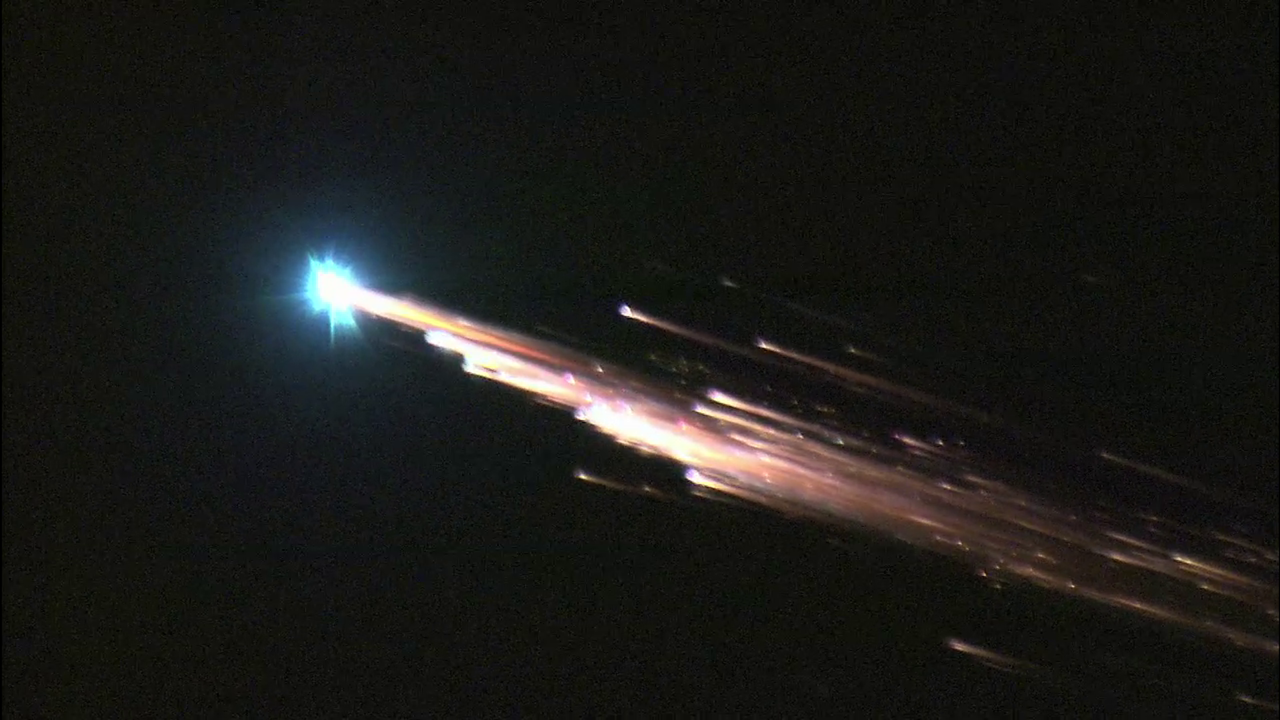
At least three large pieces of space debris — old satellites and spent rocket stages — fall back to Earth every day on average, but researchers have only a very limited understanding of where these potentially dangerous fragments land and what happens to them in the atmosphere. A new method, based on sonic boom tracking by earthquake sensors, could provide real-time information about the hurtling debris fragments' whereabouts.
In November 2022, Spain and France shut parts of their airspace for about 40 minutes as a giant piece of a Chinese rocket was predicted to potentially come crashing down in southern Europe. The shutdown diverted or delayed hundreds of flights and cost millions of dollars. The rocket body eventually reentered on the other side of the globe, reentering over the Pacific Ocean.