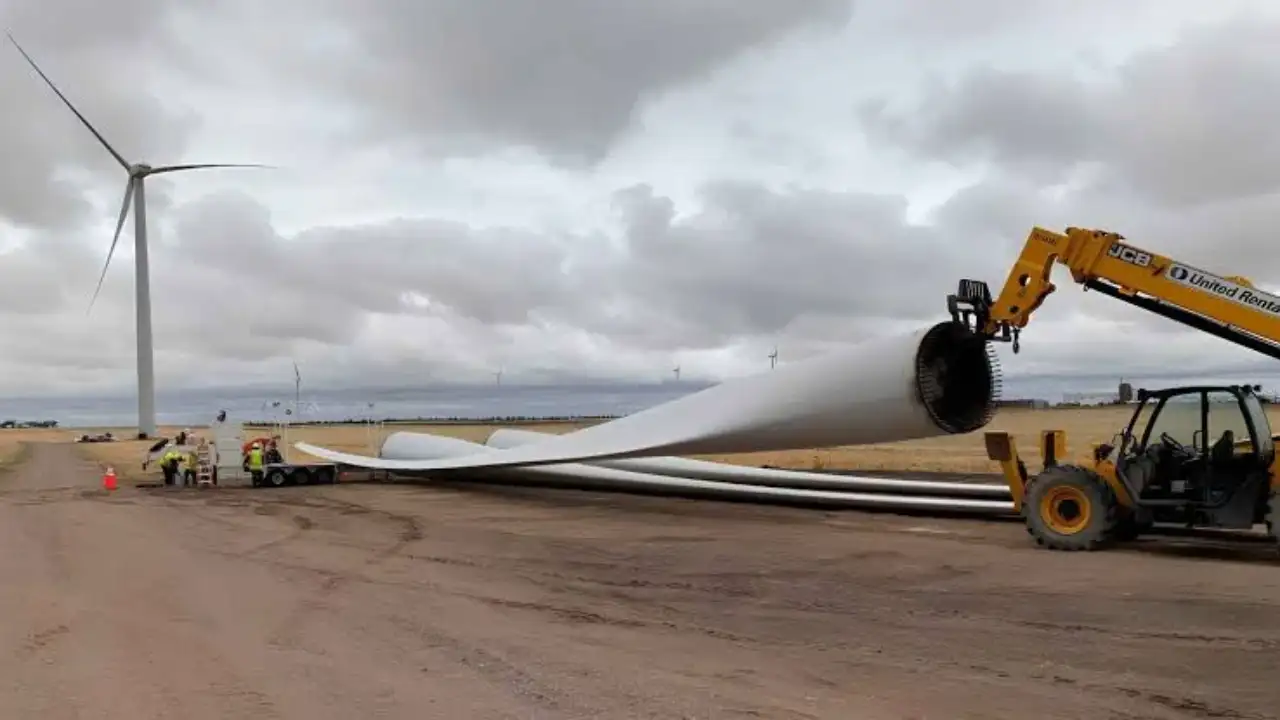
A wind turbine blade can spend decades fighting wind, rain and repeated stress hundreds of feet above the ground. Then, when the turbine is retired, that same strength can become a problem. In Casper, Wyoming, a landfill received 1,124 turbine blades by September 2020, turning the site into one of the clearest American examples of what happens when enormous composite structures reach the end of their useful lives.
The surprising part is what happened elsewhere. In Louisiana, Missouri, Veolia has developed a very different route for retired blades. The company says its facility has processed more than 7,000 blades since 2020, shredding them so their material can be used in cement manufacturing. The contrast is important because it shows that a wind blade is not automatically “recyclable” or “waste.” What happens to it depends heavily on the materials, economics and infrastructure available when the turbine comes down.