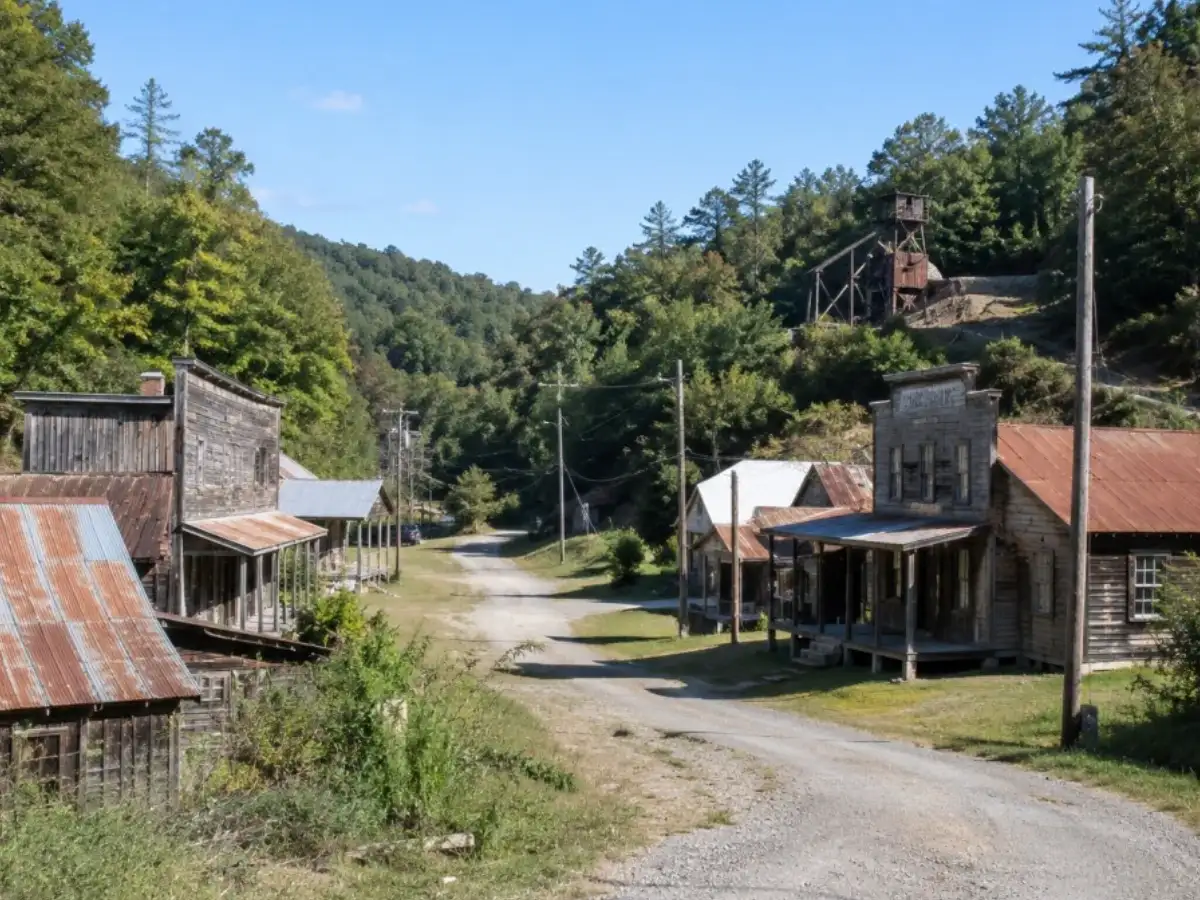
Long before Rush, Arkansas, became a ruin beside the Buffalo River, it was the kind of place people hurried toward because they believed the ground itself could make them rich. The hills above the valley were rich in zinc, drawing miners and families to a town that quickly grew around the mining industry. For a while, the town looked like it would continue to grow, but the demand for zinc decreased, the mining operations dwindled, and the community that relied on the boom was left devastated.
The timing of zinc discovery led to the emergence of Rush. The first discovery was made in Rush Mountain in 1880, and the Morning Star Mine was opened in 1885. The National Park Service mentions that the actual boom was caused by the need for brass during the First World War; thus, a great deal of zinc was produced between 1911 and 1918 when the population increased to 2,000-3,000. By 1920, the town’s population had sharply declined as the zinc boom ended. The resources indicate that the boom stopped in 1919 when the prices dropped.