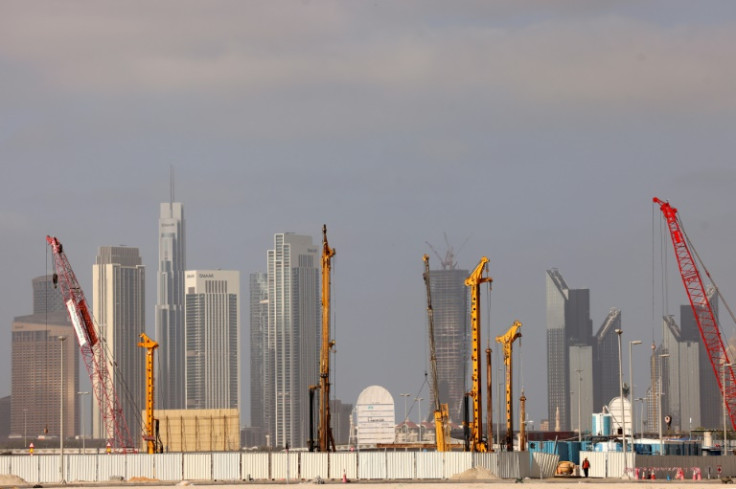
Dubai's real estate market has become increasingly difficult to explain through the region's traditional oil-linked lens. A five-year run of rising transaction volumes, values, and prices suggests the cycle is being driven more by migration, liquidity and investor positioning than by crude.
DXBInteract analysis of Dubai property indicators against Brent crude trends over the past decade indicates that apparent linkages can be overstated, particularly during global shock periods when multiple assets move together.
A sustained expansion across price, value, and volume
Dubai's market posted consecutive annual gains across the core cycle metrics from 2021 through 2025, with a step-change in activity relative to 2020.
- Transactions rose from 34,737 in 2020 to 215,671 in 2025, up 521 percent
- Total value climbed from AED 71.5 billion to AED 686.6 billion, up 860 percent
- Average price per square foot increased from AED 917.7 to AED 1,656.5, up 80.5 percent
The year-by-year path shows a broad-based upcycle rather than a single rebound year.
Transaction volume2020: 34,737
2021: 61,124
2022: 96,534
2023: 133,643
2024: 181,689
2025: 215,671
Transaction value (AED)2020: 71.5B
2021: 150.7B
2022: 263.7B
2023: 412.1B
2024: 523.5B
2025: 686.6B
Average price per square foot (AED)2020: 917.7
2021: 992.4
2022: 1,201.2
2023: 1,370.6
2024: 1,529.1
2025: 1,656.5
Why oil correlations can look stronger than they are
DXBInteract compared average Brent prices from 2014 to 2024 with Dubai's average price per square foot over the same period. A modest relationship can appear on a simple chart, but it is heavily influenced by years in which global macro forces compressed correlations across many assets.
Two periods are particularly distortionary:
- Post-Covid recovery, when liquidity, re-opening demand and mobility trends lifted multiple asset classes simultaneously
- The Russia-Ukraine war period, when oil prices moved on supply disruption and sanctions, while Dubai real estate strengthened amid capital inflows and relocation decisions
In those windows, synchronized price action does not establish causation. It often reflects a shared macro regime.
Oversupply and cheaper materials are not a pricing mechanism
A common oil-to-property argument in 2025 is that oversupply and softer energy prices reduce construction costs, which should reduce home prices. That logic rarely holds in Dubai's market structure.
Pricing is primarily demand-led rather than cost-plus. When input costs fall, savings typically flow into developer margins, incentive structures, or launch cadence, not into a mechanical repricing of existing inventory. Lower costs can influence future supply, but they do not automatically reset today's market clearing price.
What is driving Dubai instead
Dubai's real estate cycle is increasingly shaped by factors that sit outside the crude complex:
- Population inflows and wealth migration
- Residency-linked demand and policy clarity for investors and end users
- Global liquidity and interest-rate conditions
- Segmentation, with demand concentrating by location, quality tier, and product type
- Risk positioning during periods of geopolitical uncertainty
The bottom line
Dubai property is being priced by capital flows and confidence more than by crude. The market's five-year expansion across transactions, value and prices suggests oil is now a background variable, not the mechanism setting residential valuations.
Fateh Al-Msaddi is the founder of DXBInteract, a Dubai real estate data and analytics platform.