
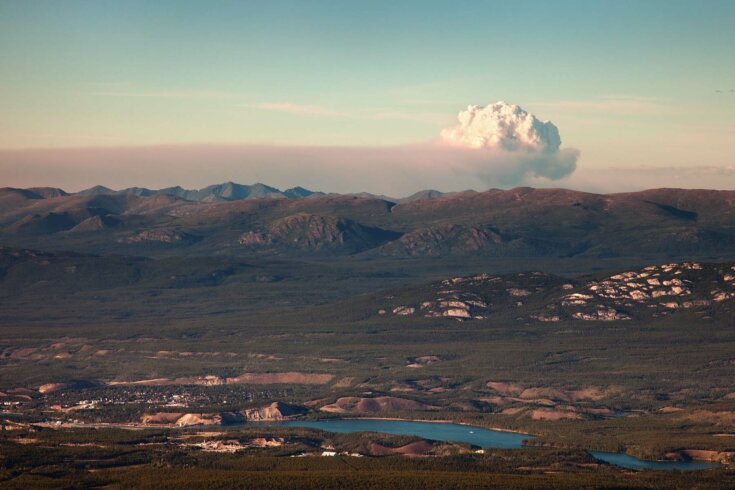
When I moved to Whitehorse in 2009, I’d never imagined having to plot out a household wildfire evacuation plan. I don’t remember noticing a particularly smoky season until the summer of 2013, when fires around the smaller community of Carmacks, two hours north, left a brown haze in the capital city’s atmosphere and the taste of barbecue in the air. The next summer, I wrote about the mushroom-hunting boom that had inevitably followed those fires: the morels popping up in the burn zones a year later were plucked by sweaty, ash-smeared pickers and sold for cash along the roadside to professional buyers who’d rolled into the territory from British Columbia. But I treated both the smoke and the morel boom that followed as curiosities rather than omens.
The North’s relative lack of human-built spaces, compared to more heavily used southern areas, shapes our relationship to wildfire. Here in the Yukon, since most of our fires result from lightning strikes and burn deep in wilderness without threatening any infrastructure, the authorities just let them burn themselves out most of the time. Unlike more rigorous regimens of fire suppression, that passivity supports the boreal forest in its natural cycle of renewal. And since roads are often a vector for the ignition of new fires, our scant northern highway coverage can be preventative too.