Get all your news in one place.
100's of premium titles.
One app.
Start reading
Radio France Internationale
World
RFI

DRC opposition postpones protest after Tshisekedi announces national dialogue

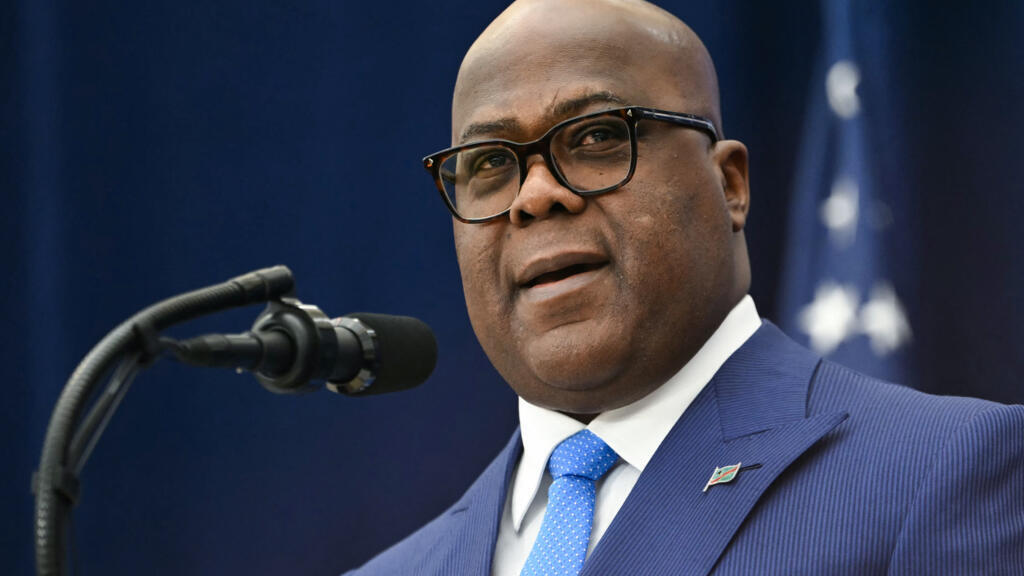
The Democratic Republic of the Congo's President Felix Tshisekedi in Washington, DC, on 4 December 2025.
The Democratic Republic of the Congo's President Felix Tshisekedi in Washington, DC, on 4 December 2025. © AFP - ANDREW CABALLERO-REYNOLDS

The Democratic Republic of Congo's main opposition coalition has postponed a protest after President Félix Tshisekedi announced the imminent launch of a national dialogue, a bid to ease the country's deepening political stand-off.

The C64 platform, which brings together several opposition parties, had called on supporters to march in Kinshasa on 22 July to defend the constitution and oppose any attempt to extend Tshisekedi’s time in power.

But following a request from the country’s influential Catholic and Protestant churches, which have been asked to facilitate the dialogue, the coalition agreed to call off the demonstration planned for Wednesday.

The decision came after several meetings and hours of sometimes heated debate among C64’s members.

“It was tense,” one opposition figure told RFI, as coalition leaders sought to demonstrate goodwill towards a religious mediation process they have demanded for more than a year.

Opposition leaders have given Tshisekedi and the churches until 15 August to convene the talks.

No further action is planned before then, according to party officials, unless the government engages in what the opposition considers a provocation.

One potential red line would be the enactment of a referendum bill passed in June, which could pave the way for amendments to the constitution.

Tshisekedi, who has led the DRC since 2019, is due to complete his second term at the end of 2028. The constitution currently limits presidents to two five-year terms.

Members of the presidential majority have backed the controversial referendum legislation, fuelling opposition claims that Tshisekedi may be preparing the ground to remain in office beyond the end of his current mandate.

Questions over participation

Tshisekedi announced the national dialogue following a meeting on 17 July with representatives of the DRC’s main religious denominations.

According to the presidency, the talks are intended to strengthen national cohesion in a country facing political divisions and an escalating conflict in its eastern provinces.

However, key details – including who will attend, where the talks will be held and the exact role of the religious mediators – remain unresolved.

The announcement followed extensive discussions between the presidency and religious leaders. Church representatives have insisted that all major political currents should be represented.

One of the most sensitive questions is whether representatives of armed movements will be allowed to join the discussions.

Corneille Nangaa, a leader of the Congo River Alliance, or AFC, which includes the M23 armed group, has already rejected the proposed dialogue. The AFC/M23 controls parts of North Kivu and South Kivu provinces in the east of the country.

Separate discussions between Kinshasa and the rebels are continuing under the Doha peace process.

Opposition divided

The decision to postpone Wednesday’s march has exposed fresh divisions within an opposition already weakened after Tshisekedi’s re-election in 2023.

C64 was formed in May to bring together parties opposed to any alteration of the presidential term limits. While the platform has formally accepted the churches’ request to suspend the protest, several prominent opposition figures have criticised the decision.

Seth Kikuni, a member of the Sauvons la RDC or "Save the DRC" coalition formed around former president Joseph Kabila, described cancelling the demonstration as a mistake.

Criticism has also emerged from figures linked to Moïse Katumbi’s Ensemble party, even though Katumbi is a member of C64.

The opposition’s caution is partly rooted in the government’s previous reluctance to hold talks involving figures it accuses of links to M23.

Tensions have also been heightened by the authorities’ handling of previous demonstrations.

An opposition rally in Kinshasa was broken up on 12 June, with several supporters injured in clashes involving pro-government activists and police. The United Nations said at least one protester was killed.


This has been adapted from the original article in French by RFI's Kinshasa correspondent Paulina Zidi.

Sign up to read this article
Read news from 100's of titles, curated specifically for you.
Already a member? Sign in here
Related Stories
Top stories on inkl right now
One subscription that gives you access to news from hundreds of sites
Already a member? Sign in here
Our Picks
Fourteen days free
Download the app
One app. One membership.
100+ trusted global sources.