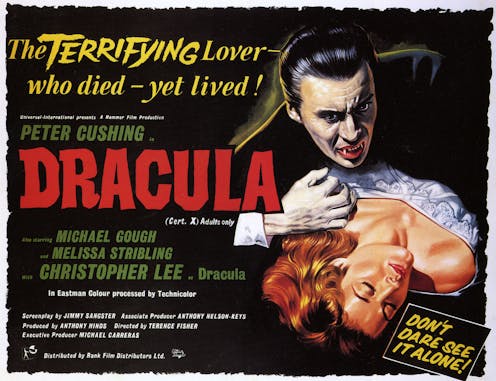
Having celebrated the 125th anniversary of its 1897 publication earlier this year, Dracula is deservedly considered a classic – not least for the way its eponymous vampire remains a cultural icon. Bram Stoker’s novel has prompted a wide variety of critical interpretations, from the existential dread of cursed immortality to the threat of disease, intrusion and colonialism.
But Stoker’s vampire represents something else that has gone relatively unexplored: he is a monstrous personification of sleep disorders known as parasomnias. These involve hallucinations, dreams and involuntary movement, and include phenomena such as sleepwalking, nightmares and sleep paralysis (when you cannot move your muscles as you are waking up or falling asleep).