Get all your news in one place.
100’s of premium titles.
One app.
Start reading
International Business Times
Business

Dow Soars 500 Points After Trump Abandons Scheduled European Tariffs In Surprise Greenland Deal

In a dramatic reversal that left traders frantically unwinding their panic positions, US stock markets erupted higher on Wednesday as President Trump announced he'd reached a 'framework of a future deal' on Greenland with NATO Secretary General Mark Rutte—and would therefore cancel the punitive tariff regime he'd threatened to unleash on European allies. The about-face sent equities soaring in what amounted to a collective exhalation of relief that markets had been desperately craving.

The Dow Jones Industrial Average surged roughly 550 points, or approximately 1.2 per cent, whilst the technology-heavy Nasdaq Composite and the S&P 500 each climbed about 1.2 per cent—marking the latter's best performance since November and finally nudging it into positive territory for the calendar year. The rally reversed most of Tuesday's catastrophic decline, when investors had dumped equities in fear that Trump's escalating Greenland obsession would ignite a transatlantic trade war reminiscent of the chaos that followed April's 'Liberation Day' tariff threats.
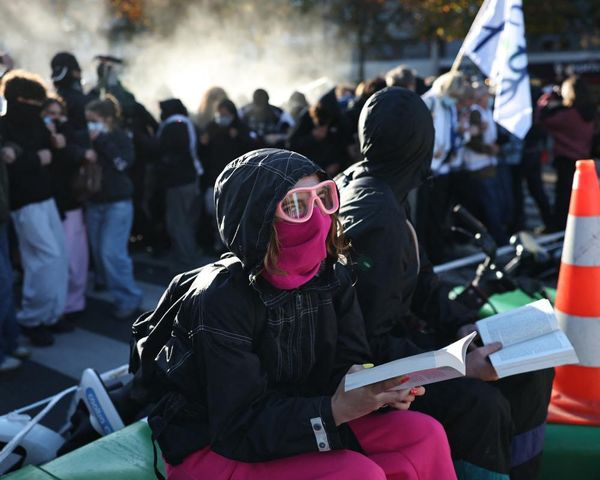
What triggered Wednesday's reversal? Trump's Truth Social post proved surprisingly diplomatic in tone. 'Based upon a very productive meeting that I have had with the Secretary General of NATO, Mark Rutte, we have formed the framework of a future deal with respect to Greenland and, in fact, the entire Arctic Region,' he wrote. More critically: 'I will not be imposing the Tariffs that were scheduled to go into effect on February 1st.'

Those tariffs—a threatened escalation from 10 per cent up to 25 per cent on eight European nations including Denmark, France, Germany, and the United Kingdom—had become the market's paramount anxiety. The EU had already declared itself 'fully prepared' to retaliate in kind, raising spectre of a destructive trade spiral that could undermine global growth precisely as central banks were attempting to navigate monetary policy. Wall Street simply cannot tolerate such uncertainty. Wednesday's rally reflected pure relief that this particular threat had evaporated.

Stock Market Rally: Sector Winners and the Resurgence of Risk Appetite

The structure of Wednesday's gains tells an instructive story. Energy stocks soared to record highs, fuelled by expectations that trade tensions would ease without constraining oil demand. Materials and technology sectors also outperformed, with megacap names including Apple, Nvidia, Tesla, and Alphabet all registering meaningful advances.

For the first time since the market's early-year rally peaked, risk appetite had genuinely returned. More than 400 of the S&P 500's constituent stocks finished in positive territory. Small-cap equities, which had been performing magnificently regardless of macroeconomic worries, extended their outperformance streak to a thirteenth consecutive session.

Fixed-income markets signalled accompanying relief. Treasury yields fell sharply—the ten-year yield retreated from earlier highs to settle around 4.25 per cent—as investors reduced their perceived economic risk premium. Gold, which had spiked dramatically during the Greenland tensions as investors sought safe havens, retreated from record levels. The dollar stabilised.

Yet significant caveats warrant mention. Trump never specified what the 'framework' actually entails. Greenlanders, Danish officials, and European diplomats have expressed profound scepticism about whether any serious 'deal' exists or whether Trump's announcement merely constitutes tactical theatre designed to reset market sentiment. NATO Secretary Rutte's cryptic comment that Wednesday's developments are 'not popular' with European nations suggests diplomatic complications remain unresolved.​

Market observers largely conceded the specific details matter less than the temporary abatement of immediate uncertainty. 'I really do think the details perhaps are not as relevant, even perhaps if they never come to light. The near-term crisis appears to be behind us,' noted Matt Weller, global head of market research at StoneX. As one strategist observed, 'The President's apparent retreat should alleviate some of the already factored-in risks in the markets. However, it's crucial to recognise that this incident has jolted investors from their early-year complacency.'

Trump's Policy Reversal: De-Escalation or Strategic Repositioning

The broader narrative underlying Wednesday's events deserves scrutiny. Trump spent days sabre-rattling about Greenland, threatening military force ('we would be, frankly, unstoppable'), and leveraging tariff threats against historic NATO allies. European leaders responded with studied defiance: UK Prime Minister Keir Starmer declared he would 'not yield' over Greenland; the EU Commission insisted it was 'fully prepared to act' in retaliation.​

Markets hate such uncertainty. But Tuesday's violent selloff—the worst day since October—conveyed a message: markets will impose costs for geopolitical recklessness. Strategists noted that this pattern mirrors April's 'Liberation Day' episode, when Trump's initial tariff threats rattled financial markets, leading to a volatile selloff, after which he moderated his stance and markets recovered. Whether this Greenland episode follows the same script—escalation, market panic, then de-escalation—remains the crucial question.

What complicates interpretation is that Trump's Davos speech included other bullish announcements. He touted the United States' military capabilities ('We make the greatest weapons in the world. But now we're going to make them faster, much faster'), signalling his commitment to defence spending that should benefit companies like Lockheed Martin, Northrop Grumman, and GE Aerospace, all of which posted gains Wednesday. He reiterated his push for a 10 per cent credit card interest rate cap (a proposal financial institutions fiercely oppose) and renewed his call for a ban on large institutional investors purchasing single-family homes.

More significantly for equity investors, Trump expressed enthusiasm for cryptocurrency legislation, signalling his administration's friendliness to digital assets. Bitcoin briefly touched $90,000 on Wednesday before retreating to approximately $88,000.​

The Supreme Court's apparent scepticism toward Trump's attempt to fire Federal Reserve Governor Lisa Cook introduced another source of uncertainty during proceedings Wednesday, though markets largely cheered this development as a defence of central bank independence.

For now, Wall Street has accepted the relief narrative: Greenland tensions have eased, tariff threats have receded, and equities can resume their upward trajectory. But analysts caution that headlines will remain abundant in the coming weeks—from corporate earnings to economic data to further Davos developments—and tariff risk hasn't disappeared; it's merely been temporarily postponed.​

Originally published on IBTimes UK

Sign up to read this article
Read news from 100’s of titles, curated specifically for you.
Already a member? Sign in here
Related Stories
Top stories on inkl right now
One subscription that gives you access to news from hundreds of sites
Already a member? Sign in here
Our Picks
Fourteen days free
Download the app
One app. One membership.
100+ trusted global sources.