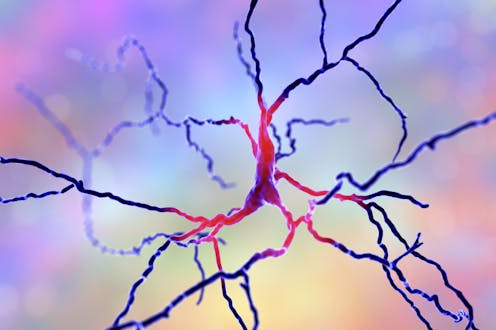
Dopamine seems to be having a moment in the zeitgeist. You may have read about it in the news, seen viral social media posts about “dopamine hacking” or listened to podcasts about how to harness what this molecule is doing in your brain to improve your mood and productivity. But recent neuroscience research suggests that popular strategies to control dopamine are based on an overly narrow view of how it functions.
Dopamine is one of the brain’s neurotransmitters – tiny molecules that act as messengers between neurons. It is known for its role in tracking your reaction to rewards such as food, sex, money or answering a question correctly. There are many kinds of dopamine neurons located in the uppermost region of the brainstem that manufacture and release dopamine throughout the brain. Whether neuron type affects the function of the dopamine it produces has been an open question.