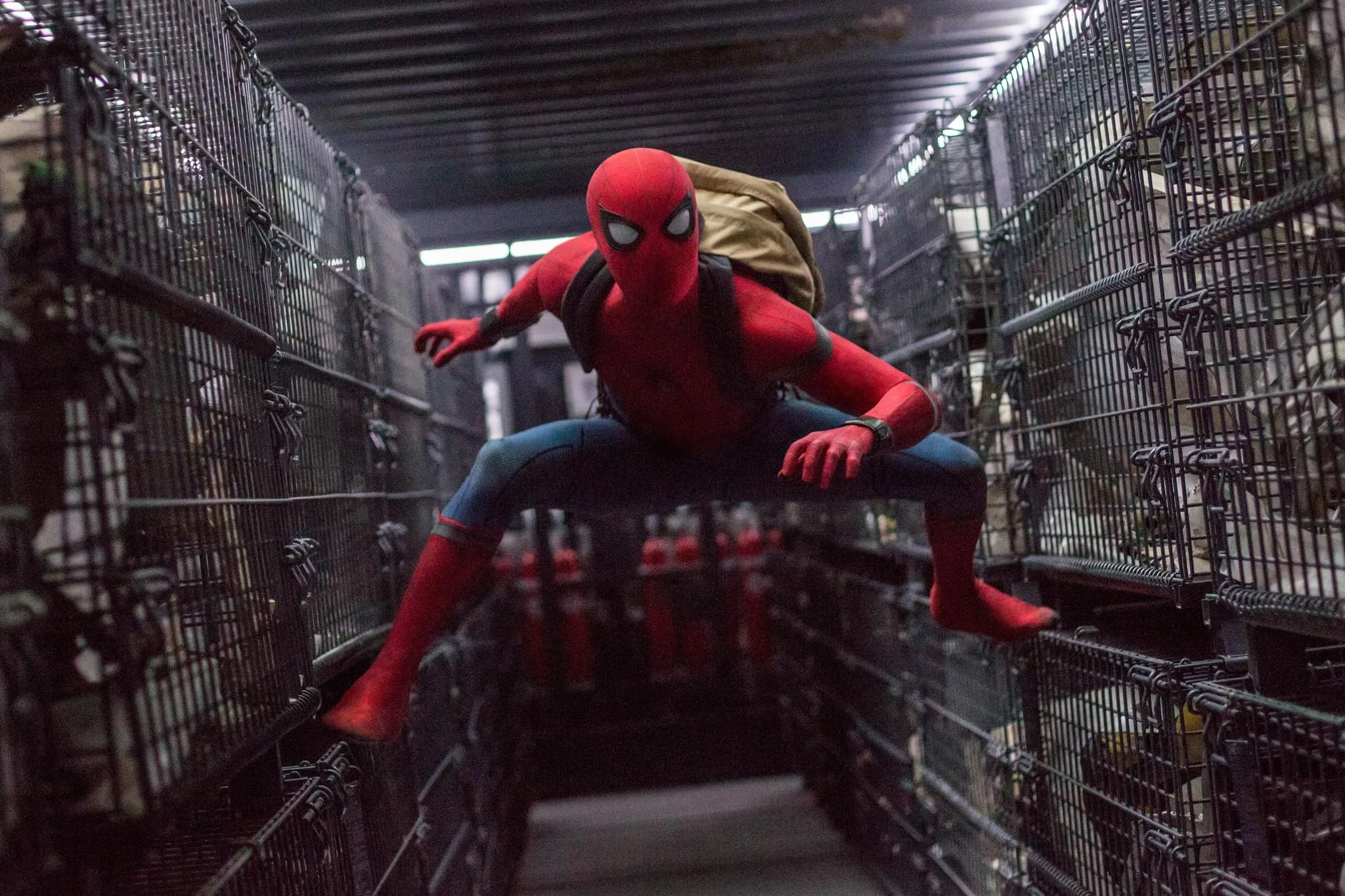
“When you can do the things that I can,” Peter Parker (Tom Holland) says in Captain America: Civil War, “but you don’t, and bad things happen, they happen because of you.” It was a roundabout way of getting at Peter’s superhero creed — “With great power comes great responsibility” — without really saying it. But given that the character was just 15 at the time, such clunkiness was easy to forgive. If nothing else, it told fans that his origins as Spider-Man still happened; they just happened off-screen.
By the time Tony Stark (Robert Downey Jr.) comes to recruit Peter to the Avengers in Civil War, he’d already gained his powers through a radioactive spider bite, and most assumed he had also lost his beloved Uncle Ben shortly after. Those two experiences make up the one-two punch that other Spider-Man films wisely dubbed his “canon event.” After all, it’s Uncle Ben who first teaches Peter about great power and great responsibility — and when Peter fails to prevent Ben’s demise, those platitudes become the backbone of his moral code. It’s just as crucial to Spider-Man’s creation as the murders of Thomas and Martha Wayne are to the creation of Batman: Could Peter become his neighborhood’s resident wallcrawler without it?
If you ask Anthony and Joe Russo, the directors of Civil War, the answer is a nonchalant, “Sure, why not?”

The Russos recently sat down with CBR’s Sean O’Connell to commemorate the 10th anniversary of Civil War, and unpack their approach to the ambitious story. The film served as the MCU origin for both Spider-Man and Black Panther (Chadwick Boseman) — and while the latter got an effective introduction, Spidey’s first outing left fans scratching their heads for years to come.
“Spider-Man was one of my favorite characters growing up, if not my favorite,” Joe Russo told O’Connell. It’s a shame, then, that the filmmaker seems to misunderstand everything that makes him so compelling.
The Peter we meet in Civil War seems at least marginally aware of the consequences of his inaction, but the Russos treat that responsibility and Uncle Ben’s demise as two separate entities, not character-building moments designed to work in tandem. Though they “related” to the idea of a boy saddled with “incredible responsibility,” attaching that responsibility to a “sense of loss” just didn’t make sense for their version of Peter Parker.

“In our minds, no, he wasn’t responsible for Uncle Ben’s death,” Russo says of Peter. “What Tom Holland is as an actor, if he blamed himself for his Uncle Ben’s death, I think he becomes a very different character.”
Yeah. Spider-Man. The character he becomes... is Spider-Man.
Russo argued that, if Peter was responsible for Ben’s death, it would have informed a different, “more intense” interpretation of the character. That’s another gross misunderstanding of Spider-Man: while previous incarnations of the hero have leaned into the melodrama and tragedy of his origins, they weren’t all about Peter’s loss. He’s a famously buoyant character, deflecting to wisecracks and wit whenever possible. But it’s a conscious choice he makes in the face of an increasingly scary world. “I have to joke,” Spidey says in Peter Parker: The Spectacular Spider-Man #6, “‘cause what’s the alternative?”
Peter wouldn’t automatically sink into perpetual brooding if his uncle died. The “intensity” Russo was so afraid of tapping into is actually just the decision to take life more seriously. It’s something that every Spider-Man needs in some form — and Civil War’s choice to ignore it completely explains why the MCU’s version of the hero has been off from the beginning.

Ignoring Uncle Ben outright kept Peter in a state of arrested development throughout his solo trilogy. He was always looking for a father figure to replace him, sure, but why? None of the Spidey films could answer that, and when director Jon Watts retrofitted Ben’s demise (and “great responsibility” speech) onto Marisa Tomei’s May Parker in No Way Home, they didn’t have to any longer. It was somewhat satisfying to finally hear those words in the MCU — but again, it made no sense when compared to the Peter we met in Civil War, a Peter who’d seemingly already been taught about the importance of his powers.
There’s a sense that this incarnation of Spider-Man will never feel quite right, even as he gears up to return with as blank a slate as possible in Brand New Day. The Russos kicked things off on the wrong foot for no reason whatsoever, robbing Spider-Man of his most emotional tether. Without it, something might always be missing from his adventures; this version of the hero might never reach his true potential.