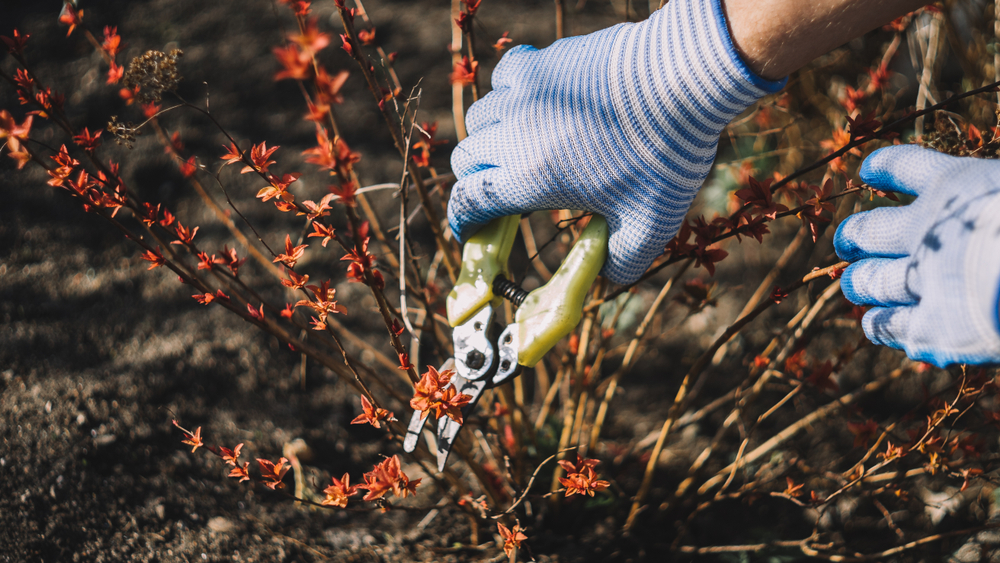
Fall cleanup season has a way of making every overgrown shrub look like it needs a haircut. Before you grab the pruning shears, however, remember that some of next spring’s flowers are already sitting on those branches in the form of buds that developed months earlier. Spring-flowering shrubs commonly bloom on “old wood,” meaning growth produced during the previous season, and pruning these plants in late summer, fall, or winter can remove the buds responsible for the next display. Learning which plants not to prune in fall can therefore mean the difference between a shrub covered in flowers and one that produces mostly leaves next year. These seven common landscape plants are good reasons to put the shears back in the shed.
1. Lilacs Already Have Next Spring in the Works
Lilacs produce their spring flowers on stems that grew during the previous growing season, so those seemingly ordinary fall branches are carrying next year’s show. Cutting the shrub back in October may make the landscape look tidier, but you’re potentially removing flower buds along with the unwanted growth. You should prune lilacs within roughly two weeks after flowering, with established shrubs benefiting from periodically removing some of the oldest branches at the base. That approach gives fresh growth plenty of time to develop and eventually carry flower buds for the following year. Among plants not to prune in fall, lilacs are especially easy to remember: enjoy the flowers first, then do the trimming.
2. Forsythia Should Be Pruned After Its Yellow Show
Forsythia’s bright yellow flowers can appear so early that it’s easy to forget the plant prepared for them during the previous year. Those flower buds form on old wood and fall, or winter pruning removes them and can reduce the following spring’s display. If an established shrub needs routine thinning, remove roughly one-quarter to one-third of its oldest stems at ground level after flowering rather than repeatedly shearing the outside into a tight box. Formal hedge-style trimming can be especially problematic because maintaining that shape often requires cutting during the period when next year’s flower buds are present. If your forsythia has looked disappointingly green instead of yellow each spring, the timing of your pruning routine deserves a closer look.
3. Azaleas Can Lose Their Buds to a Fall Haircut
Azaleas are another classic example of shrubs that can punish an enthusiastic fall cleanup with fewer flowers. Penn State includes azaleas and other rhododendrons among spring-flowering shrubs that should generally be pruned after flowering because they bloom on old wood. By autumn, much of the flowering potential you’re hoping to see next year is already attached to the plant, even if you can’t easily distinguish every flower bud from a leaf bud. Save major shaping for the appropriate period after blooming and limit autumn cutting to situations such as removing clearly dead, broken, or problematic branches. Putting azaleas on your plants not to prune in fall list is considerably cheaper than spending next spring wondering whether the shrub needs fertilizer when the real problem was your pruning shears.
4. Rhododendrons Need the Same Old-Wood Caution
Rhododendrons follow much the same principle as their azalea relatives, producing spring flowers from buds formed on older growth. Penn State specifically lists rhododendrons among the shrubs where gardeners interested in maximum bloom should wait until after flowering to prune. Fall pruning doesn’t necessarily kill an otherwise healthy rhododendron, but it can eliminate exactly what you’re growing the shrub to enjoy. If a plant has simply become too large for its location, repeated aggressive pruning may also be a sign that the mature shrub and planting site were never a particularly good match. For routine maintenance, let the spring flowers finish and then evaluate what actually needs to be removed.
5. Viburnums Can Be Carrying Next Year’s Flowers
Viburnums vary enormously in size and appearance, but many familiar spring-blooming varieties share the same old-wood flowering habit. Spring-flowering shrubs, including viburnums, develop their flower buds during the previous year’s growth, making pruning timing critical when preserving flowers is the goal. If your viburnum needs thinning, waiting until after its spring display allows you to remove unwanted branches without sacrificing buds before they have a chance to open. Older stems can often be removed at their origin rather than indiscriminately shearing the entire outside of the shrub. That makes viburnum another one of the plants not to prune in fall simply because you’re already cleaning up everything else in the landscape.
6. Bigleaf Hydrangeas Can Be a Pruning Trap
Hydrangeas deserve special attention because saying “never prune hydrangeas in fall” would be inaccurate—different species bloom on different types of wood. Bigleaf hydrangeas (Hydrangea macrophylla) are among those that traditionally flower on old wood, while panicle and smooth hydrangeas flower on new growth and have different pruning schedules. Try to prune old-wood hydrangeas after their flowers fade so the shrubs have time to produce the growth and buds responsible for the next display. Some newer bigleaf cultivars can bloom on both old and new wood, but identifying what you actually grow is smarter than giving every hydrangea the same autumn haircut. If you don’t know your hydrangea type, leave healthy stems alone until you identify it rather than gambling next year’s flowers.
7. Oakleaf Hydrangeas Also Bloom on Old Wood
Oakleaf hydrangeas (Hydrangea quercifolia) are valued for more than their flowers because their distinctive leaves can develop beautiful fall color and their peeling bark adds winter interest. They also belong to the old-wood hydrangea group, which means a late-season cleanup can remove flower buds intended for the following year. You should prune hydrangeas that flower on old growth after their summer flower display rather than waiting until fall or winter. If you’re tempted to cut away dried flower heads and shorten branches while raking leaves, remember that cosmetic tidiness isn’t worth sacrificing an entire season’s bloom. Add oakleaf hydrangea to your plants not to prune in fall list and save significant shaping for after flowering.
Dead and Damaged Branches Are a Different Story
Avoiding fall pruning doesn’t mean you should ignore a branch hanging dangerously over a walkway or leave obviously dead and broken wood indefinitely. Dead, dying, or broken branches can be removed when necessary, regardless of the normal pruning schedule for the plant. The bigger fall concern is unnecessary shaping, shearing, and size reduction of healthy spring-flowering wood, particularly because late-season pruning can also stimulate tender new growth that may not harden sufficiently before freezing weather. If disease is involved, proper timing and tool sanitation can become even more important, so check species-specific recommendations rather than applying one rule to every landscape plant. Think of the plants not to prune in fall rule as protection for healthy flowering wood, not a prohibition against dealing with legitimate safety problems.
Let the Flowers Tell You When to Grab the Shears
One of the easiest gardening rules to remember is that many shrubs flowering early in spring should be pruned shortly after they finish blooming. That doesn’t apply universally, but it provides a useful starting point because early bloomers often produced those flower buds on last year’s wood. By contrast, plants such as smooth and panicle hydrangeas flower on new growth and can generally be pruned in late winter or early spring without sacrificing that year’s flower display. Before adding any shrub to your fall cleanup list, identify the species, find out whether it flowers on old or new wood, and resist cutting simply because bare branches look untidy.
Have you ever accidentally pruned a spring-flowering shrub at the wrong time and wondered why the flowers disappeared the following year?
What to Read Next
You’re Still Watering Like It’s July — Your Fall Garden Doesn’t Need It
7 Vegetables You Can Still Plant in Fall for One More Cheap Harvest
Planting a Tree This Fall? This $0 Mistake Can Kill a $100 Tree
The post Don’t Prune These 7 Plants in Fall or You Could Lose Next Year’s Flowers appeared first on Frugal Gardening.