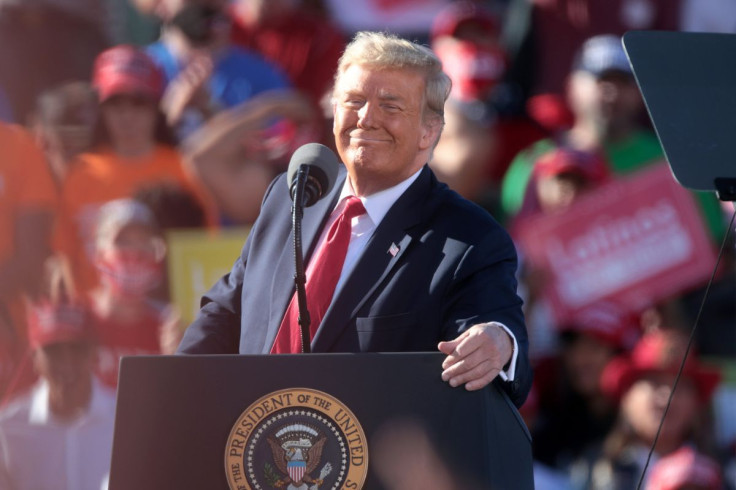
President Donald Trump signed an executive order in Washington on Monday that alters federal childhood vaccine recommendations by narrowing the universally recognised routine immunisations to just 11 diseases.
The policy change, which began earlier this year, creates a new distinction between the federal government's universal recommendations and the broader schedule supported by the American Academy of Paediatrics.
The Centres for Disease Control and Prevention announced in January that the universal routine category would be reduced following a review of childhood immunisation schedules in 20 other developed nations.
The agency noted the United States previously recommended protection against 18 diseases, involving more total childhood doses than some of the international counterparts they examined.
Trump is now using the executive order to advance that approach.
Trump Executive Order Shifts Childhood Vaccine Rules
Under the newly signed Trump vaccine plan, the designated list of 11 core diseases includes measles, mumps, rubella, diphtheria, tetanus, pertussis, polio, Haemophilus influenzae type B, pneumococcal disease, human papillomavirus, and varicella.
Under the revised federal framework, those 11 diseases are included in the category recommended for all children.
Immunisations outside the primary universal category have not been eliminated from the federal framework.
The order places RSV monoclonal antibodies, hepatitis A, hepatitis B, meningococcal vaccines, and dengue protection in a category specifically reserved for certain higher-risk populations.
It lists hepatitis A, hepatitis B, rotavirus, meningococcal disease, influenza, and COVID-19 under a separate shared clinical decision-making category.
Trump Childhood Vaccine Executive Order Sparks Debate
The 11-disease universal list does not mean children will receive only 11 injections. Yet, Trump highlighted the figure while promoting the executive order on Monday.
According to CBS News, the president claimed that 'in many cases, we were requiring 72 jabs for our beautiful, healthy, lovely, delicate little children.' That figure reflects Trump's characterisation of how many doses children could receive over time under previous recommendations, rather than 72 distinct vaccine products.
The executive order directs federal agencies to review the revised recommendations and take appropriate steps to advance them where legally permitted.
It advises states and territories to review the recommendations and consider whether their own immunisation laws and regulations should change. States retain authority over their school-immunisation policies, so any changes to school requirements would depend on decisions made under state law.
Doctors Review Trump Childhood Vaccine Executive Order
Beyond reclassifying diseases, the executive order calls for changes to how childhood immunisations could be offered and administered to patients.
The order calls for single-disease measles, mumps and rubella products once those products become domestically available. It also says childhood immunisations should be administered during separate medical visits whenever feasible, although it explicitly calls for the continued availability of combination vaccines.
CBS News medical correspondent Dr Céline Gounder noted a standalone option does not currently exist.
Gounder said, 'There's no licensed version in this country. No company has said it's building one, and the order only takes effect once those products exist.'
If single-disease products become available and are used separately, some children could require additional injections or visits. However, the order qualifies separate visits with the phrase 'to the maximum extent feasible' and does not create an immediate requirement for families to schedule them.
The Trump vaccine plan also instructs the Department of Health and Human Services to examine the timing and sequencing of all childhood vaccines and present plans within 90 days.
The agency's task force must also consider alternatives to aluminium adjuvants, continue evaluating vaccine safety and effectiveness data, and strengthen general monitoring and research.
Autism Claims Shadow the Childhood Vaccine Order
While the official text focuses heavily on administrative restructuring, Trump used the signing event to repeatedly bring autism into the public conversation.
'Today, we're proud to officially announce the United States of America's Gold Standard Childhood Vaccination Recommendations and that has to do with many subjects, but including autism in particular.'
He expanded on this theory during his remarks, arguing that decades ago, children received only a small fraction of the injections required today and claimed that in those times, people were much healthier and the high rates of autism now observed simply did not exist.
Trump cited no evidence for these claims, and autism is not identified in the executive order as the basis for the revised vaccine categories.
The disconnect between the official legal document and the spoken remarks leaves significant room for public confusion.
Future Impacts of Trump Childhood Vaccine Order
The cited research does not support a causal link between MMR vaccination and autism. A 2015 study of 95,727 children found that MMR vaccination was not associated with an increased risk of autism, including among children with an autistic older sibling.
Similarly, CBS News cited a large 2019 Danish study involving more than 650,000 children that reached a similar conclusion.
The American Academy of Paediatrics continues to recommend routine vaccination against 18 diseases for 2026 and has criticised the narrower federal approach. The organisation argues national schedules cannot be directly copied because countries face vastly different disease risks, demographics, healthcare systems, and vaccine availability.
Republican Senator Bill Cassidy, who is a physician, offered one of the strongest political rebukes.
According to CBS News, Cassidy stated, 'I'm a doctor. This executive order is wrong.' He noted that vaccines are safe and effective, adding they do not cause autism.
Cassidy warned that separating combination vaccines could mean more shots for the same protection, increase vaccine hesitancy and make children less safe. He urged parents to listen to their paediatricians rather than an inaccurate executive order.