Historically, the United States hasn’t always been easy to deal with, but it was consistent. Even countries that disagreed with American policies knew there was a logic underlying its actions, and this predictability gave the country some credibility.
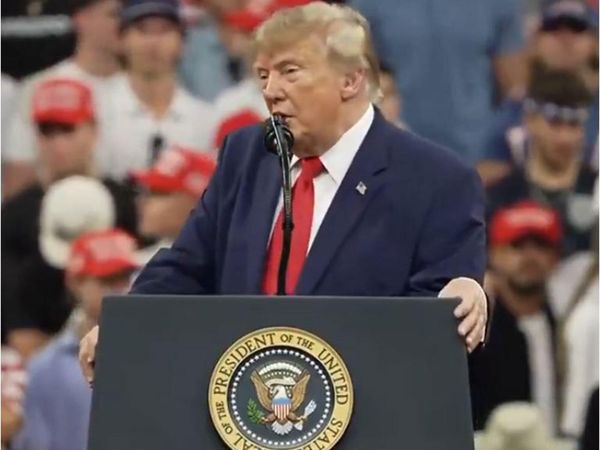
But now, under U.S. President Donald Trump’s second administration, American foreign policy has become haphazard and contradictory, driven by a leader who believes his ability to exercise power around the world is constrained only by his own morality.
This is new and, for observers around the world, perplexing. As Canadian Prime Minister Mark Carney recently said: “Washington has changed. There is almost nothing normal now in the United States.”
Trump maelstrom
Some, like U.S. Vice President JD Vance, are labouring to erect a retroactive, pseudo-intellectual scaffolding around this chaotic mess, seeking to frame it as a coherent doctrine. But it’s become increasingly clear there’s no grand plan, just a Trumpian maelstrom of impulsive reactions, extractive transactions and personal grudges that shift with the news cycle.
To understand this political dysfunction, a German thinker from more than 100 years ago, Max Weber, offers a helpful guide.
Most famous today for his theory of “the Protestant work ethic,” Weber’s writing also explored the concept of “patrimonialism.”
This is a system of governance in which a ruler treats the state as personal property, governs by whim and uses the state’s resources to reward cronies and enrich family. Drawing largely on his understanding of the Ottoman Empire, Weber called the most extreme form of this system “sultanism.”
Reading Weber today, it seems the best description of how the U.S. engages the wider world could be termed “sultanism with American characteristics.”
Loyalty over experience
Consider Iran. Following the start of Operation Epic Fury, the Trump administration cycled through so many conflicting war aims that CNN was able to assemble a montage of the contradictions.
Senior administration officials worked feverishly to build a strategy around the operation, but it soon became clear that this “war of choice” was started based on little more than the president’s whim.
Read more: Vietnam ruined Lyndon B. Johnson’s political career. Will Donald Trump face the same fate over Iran?
Weber’s framework extends to the people around Trump. In sultanistic systems, staff are selected based on loyalty, not merit, and serve the ruler, not the state.
As Weber wrote, this leads to “an administration and a military force which are purely personal instruments of the master.”
We see this pattern vividly illustrated by the Trump administration’s approach to staffing senior roles, including those leading high-stakes diplomatic negotiations.
Look at Steve Witkoff, a real estate developer and longtime Trump friend with no foreign policy experience, who has served as the administration’s lead envoy on some of the most sensitive negotiations in the world.
Or Jared Kushner, the president’s son-in-law, who, despite having no background in foreign policy, was entrusted with key roles in Middle East diplomacy, while his investment firm pursues deals with the same Gulf states he is negotiating with on behalf of his country.
Serving the sultan
These are not appointments that a merit-based system would produce. But right now in America, officials serve the sultan, not the republic, which is why their speeches are regularly given for an “audience of one.”
Furthermore, in seeking the sultan’s favour, appointees regularly debase themselves on television, such as when Kevin Warsh, Trump’s pick to be the next head of the Federal Reserve, refused to admit Trump lost the 2020 election.
This sultanistic pattern of rewarding loyalty and punishing defiance is expanding. Federal disaster relief, long treated as a non-partisan obligation of the government, has become a stark illustration of this logic.
Since the start of his second term, Trump has approved just 23 per cent of disaster funding requests from blue states, compared to 89 per cent for red states. In some cases, the conditionality for disaster aid has been made explicit: for example, in 2025, as fires ravaged Los Angeles, Trump threatened to withhold aid unless California enacted voter ID laws — a condition with no relationship to disaster recovery.
This fear of punishment also helps explain why, fearing for their businesses, many media companies are bowing to “the court of King Trump.”
‘Orgy of corruption’
Finally, Weber’s framework sheds light on what may be the most defining feature of the Trump administration: a blurring of the lines between public office and private enrichment. Under sultanism, the distinction between the ruler’s personal wealth and the state’s treasury is, at best, notional.
Trump and his team have governed accordingly, with perhaps the most egregious example being hundreds of millions of dollars of insider trading around the Iran war. In a healthy democracy, this “orgy of corruption” would be investigated and prosecuted. But in a patrimonial system this is simply how things work: the state exists to serve the ruler and his inner circle.
This is what the world must now manage. A sultanistic system does not respond to appeals to shared values or long-standing agreements. It responds to leverage, personal relationships with the ruler and transactional incentives.
Policymakers and business leaders increasingly understand they are dealing with a court that rewards fealty and punishes defiance. That’s why the Swiss gave Trump a gold bar in exchange for lower tariffs, and why the Qataris gave him a “palace in the sky.”
In 2026, appeals to shared democratic values or common national interests are pointless; bring the sultan something he wants or face punishment. Weber helps explain why.
Christopher Collins does not work for, consult, own shares in or receive funding from any company or organisation that would benefit from this article, and has disclosed no relevant affiliations beyond their academic appointment.
This article was originally published on The Conversation. Read the original article.