
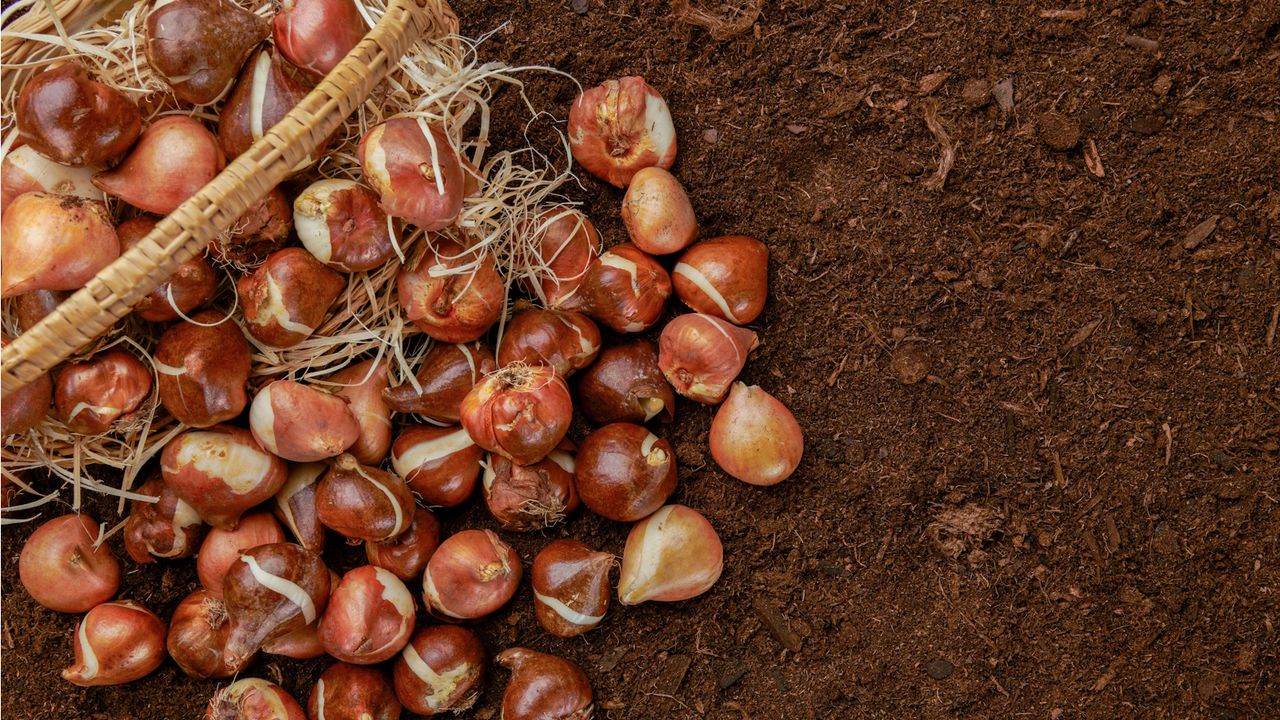
It can be easy to lift bulbs, put them in storage, and forget about them until it's time to plant again. But, failing to check on stored bulbs may leave you disappointed. The slightest of discrepancies in proper storage can result in a range of issues from pest damage to mold.
But, exactly how often should you check stored bulbs? And what can you do to ensure they stay safe? Well, garden experts say that when storing bulbs at any point in the year, it's better to be safe than sorry and check them regularly. Even if you took all the right steps to provide a dry, secure place for them, minor errors, environmental changes, and accidental dislodging can allow moisture and light in, or provide access to destructive pests, resulting in ruined bulbs that can't be used.

For this reason, the experts advise to check stored flower bulbs, and tubers, at least once a month. This allows you to identify and remove any damaged bulbs to protect the remaining ones. Here, they explain why this is so crucial and what to look out for when checking them, plus their tips for secure bulb storage.
How Often Should You Check Stored Bulbs?

'If you have your bulbs packed up well, meaning in a cool, dry place with airflow, you should only need to check on your bulbs about once a month,' says Lindsey Chastain, homesteader and founder at The Waddle and Cluck.
This allows you to ensure they are in good shape for planting in the next season.
You may even want to check the bulbs and tubers most sensitive to environmental changes (like dahlias and canna lilies) more regularly, as often as every three weeks.
'You should certainly check more regularly if you're unable to provide a storage area that is between the ideal temperatures of 40-50°F,' says gardening expert Michael Clarke. In cooler or warmer conditions, problems are more likely to occur.
As for what to look for, Michael suggests giving the bulbs a gentle squeeze:
'Check for softness and rot, and also look for any shriveling that indicates they have dried out too much,' he says.
Likewise, look for pest damage, particularly from rodents that often eat plant bulbs.
It would be a bulb planting mistake to use any bulbs with these symptoms. It could spread diseases and they may even be unviable, hindering your display.
Instead, you should remove and dispose of damaged bulbs before taking steps to secure your bulb storage.
How To Keep Stored Bulbs Safe

To prevent any issues with your stored bulbs, you can follow our expert guide on how to store bulbs. The bottom line: keep your bulbs somewhere cool, dark, dry, and well-ventilated.
This will prevent issues of rot, stop premature sprouting, and keep them in good shape for planting later on.
'I store my bulbs in milk crates in a closet in the garage,' says Lindsey. 'They are out of the weather and drastic temperature changes. They stay cool and dry.
'Keeping moisture down is the key to not getting mold on your bulbs, so I put newspaper between layers to help keep moisture down. The holes in the milk crates also allow for plenty of airflow,' she describes.
You should also keep natural pest control in mind when storing bulbs, to protect them from the likes of rodents and other destructive pests, especially if you're storing them in a garage or shed.
For example, you could use scents that pests hate, like this pack of essential oils from Amazon. You should, however, avoid airtight containers that, yes will keep pests out, but will also trap excessive moisture in and potentially cause fungal issues.
Shop Bulb Storage Solutions
These burlap bags are breathable, ideal for storing bulbs without trapping excessive moisture that could cause rot.
These mesh bags can be used to store bulbs, providing airflow. This set comes in a pack of 50 for a large bulb collection.
You can store bulbs in this wooden crate to keep them in viable condition. It has slats for good airflow.
FAQs
Can I Plant Bulbs that Sprouted in Storage?
Yes, you can still plant bulbs that have sprouted in storage, so long as they aren't soft, rotting, or moldy. Be aware, however, that bulbs do have a shelf life and may become less viable the longer you wait to plant them. Ideally, sprouted bulbs should be planted as soon as possible to increase chances of success.
In between checking stored bulbs in winter, you can order bulbs for planting in spring. There are plenty of fall-flowering bulbs to choose from.