
Get all your news in one place.
100's of premium titles.
One app.
Start reading
TechRadar
TechRadar
Eric Hal Schwartz

'Don’t fear the dead, and don’t fear me' — AI brings a digital Val Kilmer back to the screen

As Deep as the Grave.
  • Actor Val Kilmer appears in the new film As Deep as the Grave through an AI-generated performance created after his death
  • The technology allows filmmakers to complete roles using digital likenesses
  • Val Kilmer's family gave permission to use the AI-produced likeness

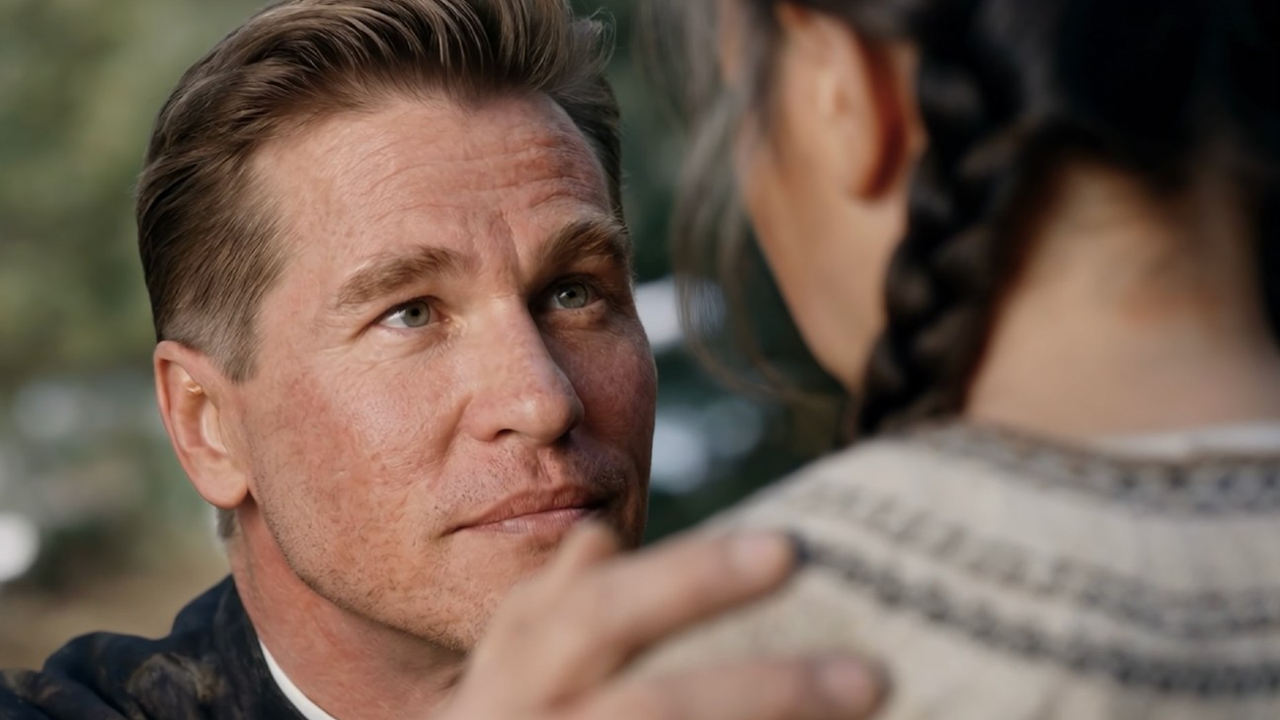
Val Kilmer passed away in 2025, but you wouldn't necessarily know it based on the trailer for the forthcoming movie As Deep as the Grave — and that's despite it having been shot after his death.

The indie drama's trailer was unveiled on Wednesday (15 April) at CinemaCon and features an AI-generated Kilmer in the role of Father Fintan, a priest whose character bridges Catholic tradition and Native American spirituality.

“Don’t fear the dead, and don’t fear me,” the ersatz Kilmer proclaims in the trailer. It's so on-the-nose that there's no way it wasn't deliberately devised by the filmmakers to reference the situation behind the camera.

Virtual Kilmer

The film centers on archaeologists Ann and Earl Morris, whose work in the American Southwest during the 1920s uncovered remains tied to the Ancestral Puebloans. Kilmer reportedly had been interested in the blend of historical narrative and spiritual undertones before he passed away.

At the time, his health made it difficult for him to commit fully to production; his battle with throat cancer had already limited his ability to speak and perform. That didn't stop the producers from writing the character with him in mind, though, and after he passed away, director Coerte Voorhees decided against simply recasting or rewriting.

With the support of Kilmer’s estate and his daughter, Mercedes, the production moved forward using a digital version of an imagined Kilmer performance.

That decision places As Deep as the Grave in a growing category of films that use AI for performances; the sci-fi shortEcho Hunter is another recent example. Here, Kilmer’s character is woven into the story in a substantial way, making his presence central rather than symbolic.

Actor illusion

To make the AI Kilmer, the producers used existing footage of the actor as a visual foundation, enabling artists to reconstruct facial movements and expressions. AI audio models trained on past recordings of the actor recreated the cadence and tone of Kilmer’s voice.

After further layering and enhancement, the virtual performance was integrated into the film as cohesively as possible. The goal is not to replicate a single past performance but to create something that feels consistent with the actor’s established style.

There is a certain continuity in this approach. During his lifetime, Kilmer had already explored AI-assisted voice technology to help restore his speech after cancer affected his vocal cords. The tools used in the film extend that work into a new context.

The filmmakers have emphasized that the process was carried out with approval and participation from Kilmer’s family. That detail matters in an industry where the use of digital likenesses has become a subject of intense debate. Consent and control are central to how these projects are received, both by audiences and by other actors.

Uncanny acting

Kilmer is both recognizable and slightly disorienting to watch in the trailer. The face is familiar, and it sounds and moves like him, but even if you didn't know it was AI, you'd probably pick up on the slight disconnect between the avatar's behavior and Kilmer's actual performances.

The release of the trailer has already sparked discussion across the industry. Organizations such as SAG-AFTRA have raised concerns about how AI-made digital likenesses are deployed. Some filmmakers and studios argue that the technology offers new ways to preserve performances and complete projects that might otherwise remain unfinished.

It's far too soon to tell which approach will win out, but either way it's a step into uncertain territory, where the boundaries of authorship and presence become less clear.

AI changes how performances can be preserved, for better and for worse. As AI continues to reshape what is possible on screen, audiences are being asked to accept new kinds of performances. We may not have to fear AI Kilmer, but we should definitely take his creators' plans seriously.

Sign up to read this article
Read news from 100's of titles, curated specifically for you.
Already a member? Sign in here
Related Stories
Top stories on inkl right now
One subscription that gives you access to news from hundreds of sites
Already a member? Sign in here
Our Picks
Fourteen days free
Download the app
One app. One membership.
100+ trusted global sources.







