
Get all your news in one place.
100's of premium titles.
One app.
Start reading
Tom’s Guide
Tom’s Guide
Technology
Michael Desjardin

Dolby Vision 2 is finally live — here are the TVs getting the update and my expert take on the new format

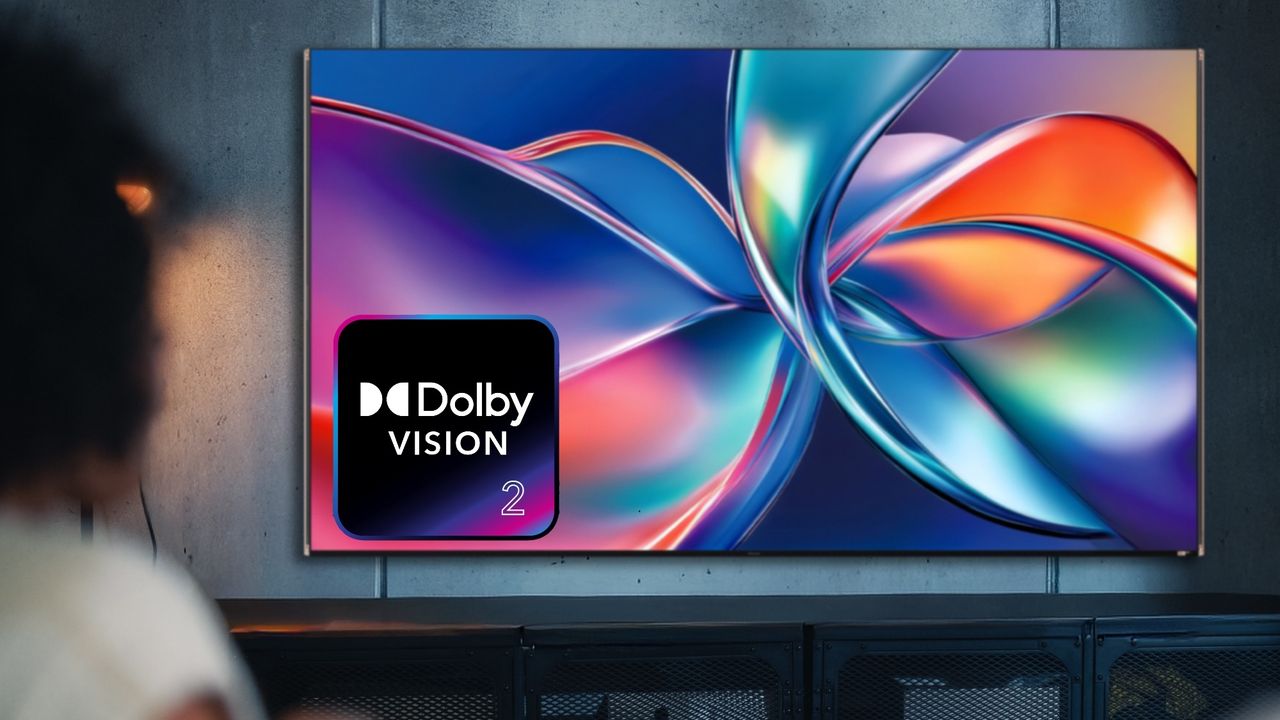
A TV sporting the Dolby Vision 2 logo in a living room.

We live in an era of sequels. But until Dolby announced a follow-up version of Dolby Vision, I didn’t expect to experience a sequel to an HDR format, of all things.

Several months after the announcement of the new format, Dolby Vision 2 is finally making its way to TVs all over the world. Dolby Vision 2 is arriving on select Hisense models first and will soon expand to additional sets.

If you’re a picture purist, an A/V aficionado, or an all-around home theater enthusiast, you’re probably champing at the bit to peep this premium HDR format. Before we dive into whether or not Dolby Vision 2 is worth seeking out, let’s start with the list of Dolby Vision 2-supporting TVs.

Which TVs have Dolby Vision 2?

(Image credit: Tom's Guide)

As mentioned, the newest version of Dolby Vision is being welcomed into the world by way of Hisense. Right now, Dolby Vision 2 is rolling out in a firmware update to the following TVs:

  • Hisense UX
  • Hisense UR9
  • Hisense UR8
  • Hisense U7/U7 Pro

The first Hisense TVs to receive the update are models built around the Google TV or VIDAA OS smart platform. According to Dolby Laboratories, the initial rollout will expand in the coming weeks.

We’ve already tested and reviewed the Hisense UR9 (the brand’s top RGB LED flagship for 2026), and we’re in the process of evaluating the UR8 and the Hisense U7 (dubbed the U7SG here in the states).

Of these models, the Hisense U7SG represents the most-affordable way to secure Dolby Vision 2 support right now. It’s a mid-range Mini-LED TV that gets exceptionally bright and colorful during HDR content, but how well it showcases Dolby Vision 2 content remains to be seen.

Dolby claims that regular, garden-variety Dolby Vision content will look better on TVs equipped with Dolby Vision 2. But, of course, this raises a key question about the nascent feature.

Is Dolby Vision 2 worth having?

Like its predecessor, Dolby Vision 2 leverages dynamic metadata embedded in content to present the picture in a carefully controlled manner. In simple terms, Dolby Vision 2 (and the OG Dolby Vision) work to ensure that whatever you're watching gets as close as possible to matching the creator's intent.

How close it gets comes down to the overall performance of your display. Some TVs get brighter and more colorful than others, and as you can imagine, those TVs make better use of Dolby Vision (and HDR in general). Likewise, many affordable TVs offer Dolby Vision support, but due to their performance limitations, Dolby Vision-enhanced content looks worse than standard HDR content does on a better-performing set.

(Image credit: Dolby)

With all of that being said, let’s consider the newest format. Both Dolby Vision 2 and Dolby Vision 2 Max (the top-tier version) offer up new features for filmmakers to tinker with. These include Authentic Motion (which allows creators to control motion smoothing on a shot-by-shot basis) and Light Sense 2 (which dynamically adjusts the picture’s brightness based on ambient lighting conditions).

But the newest format’s bread and butter is the flexibility it gives to creators whose content will be screened on the TVs of tomorrow. It’s reportedly been developed for displays that reach up to 10,000 nits of brightness — far higher than anything I’ve personally measured on a consumer-facing, HDR-capable TV.

As TVs evolve, Dolby Vision 2 will be here to take advantage of their performance.

Dolby Vision 2 has reportedly been developed for displays that reach up to 10,000 nits of brightness.

Just as we have to wait for the TVs of tomorrow to see what Dolby Vision 2 is fully capable of, we also need to wait for the content to start flowing. According to Dolby Laboratories, several streaming platforms have already committed to platforming Dolby Vision 2-enabled content, including Peacock and Canal+. But right now, there’s not much to see.

So, what are you missing out on if your TV doesn’t support Dolby Vision 2? Not much. Today, Dolby Vision 2-viewers might notice a slight improvement to the presentation of movies and shows mastered for the original Dolby Vision format, but we’ll have to wait for proper Dolby Vision 2-enhanced content to truly familiarize ourselves with the newest members of the Dolby Vision family.

More from Tom's Guide

Sign up to read this article
Read news from 100's of titles, curated specifically for you.
Already a member? Sign in here
Related Stories
Top stories on inkl right now
One subscription that gives you access to news from hundreds of sites
Already a member? Sign in here
Our Picks
Fourteen days free
Download the app
One app. One membership.
100+ trusted global sources.