
Get all your news in one place.
100’s of premium titles.
One app.
Start reading
Livingetc
Livingetc
Lilith Hudson

Does Minimalism Help You Sleep? We Asked Experts If Stripping Back Your Bedroom Is the Secret to Better Rest

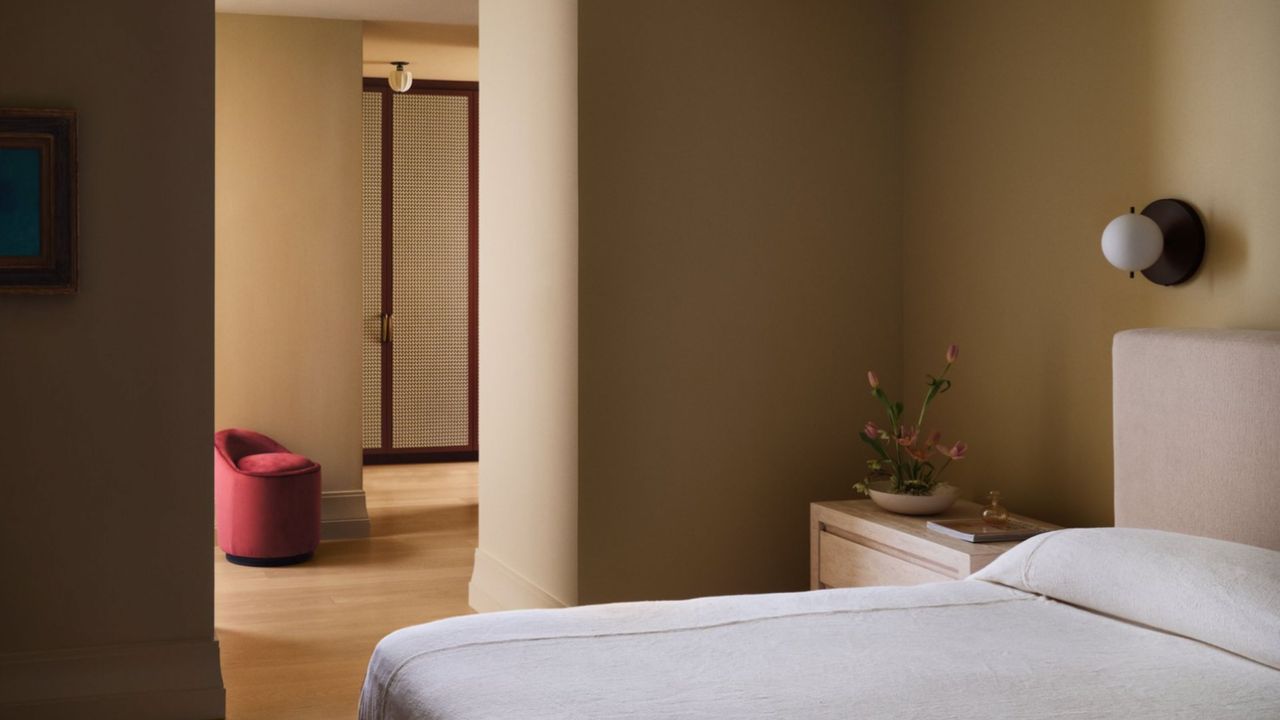
Cream bedroom with cream bedding and headboard, red ottoman, wall sconce, and timber side table.

The idea that our surroundings affect how we sleep is nothing new, but instead of buying into blackout blinds and gimmicky sleep tech, could the secret to better sleep be as simple as adopting a more minimalist approach in the bedroom?

As our homes become busier and more multifunctional, bedrooms are increasingly doubling as offices, dressing rooms, and storage spaces. The result? A space that’s meant to help us switch off can end up doing the opposite. Minimalist interior design, however, offers a compelling counterpoint. By stripping a bedroom back to the essentials, you reduce visual noise and create a calmer environment that's more conducive to rest.

But does a minimalist bedroom genuinely help us to sleep better, or is it just another piece of faddy wellness advice? We spoke to sleep experts and interior designers to explore how interior design can improve sleep quality, and how to create a bedroom that feels restful without tipping into sterile.

Can Minimalism Help You Sleep?

If you're not getting your 40 winks, you might want to consider redecorating your bedroom (Image credit: Ome Dezin)

Whether you lean towards minimalism or prefer something more expressive, there's no denying the benefits of this pared-back design style. When visual noise is reduced, a space tends to feel calmer and more relaxing. Since that's exactly the vibe we want from our sleep sanctuary, minimalist bedroom ideas are suddenly very appealing.

"Every object in your bedroom requires a tiny bit of mental processing, so if you’re in a busy room when you're trying to sleep, this background cognitive visual load can really hinder full relaxation," explains Joyce Huston, co-founder and lead interior designer at Decorilla. "A minimal bedroom means fewer stimuli competing for your attention, and since sleep requires your brain to power down, a beautifully simple bedroom can really help that transition."

Lori Miller, interior designer and founder of LGC Interior Design, is quick to note that the theory isn't without scientific evidence, either. "Research has shown a clear link between clutter and elevated stress levels, including a 2016 study in the Journal of Environmental Psychology that connected visual clutter to higher cortisol levels — the stress hormone that interferes with sleep," she says. With this in mind, designing a low-cortisol bedroom for better sleep could be as simple as embracing a more minimalist style.

This isn't to say you ought to have a plain, boring bedroom devoid of personality, either. Lori says minimalism isn’t about deprivation; it’s about intentionality. "When you reduce excess and surround yourself only with items that feel purposeful and calming, you’re creating an environment that supports rest," she says. "In bedrooms, this often means investing in fewer but higher-quality foundational pieces, like a well-made mattress, breathable bedding, and supportive pillows, rather than layering in distractions that don’t serve sleep."

How Should You Use Minimalism to Promote Better Sleep?

Clutter-free surfaces are rule 101 of minimalist bedrooms (Image credit: Derek Swalvell. Design: Zen Architects)

Curating a minimalist bedroom is all about designing a space with serenity in mind. "One of the easiest ways to use minimalism to enhance your sleep environment is to simplify what your body and eyes interact with most," Lori explains. "Start with the bed itself. Choose a streamlined bed frame, limit bedding to one or two complementary textures, and opt for calming, neutral tones. High-quality materials matter here — natural fibers like cotton or linen feel better against the skin and visually reinforce a sense of ease."

Joyce says the next thing to tackle is keeping surfaces clear, especially nightstands. "Limit the bedside table area to a maximum of three items, like a lamp, a book, and a water glass," she says. "Storage should be concealed so the room feels open and grounded," adds Lori. "Minimalism works best when everything has a 'home' and nothing feels accidental."

If redecorating is on the cards, Joyce suggests choosing a simple color palette of two to three shades in soft tones like sage greens or warm whites. "I know it can be tempting to go for fun and bold bedroom colors but saturated colors energize spaces, and that’s not the plan when you need to relax," she adds.

Is There a Tipping Point Where 'Minimal' Becomes 'Too Sterile' for Rest?

If not used intentionally, minimalism can risk feeling cold and sterile (Image credit: Manolo Langis. Design: Mandy Graham)

If you plan to embrace a more pared-back design style in the name of better sleep, be wary of common minimalist bedroom mistakes. Remove too much decor from your sleep space, and your bedroom risks feeling cold, stark, and sterile. "A bedroom that’s too bare, too cold, or overly rigid can feel uninviting, which can actually make it harder to relax," Lori says. "Sleep is deeply emotional, and spaces that feel impersonal don’t always support rest."

Joyce agrees. "A completely bare room can increase anxiety for some people," she says. Instead, she says we need some warmth and comfort, even when designing a minimalist bedroom. "The goal is somewhere in the middle," says Lori. "Clean lines paired with softness, comfort, and sensory cues. This might mean adding a subtle texture through bedding, incorporating a soft rug, or using warm lighting instead of stark overhead fixtures."

The bottom line? Minimalism should reduce stress, she says, not remove comfort. "When done thoughtfully, it creates a bedroom that feels calm, personal, and restorative — exactly what we need for quality sleep."

Ultimately, a minimalist bedroom isn’t about rigid rules or living with less for the sake of it — it’s about creating a space that feels calm enough to rest in. Whether that means editing out visual clutter, rethinking storage, or simply being more intentional about what earns a place in the room, even small changes can make a noticeable difference to our sleep.

The power of some intentional minimalism shouldn't be underestimated, and you might be surprised to learn that it's benefits don't just stop at better sleep. A pared-back space may also support focus and mental clarity, meaning minimalism can help ADHD, too. Less really can be more.

Sign up to read this article
Read news from 100’s of titles, curated specifically for you.
Already a member? Sign in here
Related Stories
Top stories on inkl right now
One subscription that gives you access to news from hundreds of sites
Already a member? Sign in here
Our Picks
Fourteen days free
Download the app
One app. One membership.
100+ trusted global sources.