The Coffee Lab
I'm Erin, and welcome to the twelfth episode of The Coffee Lab, the series where we forget coffee snobbery. The Coffee Lab is all about making coffee fun. Join me as I help you kickstart your coffee journey!
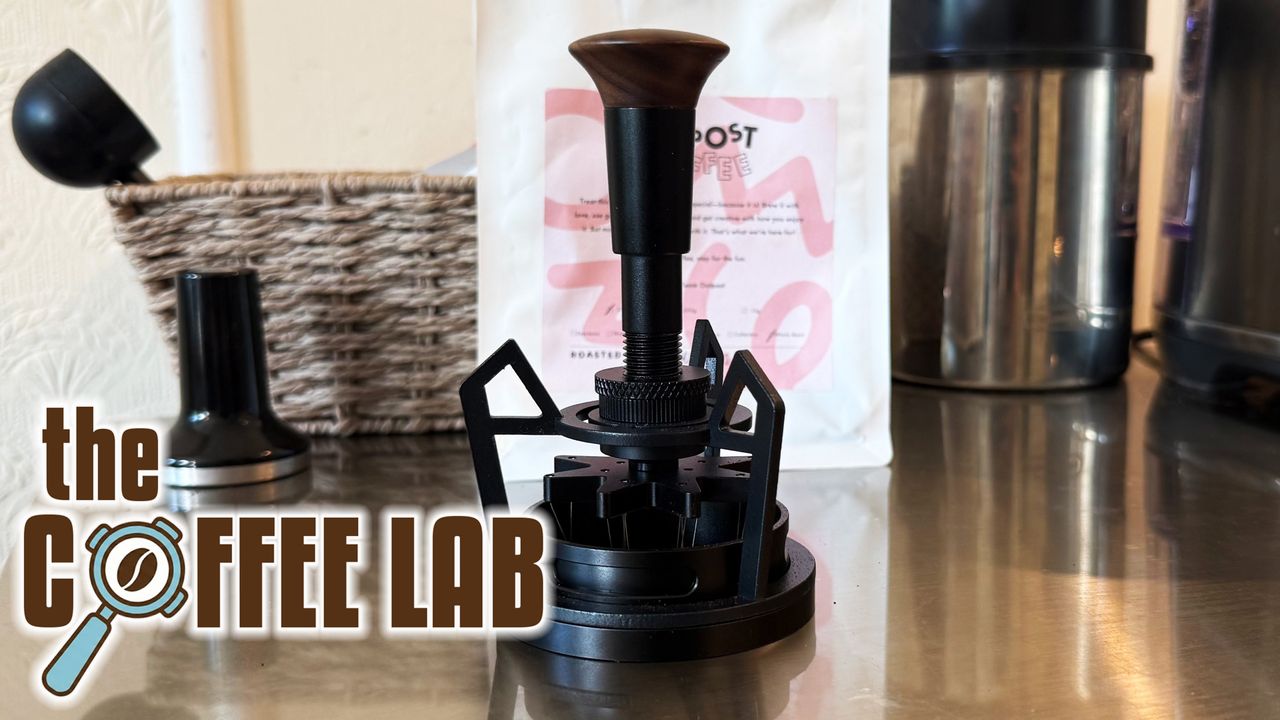
Have you ever seen a coffee accessory that looks like it could be a Medieval torture device? Let's talk about it. So this little device is called a WDT tool. This is an accessory often seen in the hands of the most ardent coffee snobs, paired with things like a spring-loaded tamper and a coffee scale.
Here at The Coffee Lab, we take coffee back to basics. At the end of the day, as long as you're enjoying your morning (or afternoon... or evening) cup of java, who is anyone to tell you you're making it wrong? But I've been so intrigued by what is essentially a set of acupuncture needles on a stick that I knew I had to get a WDT tool in to test.
So, today we're going to answer the question: Do you actually need a WDT tool, or is it just a gimmick?
@tomsguide ♬ The Jazzy Flow - SrChillEasier
What is a WDT tool?
WDT stands for Weiss Distribution Technique. John Weiss, a passionate home barista, actually invented this technique while trying to eradicate channeling in his espresso. Frustrated by inconsistent extraction, Weiss used a needle to distribute grounds evenly, giving the water a flat surface to pass through. And, ta-da! WDT was invented. You can actually read Weiss's 2007 article on Home-Barista.
A WDT is essentially a device with lots of little needles. These needles cut through the coffee grounds, break up clumps, and distribute the particles. You can get WDT tools with anywhere from around five to ten needles.
The before and after
Take a look at these two photos: one is my portafilter basket before using the WDT tool, one is after. Can you see a difference?
As you can see, the first image shows clumpy coffee grounds, and, in the second image, you can see the evenly distributed grounds.
I made two identical espressos, one with the WDT tool, and one without the WDT. And if you haven't watched the TikTok video linked above... then I'm going to spoil it for you.
They tasted pretty much the same.
The verdict
Is having a WDT tool essential for good coffee at home? No, not at all. Don't let any coffee snob tell you you're not a real home barista until you have one.
But will having a WDT tool guarantee good espresso every time? Also, no. You don't need a WDT tool to get barista-quality espresso.
I'm going to let you in on a little secret — I've worked in three coffee houses, and not one of them had a WDT tool.
We just ground the beans into the portafilter basket, tamped, and pulled the shot. No messing around with needles.
But will having a WDT tool improve the flavor of your home espresso? Well, kind of. If you're using high-quality, artisan beans, a powerful grinder like the Mazzer Philos, and you know what you're doing, you might be able to get better-tasting espresso at home.
For the average home barista, though, it's not an essential purchase. Sure, it's fun, and I'm probably going to continue using mine now I've got it. Unless you're a die-hard coffee nerd, I suggest saving your money.
More from Tom's Guide
- I tried this ridiculously cheap bean-to-cup espresso machine so you don't have to — and it's a total head-scratcher
- Non-plastic coffee makers are trending — and this low-plastic Ratio model is my favorite for coffee snobs
- I made two identical espressos with $5 coffee beans and $20 coffee beans — and yes, the coffee snobs are right