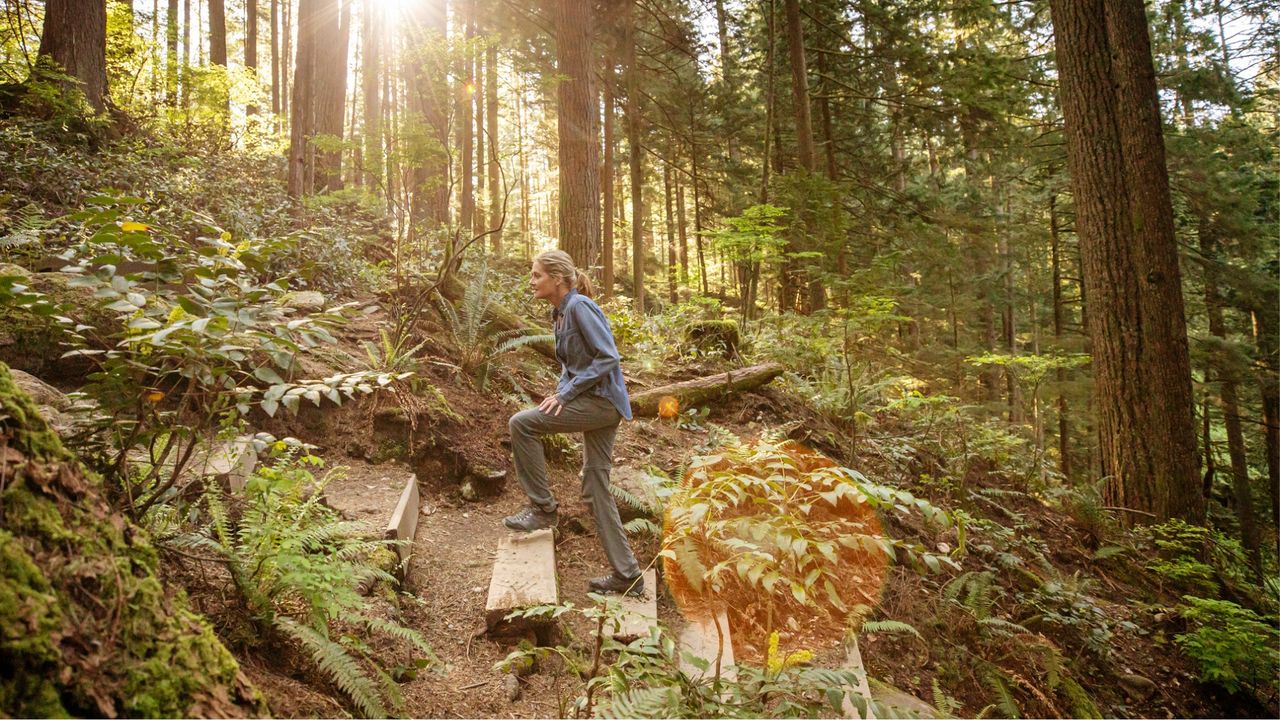
If you walk a lot, particularly up and down hills, you may find your calf muscles feel stiff and sore the day after.
This is a common complaint for hikers and can be alleviated by warming up and cooling down properly with targeted stretches.

Physical therapist Troy Hurst tells Fit&Well that two variations of a simple wall calf stretch—targeting both the gastrocnemius and soleus muscles in the calf—can help.
“While the standard calf stretch against the wall that most of us think of targets the larger gastrocnemius muscle, the soleus is also important for endurance and stability when the knee is bent.”

Hurst explains that the gastrocnemius is the big calf muscle that visibly forms the shape of your calves. The soleus sits under the gastrocnemius.
Both muscles are responsible for the movement of your ankle. The ankle is often a weak point for walkers and ankle sprains are one of the most common injuries people get on the trail.
Tight or immobile calf muscles can reduce the range of motion in your ankle, making you more prone to injury, so it is important to give them attention through targeted stretching.
Next time you return from a long walk or a run, try Hurst’s recommended stretch below to help minimize sore calves. If you also add it to your regular stretching routine, it can improve your ankle mobility to help you tackle uneven, sloping terrain more safely.
How to do the calf stretch
Time: 30 sec each variation
- Stand facing a wall and take one step back in a lunge stance.
- Use the wall for balance if needed.
- Gastrocnemius variation: keep your back leg straight and heels on the floor, then lean into the wall. Feel the stretch in the upper part of your calf.
- Soleus variation: bend both knees slightly while keeping your heels firmly on the floor. Feel the stretch lower part of the calf.