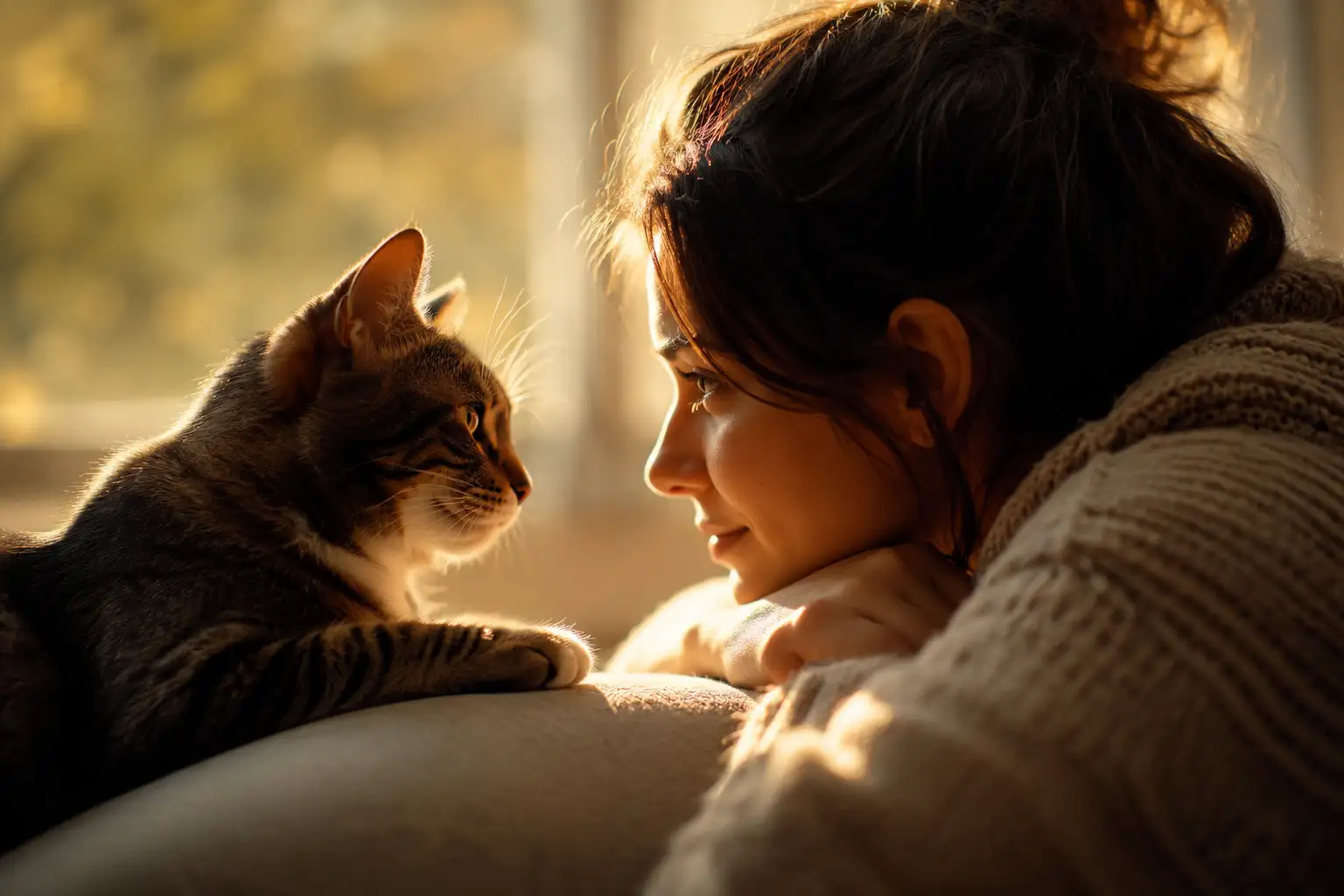
The question of whether Cat truly love their owners has become one of the most searched pet behavior topics in the United States, especially as indoor companionship continues to rise. Many cat parents notice a strange mix of affection and distance—one moment a cat is curled up beside them, and the next it acts completely uninterested. This emotional contradiction often leads to a deeper curiosity: is this love, habit, or just dependence on safety and food?
Recent studies in animal behavior suggest the answer is more complex than simple affection or survival instinct. Cats do form attachments, but they express them in ways that are subtle, selective, and deeply tied to trust. Unlike dogs, their emotional world is built around control, environment, and consistency rather than constant social bonding. That is why understanding feline behavior is not just about decoding actions—it is about reading a quiet language shaped by evolution and experience.