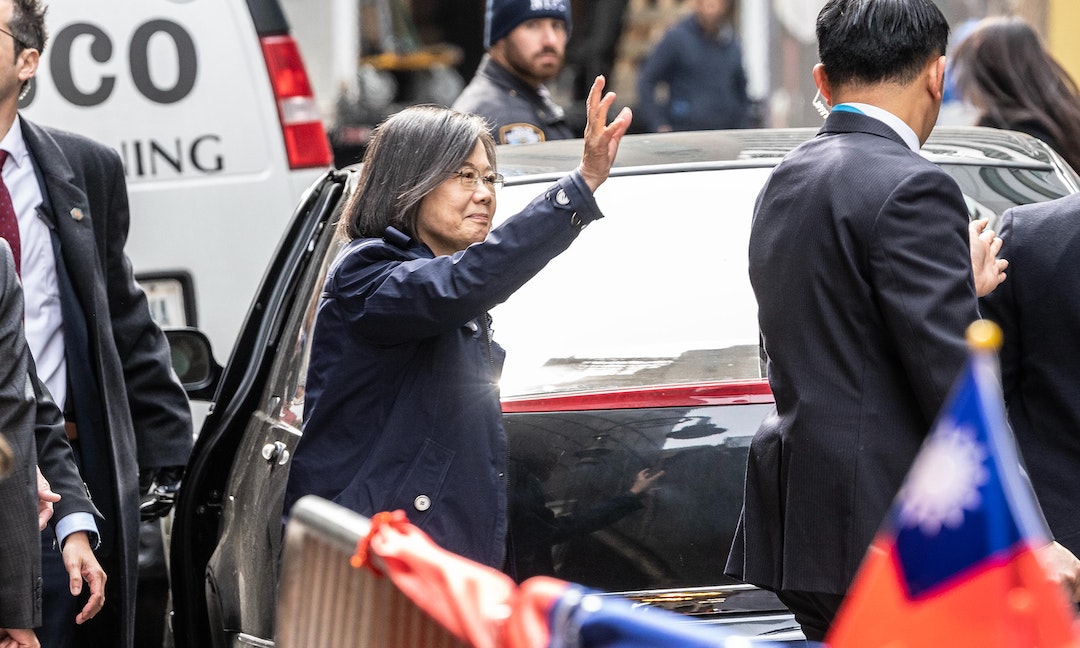
On December 15, 1978, President Jimmy Carter announced that, as of January 1st, the United States would sever all official ties with the government of the Republic of China (Taiwan) and establish formal relations with the People’s Republic of China. Since then, the U.S. and Taiwan have relied on creatively working around the lack of formal diplomatic ties to build bilateral relations. While still a presidential candidate, Ronald Reagan had suggested re-establishing formal ties with Taiwan. But none of his successors has suggested such a deviation in policy. Each president has reconfirmed the existing unofficial relations between the U.S. and Taiwan, maintained via the Taiwan Relations Act, which requires the U.S. to sell arms to the island for its own defense.
While the U.S.’s ambiguous stance on Taiwan’s sovereignty remains a point of contention between China and the U.S., Taiwan historically has not been at the forefront of Americans’ concerns. However, as both Sino-U.S. and cross-Strait relations worsen, the percentage of Americans who rate tensions between China and Taiwan as a very serious problem has increased, rising 7% from 2021 to 2022, according to Pew Research Center.