After the mid-2025 rainy season underwhelmed in the Tadjourah region of Djibouti – the small, Francophone nation wedged between Ethiopia and Somalia - authorities faced a crisis as thousands of nomads began to journey from the arid interior to the coastline in search of water. To make matters worse, crippling overseas aid cuts from Donald Trump in the US meant that emergency pools of funding were no longer easily available.
What authorities in Tadjourah then did is something that would not have been possible just a couple of years prior, and which potentially holds huge significance for cash-strapped African governments reeling from aid cuts. They sent an emergency request to Djibouti’s Sovereign Carbon Agency (SCA) – a national body established in 2023 to manage money raised by the country’s pioneering levy on emissions - to ask for support.
The SCA responded immediately by sending water trucks and solar-powered desalination units, staving off the crisis and preventing large-scale displacement in the country. It is just one of around 80 projects that have now been supported with funds raised from the carbon levy, which is making big polluters pay for the country’s climate response.
“We will never replace the UN, and we will never replace aid, but we can react quickly to events, we have a lot of local knowledge, and we can really make a difference in crises,” explains Bruno Pardigon, a French businessman who helped set up the carbon levy, and who now acts as the director of SCA. Other projects funded by the levy include plastic collection schemes, programmes around recycling, mangrove forest restoration, and the purchase of a new electric vehicle fleet.


Paul Sebastien, a former carbon trader who has held roles at the UN and numerous businesses in the space, has acted as a key technical in the establishment of Djibouti’s carbon pricing system.
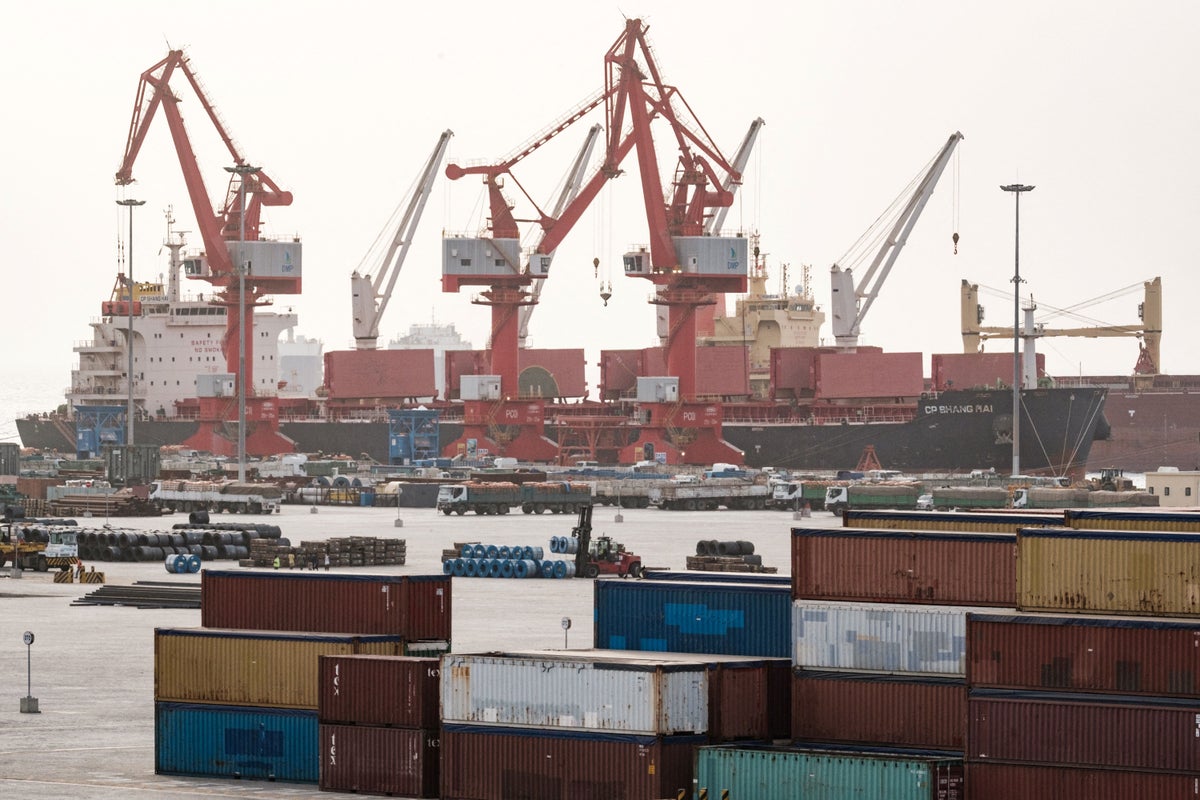
The focus of the levy is Djibouti’s port, Sebastien explains, which is one of the largest in Africa, with its 2,500 visiting ships annually servicing around 95 per cent of neighbouring Ethiopia’s trade. Visiting ships are charged $17 (£12.60) per tonne of carbon dioxide emitted, with the levy covering 50 per cent of emissions per voyage. Both the carbon emitted and the money collected is independently monitored and audited to ensure that it corresponds to the number of visiting ships, and the system complies with international standards.
The money is then spent by the SCA on programmes across Djibouti that benefit its people, in coordination with aid groups and the Djiboutian government.

“Oftentimes NGOs or local communities' associations will come to us with requests for impact projects to be funded” explains Pardigon. “We will then work with the NGO and relevant government ministries to ensure there is no overlap in their work, after which we will then run the proposal by our board to ensure that it meets our ethical guidelines, before financing and supervising the projects.”
The money raised from two and a half years of operation is “less than ten million dollars”, Pardigon says. While this might not sound massive, for a country of just 1.1m people and a GDP of around $3.7bn, it is hugely significant - and particularly so for a territory in a volatile part of the world that is so often overlooked by foreign investors.
“People look at us on the map and they see Yemen or Somalia and assume we are in a Civil War,” says Pardigon. “We are also not a country like Kenya - Bill Gates and Jeff Bezos are not lining up to fund our green projects - so this money really can go a long way, and is helping to derisk other projects.”
A model for other African countries
Djibouti’s carbon levy finds its origin in the Cop27 UN climate conference, which took place in Sharm El-Sheikh, Egypt, at the end of 2022. At the conference, many countries of the world had been talking about plans to introduce taxes on carbon emissions - and President Ismail Guelleh was frustrated that African nations were not doing the same.
“The feeling was: Why should it be that Africa produces just four per cent of global emissions, yet suffers the most - and also receives just three per cent of global climate finance,” explains Pardigon. Government authorities reached out to Pardigon, a man who already had extensive business interests in the country including in the carbon offsetting space, and the carbon levy was developed independently within Djibouti, with Djibouti’s needs as its focus, says Pardigon.
This is in contrast to some other African carbon schemes, which have been criticised for being developed for the benefit of big emitters in the Global North with too little reward for local people, as well as for the roles played by big global consultancies in their design.
Though it was launched by presidential decree and with significant third-party oversight, at first international organisations were skeptical. But now that aid has been cut, and numerous projects have been supported, the dynamic has flipped.
“We approached some international humanitarian groups at the start for support, and they were initially hesitant,” says Pardigon. “But now that there is no funding post-Trump, and we have shown what we can do, they have been coming to us asking for money.”
Djibouti’s carbon pricing system is not the first such system in Africa, with South Africa introducing a carbon tax in 2019 that currently charges big emitters around $8/tonne of carbon dioxide. But what Djibouti has done is offer a model for smaller, less-industrialised African countries to capitalise on emissions produced by international companies operating in the country, which should also not have any major impact on cost of products or the energy prices that people pay.
“Djibouti has paved the way for other countries in the continent to generate revenues from carbon emissions,” explains the SCA’s Paul Sebastien. “The model we have developed - with its strict carbon accounting methodologies, third-party verification, and robust governance - can now be used by others.”
A seperate organisation - the Africa Sovereign Carbon Registry (ASCR) - promotes and oversees the implementation of Djibouti’s carbon levy model overseas. So far, Gabon and Liberia on Africa’s west coast have established their own carbon tax initiatives, and at least 15 other countries are considering doing the same.
Longer term, there is a plan to move the foundation’s headquarters from Djibouti to Addis Ababa, the capital of neighbouring Ethiopia, which is where numerous pan-African institutions like the African Union are based.
Beyond Africa, more than 50 countries have established “polluter pays” taxation or carbon pricing systems, with the majority of these in countries in the Global North. The world’s biggest and most established carbon pricing system is the European Emissions Trading System (EU ETS), which covers all the big emitting sectors of the European Union including power and industry, and has been widely credited with significantly driving down European emissions, as well as raising €42.6bn (£37.37bn) for the EU’s green transition.
For shipping, as in Djibouti, 50 per cent of emissions from large vessels entering EU ports are covered by the EU ETS - but the EU carbon price is generally much higher, currently standing at around €70.
Filling the gap left by global bodies
When asked by The Independent how they consider Djibouti’s carbon pricing scheme, carbon market experts have been broadly complimentary, suggesting that Djibouti has every right to capitalise on carbon emissions in the same manner as wealthy countries are doing - and particularly given the disproportionate climate impacts that it and other African countries are facing.
“Carbon pricing can provide sovereign revenues for countries like Djibouti. These revenues are very valuable, unlike aid, which is often conditional and irregular,” explains Agathe Peigney, from the think tank Transport and Environment (T&E). Modelling that has been carried out by her organisation has found that - with a carbon price of $100/tonne - African countries could collectively raise billions each year for climate projects.
“Djibouti has one of the lowest carbon footprints in the world and is among the countries least responsible for the climate crisis,” adds Jenny Helle, from the think tank Carbon Market Watch (CMW). “It is positive that Djibouti, which is classified by the United Nations as a Least Developed Country, addresses its shipping emissions by introducing a carbon price signal.”
Helle adds, however, that the carbon price would need to be much higher if the intention is not only to raise funds for climate projects in the country, but also to encourage shipping companies to reduce the carbon emissions of their operations. “To strengthen [Djibouti’s] national mechanism over time, it should cover more emissions and make polluters pay enough to actually encourage them to reduce them,” she says.
Separately, the International Maritime Organisation has been trying to introduce an international carbon pricing system to help drive down shipping emissions globally, with efforts to do so postponed last year after strident opposition from Donald Trump in the US. There are some concerns that unilateral efforts to tax CO2 from ships could further undermine global efforts to decarbonise shipping - though observers spoken to by The Independent say this need not be a big concern.

“Countries needn’t wait for a multilateral decision at the IMO, as the EU has already shown. Every year that countries don't price these emissions, they miss out on huge revenues,” says T&E’s Peigney.
“At present, regional measures are the only tools addressing rising shipping emissions, and we encourage more nations to develop and implement measures to complement and strengthen global carbon pricing by the IMO,” adds CMW’s Helle.
In response to concerns raised about the prospect of countries unilaterally establishing a carbon levy on shipping, an IMO spokesperson said: “IMO provides a harmonised global regulatory framework to support a global shipping industry.
“This avoids a patchwork of differing requirements across ports and jurisdictions, where fragmentation can increase administrative burden and cost and complicate compliance for ships that trade internationally.”
This article was produced as part of The Independent’s Rethinking Global Aid project
Sea levels are already a foot higher than most scientists estimate, research reveals
UK’s climate aid cuts condemned as ‘reckless’ slashing by charities and campaigners
How the climate crisis threatens our food — and the people that grow it
Severe weather swings leave families battling floods and farmers facing bad year
Shellfish population recovers after Highland loch given protected status
Canada’s Carney signs uranium deal with Modi during historic India visit