
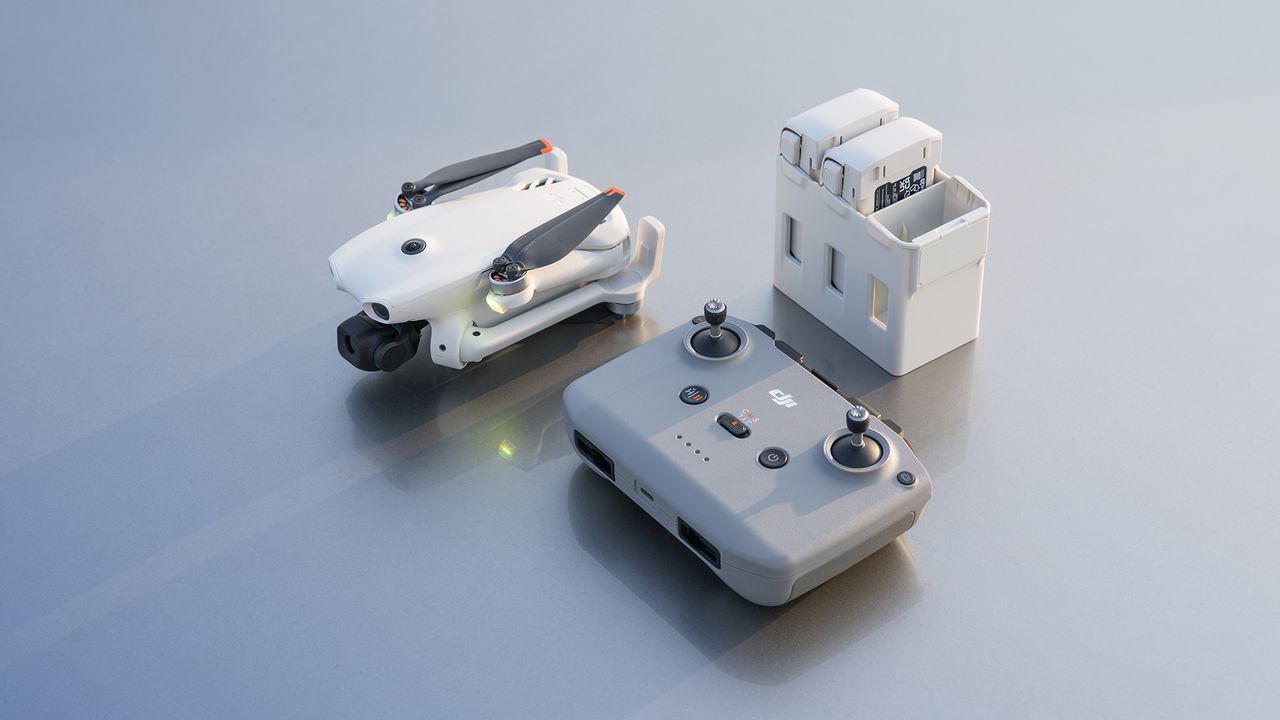
DJI has officially unveiled its long-rumoured Lito drone series, introducing two beginner-friendly models designed to make aerial photography more accessible without sacrificing key features.
The new lineup consists of the DJI Lito 1 and the more advanced Lito X1, both positioned as entry-level camera drones that sit above the Neo and Flip (selfie-focused) range while effectively replacing the Mini as DJI's go-to options for beginner pilots seeking the 'proper' flying experience.

Both are designed with first-time flyers in mind, combining lightweight sub-250g builds with automated shooting modes and improved safety systems.
ActiveTrack, QuickShots, MasterShots and Hyperlapse are included on both, allowing you to capture complex shots with minimal input.
According to DJI, the aim is to “lower the learning curve” while still delivering high-quality results from the first flight.
Two models with a clear split
While the two drones share a similar design and core feature set, the Lito X1 offers several upgrades for users who want better image quality and more advanced flight performance.
The Lito 1 uses a 1/2-inch sensor, while the Lito X1 steps up to a larger 1/1.3-inch sensor, which should improve low-light performance and dynamic range.
Both can shoot 4K video, but the X1 adds HDR recording and D-Log M colour profiles for more flexibility in post-production.

The X1 also gains forward-facing LiDAR, enhancing obstacle detection and helping the drone navigate more complex environments with greater confidence.
All current-gen Litos feature omnidirectional obstacle sensing, a notable addition at this price point, alongside up to 36 minutes of flight time and long-range (15 km) video transmission.
The DJI Lito series is now available from DJI UK, DJI EU and DJI AU in multiple configurations.
The Lito 1 starts at £299 in the UK, €309 in Europe and AU$539, while the Lito X1 is priced from £369, €379 and AU$619.
Fly More Combo bundles push pricing up to £599 and AU$1,069, depending on the model.
Sadly, neither is available in the US for now.