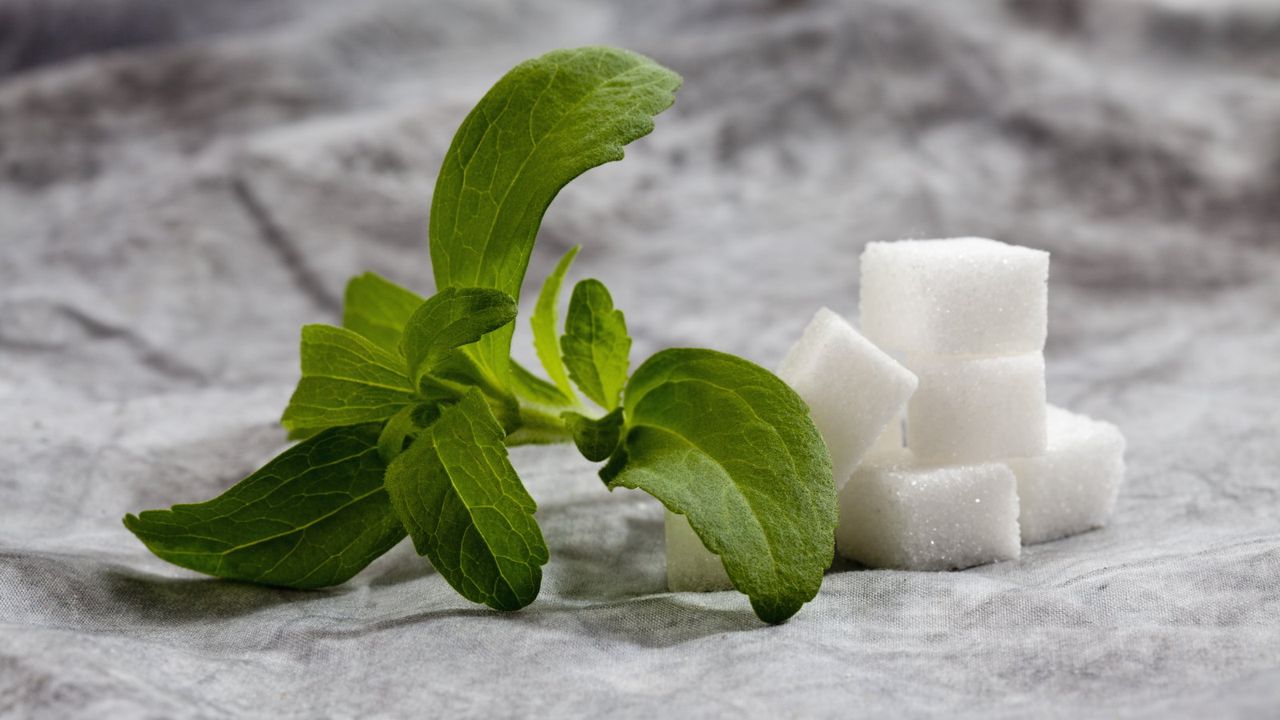
Stevia is a herb known as a sugar-free sweetener. It is a popular sugar substitute, but commercial stevia is heavily processed and often mixed with other ingredients to resemble sugar. Growing your own stevia plant (Stevia rebaudiana) means you can enjoy a 100% natural, zero-calorie sweetener from your own garden.
Stevia, also commonly known as candyleaf, sweetleaf, or sugarleaf, can be used fresh to sweeten food or drinks, or may be added dried or as a liquid. The leaves of the small, bushy plant are 200-300 times sweeter than sugar, yet calorie-free, and have been used as a natural sweetener in Southern America for centuries.

If you want a natural, super-sweet plant for your herb garden, stevia is definitely worth considering. This guide focuses on how to grow stevia at home, from buying plants or sowing seeds, to the ideal conditions, to how to care for and harvest it.
How to Grow Stevia – Seeds or Starter Plants

Stevia is a warm-weather, tender crop. It is commonly grown as an annual plant outdoors in US hardiness zones 3-8, but can be grown year-round in certain situations.
Ashleigh Smith from True Leaf Market claims that stevia grows best in temperatures of 70-85°F. She adds: ‘In frost-free areas of zones 9-11, it can be grown as a tender perennial, but it will not grow much when temperatures are below 60°F.’
Gardeners in warmer US hardiness zones can grow stevia outdoors year-round in the milder temperatures. Or, those in colder climates can overwinter plants indoors on a sunny windowsill to extend the growing season.
If you want to grow stevia, you can either buy starter plants (you can get live stevia plants at Amazon) or sow seeds (get stevia seeds at True Leaf Market).
Stevia can be finicky to grow from seeds, and it is best to sow seeds indoors around 8-10 weeks before your last frost. Sow seeds into trays or pots filled with seed compost (you can get a seed starting mix at Burpee) and cover them with a thin layer of soil or vermiculite.
The seeds need 68-75°F to germinate, so a heated propagator or heat mat may be required to provide those consistent temperatures. Even in ideal conditions, they can take up to three weeks to germinate. Keep them moist, but not waterlogged, and transplant seedlings after the last frosts.
Ideal Growing Conditions for Stevia

Young stevia plants should be spaced 18 inches apart in their final location. This should be a sunny area where they can receive at least six hours of direct sunlight daily.
However, in the warmest US hardiness zones, they may prefer a spot with afternoon shade. As Ashleigh Smith advises: ‘If grown outdoors in hot weather, a little afternoon shade can reduce water stress.’
You should grow stevia in a loose, well-draining soil type, one rich in organic matter. This means incorporating some compost (either homemade or a bag of organic compost like this from Amazon), leaf mold, or well-rotted manure before planting.
The unusual herb prefers a soil pH of 6.5 to 7.5, but can tolerate a range of 5.0 to 8.0. It can be worth doing a soil test beforehand to check the soil pH and make any amendments.
Stevia is suitable for container gardens or herb planters if you don’t have sufficient ground space. Fill a container with a quality potting soil for herbs, like this organic potting mix at Burpee.
‘Stevia can also be successfully grown indoors in soil or hydroponically with ample sunlight,’ adds Ashleigh. ‘Grow in a bright south-facing window, or aim for 14 hours per day of bright grow lights.’
Care Tips

Careful watering is essential when you grow stevia. The plants need consistent moisture, but don’t enjoy sitting in soggy soil for long periods. Check the moisture levels regularly, and water once the top inch dries out.
As stevia plants have shallow roots, they benefit from regular watering to keep the soil consistently moist. A soil moisture meter (you can get a soil moisture meter at Amazon) can instantly tell you the moisture levels and help you make informed decisions about when to water your plants.
Stevia plants do not need lots of feeding. If you added compost before planting, no additional feed is required. If you didn’t, add a handful of balanced, slow-release fertilizer when planting stevia, like this all-purpose granular plant food at Burpee.
The plants may then benefit from an additional feed from a water-soluble plant food during the season. This can come in the form of a fish or seaweed fertilizer, or a comfrey or compost tea (such as this instant compost tea at True Leaf Market). Avoid high-nitrogen fertilizers, which reduce the leaves' sweetness.
Once stevia plants reach around eight inches in height, they benefit from being pinched back. Pinching out plants promotes bushy growth and the development of lots of leaves. Doing it regularly also stops the stems from flowering, which causes the leaves to develop a bitter taste.
You can pinch back plants either with your fingers or a pair of garden snips, such as these straight-edge garden snips at Amazon.
Harvesting

You can start harvesting stevia leaves once they are large enough to use, which doesn’t take too long from planting. ‘You can begin to harvest stevia leaves in as little as 30-40 days if harvested sparingly,’ says Ashleigh. ‘The plant will generally reach full size in 60-90 days.’
The leaves can be harvested individually as required, or entire stems can be removed. However, it is important not to remove too much at one time. ‘If you only remove less than a third at a time, it will continue growing and provide multiple harvests,’ adds Ashleigh.
Stevia leaves are reputed to be at their sweetest in the fall, and you need to pick the leaves before the plant blooms. If you do see flower buds forming, pinch them off.
The leaves can be used fresh. To do so, chop or crush them for a sweet addition to drinks. You can also dry the leaves by laying them on fabric or a screen somewhere warm and sunny, or by hanging stems upside down, for a day or two. Alternatively, you can use a dehydrator.
As discussed earlier, stevia plants can survive winters outdoors in warmer climates or indoors in milder ones. However, even if you can overwinter tender plants, the vigor of stevia plants drops after the first year.
A key way to keep growing stevia year after year is to take cuttings. You can take 4-6-inch cuttings of non-flowering stems in spring or summer. Strip leaves from the bottom half, dip the bottom end in rooting hormone (you can get rooting powder at Garden Goods Direct), and place the cuttings in pots filled with potting mix.
These plants can be maintained indoors over the colder months and planted outside after the last frost in spring.
A seedling heat mat maintains consistent temperatures around 68-86℉, and this one has a digital thermostat so you can control the perfect level for stevia seeds.